The United Shipbuilding Corporation (USC) consistently implements a comprehensive digital transformation program, which involves the creation of a single end–to-end digital space, from design to construction and operation of marine equipment facilities. According to the USC press service, by 2028, the annual need for information modeling specialists in shipbuilding alone is estimated at at least 500 people. A Consortium of Higher and Secondary Vocational Education in Shipbuilding has been established at St. Petersburg State Maritime Technical University with the support of the SiSoft Group of Companies to form such a talent pool.
"The digital transformation of Russian shipbuilding places increased demands on the quality and structure of human resources. The industry needs specialists who combine deep engineering training with practical skills in working with domestic software products, information modeling and data management technologies at all stages of the ship's life cycle," the USC press service noted.
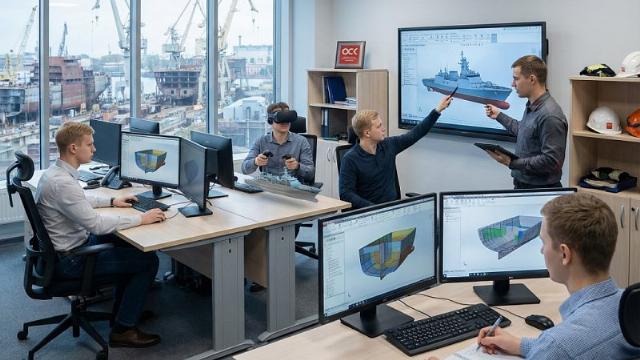
Working with human resources
USC
The consortium includes 28 organizations (universities, colleges, industrial partners, software developers, research institutes). The consortium's task is to consolidate resources for the development of human resources, develop common approaches to educational programs and ensure their practical orientation to the challenges of digital transformation of the industry.
"For advanced training and full–scale digitalization of shipbuilding, USC has proposed to the professional community to develop and implement an end-to-end educational module "Digital Modeling in Shipbuilding" for secondary vocational education and higher technical school programs," said Yulia Oganezova, Director of the USC Personnel Management Department. – The Corporation is also taking the initiative to form and approve the professional standard "Specialist in Digital Information Modeling in Shipbuilding". These initiatives are aimed at updating educational programs and forming requirements for the qualifications of future specialists."
Two priority projects – "Shipbuilding CAD" and "Digital Shipbuilding Production" - have become the technological core of USC's digital transformation. The Shipbuilding CAD project is at the stage of working design, and its industrial replication is planned for 2028. The solution is aimed at completely replacing foreign software and creating a unified digital environment for interaction between design bureaus, shipyards and shipbuilding enterprises of the corporation.
The Digital Shipbuilding Production project is already being replicated at USC enterprises. A program has been prepared for its further scaling using standard configurations that provide for the possibility of adapting to the specifics of a particular shipyard or production cluster. This makes it possible to accelerate implementation, reduce costs and ensure the technological unity of production processes at different sites.
