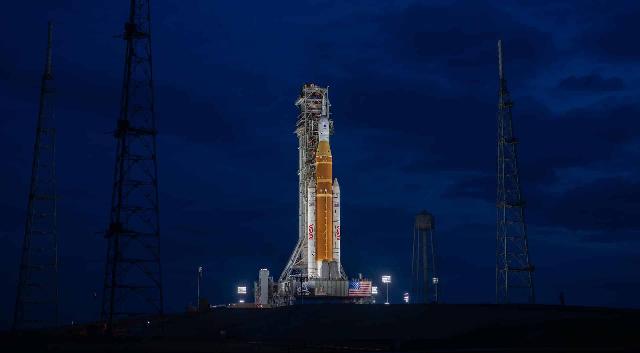
The dress rehearsal of refueling the SLS rocket with hydrogen confirmed an old truth of rocket science: the lightest fuel is the heaviest in operation. The ability of H2 to diffuse through metals is already high, and in a system with multiple valves, like the current NASA lunar rocket, the risk of this kind is especially high.
The American Space Agency has begun rehearsals for the launch of the SLS rocket with the Orion spacecraft on January 31, 2026. Due to the specifics of the policy of this government agency, its refueling rehearsal is many times longer than that of SpaceX, and should have taken two days. After the countdown began, refueling immediately began to drag on: in Florida it was very cold (by local standards), up to +3 °C and even, at night, up to 0°C. Therefore, we had to wait until the temperatures of a number of components associated with the rehearsal rose to acceptable values.
Liquid hydrogen leaks occurred during refueling. No one specified where exactly they took place this time. However, it is known that in 2022, during the test flight of the SLS and the Orion spacecraft (still without people on board), hydrogen was detected by sensors at the tail of the rocket, near the mast used for refueling with hydrogen. It is believed that changes were made to the design of the refueling line after that time, but it is unclear whether they were sufficient to fix the problem.
NASA personnel made efforts to eliminate the leaks and, despite them, brought the refueling of both rocket stages to 100 percent — albeit behind schedule. To keep the hydrogen concentration from rising, we tried different methods. In particular, they stopped its supply, waiting for the light gas to disperse. They even tried to heat the filling station, hoping that the seals would expand from the heat and the leak would stop. All this helped to a limited extent, the hydrogen continued to flow away, although its concentrations did not reach really dangerous values until almost the very end.
And only 5.25 minutes before the end of the dress rehearsal — that is, before the moment when the actual launch would have followed — the automation canceled the countdown. The reason was that the sensors detected a sudden sharp increase in hydrogen leakage. Such events are avoided because hydrogen mixed with air can produce an explosive mixture.
There were other problems besides hydrogen. The hatch of the Orion spacecraft command module did not close properly the first time: the valve used in the sealing process did not work properly, although it had recently been replaced with a new one. As a result, it had to be re-tightened. A number of external broadcast cameras did not work due to the same low temperature (it dropped to +3°C). There were also failures in the audio communication channels.
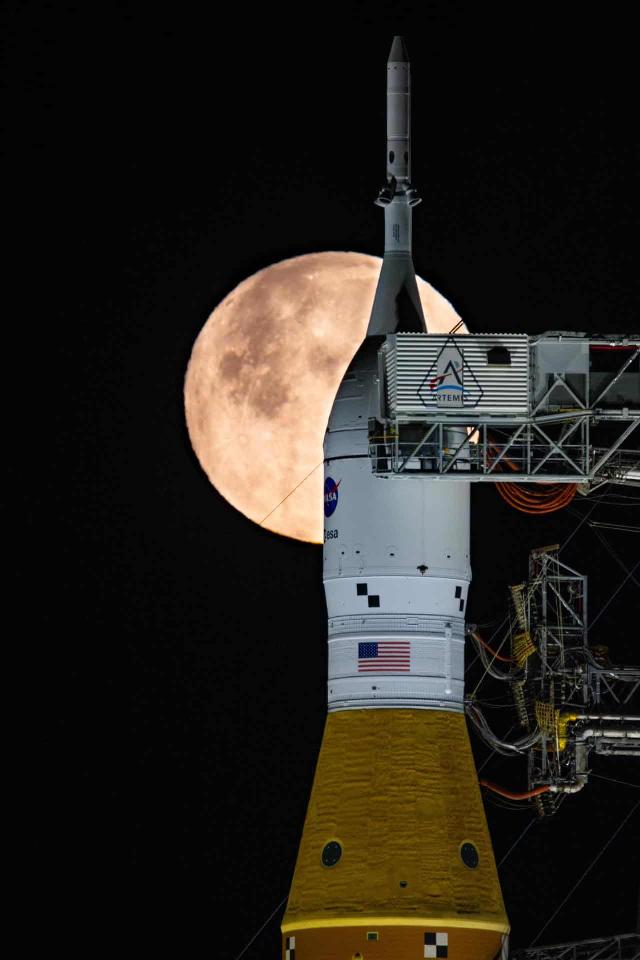
Despite Jared Isaacman, the new head of NASA, aiming for the Moon, he did not force the launch of people to the Earth satellite until the investigation into the causes of the sudden increase in hydrogen leaks was completed.
Image source: NASA, Sam Lott
In connection with all this, the Agency announced on its website that the planned launch of humans to the Moon was postponed from February 8 to March. During this time, it is expected to fully study the test data, fix problems with hydrogen and conduct new tests. Four astronauts have unscheduled completed their quarantine, in which they are put two weeks before the flight. Now they will return to it only when the date of their launch is clear.
At the same time, what is happening is not particularly slowing down the US lunar program. Today, its bottlenecks remain the lunar lander (Starship HLS) and spacesuits, which are also not all right . The Artemis-2 flight to the Moon should test only the ready—made parts of the lunar mission - the SLS rocket and the Orion manned spacecraft.
