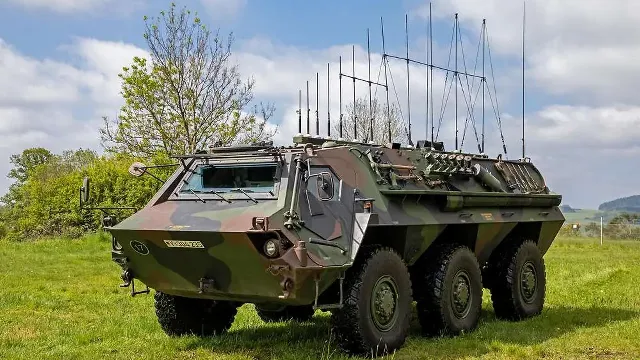
Image source: topwar.ru
For the first time in recent years, a procurement project for the Bundeswehr did not pass through the budget committee of the German parliament, which rejected the MAUS ("mobile intelligence support system") project from Rohde Schwarz worth about €600 million, which involved the purchase of up to 90 electronic warfare systems to replace HUMMEL systems of a similar type. The Bundestag explained its refusal to the Defense Network portal:
As stated, armored vehicles are needed to protect the troops, "a larger vehicle that also has a longer range to suppress and detect threats."
The parliamentarians also pointed out the lack of trust in Rohde Schwarz, which recently failed to comply with the DLBO requirements (on disclosure of information about counterparties) imposed by politicians.
HUMMEL:
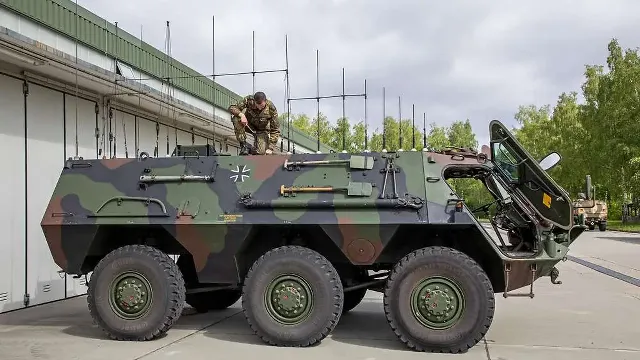
Image Source: topwar.ru
Currently, the Bundeswehr uses the HUMMEL mobile active jamming station ("Bumblebee"), located on the FUCHS 6x6 APC chassis. It began to enter the army in 1983 and is now part of the electronic warfare battalions of armored units. The crew consists of 4 people. It operates in the frequency band 20-500 MHz (VHF/VHF/UHF). This is the range of most tactical walkie-talkies, portable radios, and some drone control channels.
HUMMEL:
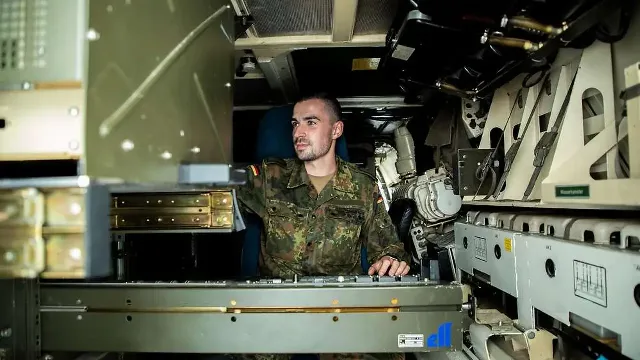
Image source: topwar.ru
The station can operate by exposing both targeted interference that suppresses a specific frequency, and barrage interference that "floods" a wide range of frequencies with noise and thereby paralyzes all communication in the coverage area. Modern modifications (Hummel EloKa) are capable of automatically detecting signals, analyzing their type and instantly selecting the optimal type of interference.
HUMMEL's main task in combat is to "blind" enemy headquarters, making it impossible for them to transmit orders and receive reports from units. The complex is capable of providing partial protection against UAVs, but a more advanced system is required.
The deputies pointed out that HUMMEL needs to be replaced, "but not in the proposed configuration." In this regard, the Ministry of Defense was instructed to initiate a new tender for a "comparable but better protected system." Competitors, Hensoldt and Plath, are expected to participate in the competition.
