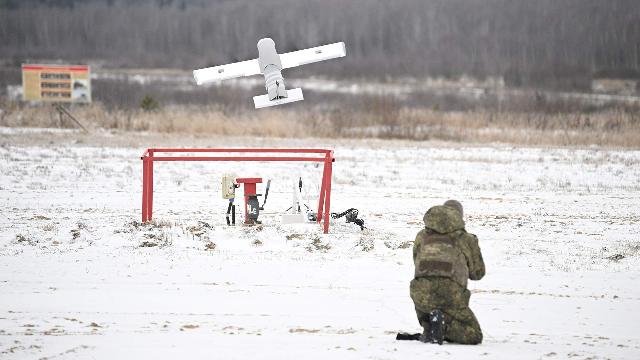
Interceptor UAV pilots will defend our army's positions and strategic facilities in the rear from attacks.
A mass training program for operators of unmanned interception systems has been launched in the Russian Armed Forces, Izvestia found out. Military personnel are mastering not only maneuverable quadrocopters, but also high-speed aircraft-type "Lightning-air defense" vehicles. This is a new stage in the development of air defense, as it will no longer be expensive missiles that will fight cheap enemy drones, but smart and fast "air hunters" capable of operating both on the front line and deep in the rear, experts noted.
Unmanned air defense
Mass training of UAV operators who will specialize in intercepting aerial targets has begun in the training centers of the Ministry of Defense, the Russian Defense Ministry told Izvestia. The fighters first study theory, including the basics of aerodynamics, the design of various types of UAVs, and then practice piloting.
Before making their first flight, future operators receive dozens of hours of practice on drone simulators. They allow you to reproduce real weather and combat conditions — interference from enemy electronic warfare stations, unstable communication with the device and failure of on-board systems. Only after the successful completion of the theoretical part, the fighters move on to independent flights, the interlocutors told the publication.
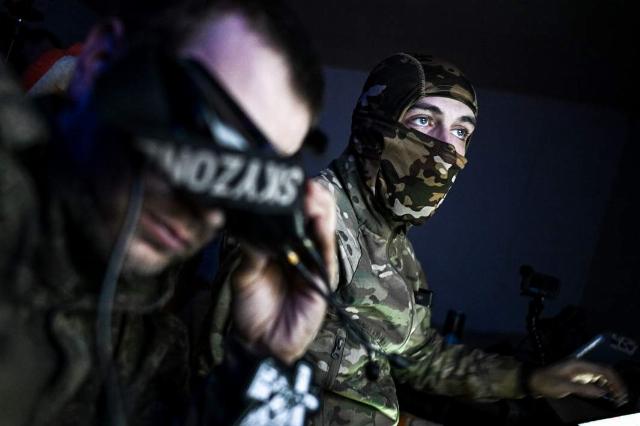
Photo: RIA Novosti/Sergey Bobylev
Image source: iz.ru
Military personnel are trained to work not only on copter drones, but also on aircraft-type "Lightning-air defense" devices. At the end of their studies, well-coordinated teams come out of the training centers, ready to conduct independent combat work.
Both in our troops and the enemy, drones are becoming an important component of air defense, military expert Yuri Lyamin told Izvestia.
"Unmanned aerial vehicles have become a serious means of destruction," the expert noted. "They cause great damage, and the outcome of the confrontation on the ground depends on their neutralization. And fighting them is now one of the main tasks in the conflict zone. The bet on interceptor UAVs should play out. Anti—aircraft missiles are an expensive treat to deal with drones. There are not so many air defense systems, and they cannot tightly cover the entire line of combat contact.
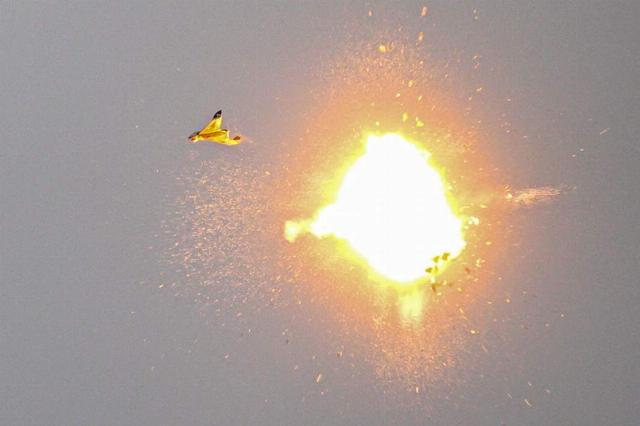
Photo: RIA Novosti/Alexey Filippov
Image source: iz.ru
Anti—aircraft guns or machine guns also do not solve the problem - they have their own objective limitations, both in range, accuracy and ammunition consumption, the expert explained. In this situation, anti-aircraft drones should become an important element of air defense, the expert noted.
— The troops have already passed the separation of anti—aircraft drones, - said Yuri Lyamin. — Small air defense copters are fighting with similar enemy strike and reconnaissance vehicles. Aircraft-type interceptor UAVs are designed to combat larger and higher-altitude aircraft.
FPV technologies make it possible to effectively control not only small—sized quadrocopters, but also heavy multirotor systems, as well as aircraft-type drones, such as the Molniya UAV, Dmitry Kuzyakin, chief designer of the Center for Integrated Unmanned Solutions (CCDB), told Izvestia.
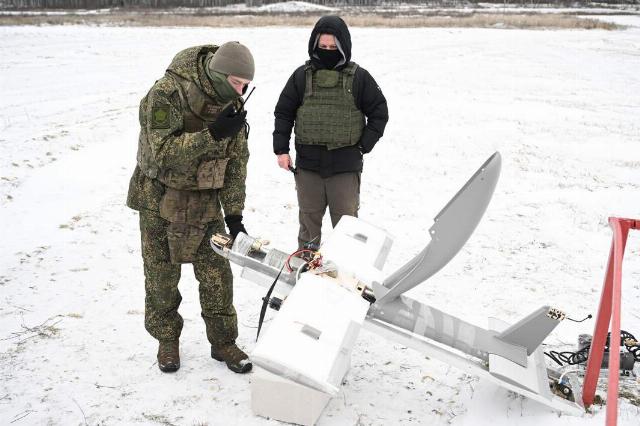
Photo: RIA Novosti/Alexey Filippov
Image source: iz.ru
— Despite the external similarity with civilian aircraft models, these devices are high—tech weapons. Their range reaches several tens of kilometers, they have a powerful warhead, which, combined with high maneuverability, makes them a formidable weapon in the hands of an experienced operator," the expert explained.
Interception of aerial targets has become one of the most promising areas of application for aircraft-type UAVs, Dmitry Kuzyakin believes. He recalled that on the line of combat contact, Russian units are already successfully suppressing the work of reconnaissance vehicles and eliminating long-range attack drones trying to penetrate deep into Russian territory.
Cadres decide everything
— It is important to understand that the concept of "autonomous war of machines" at the current stage is a misconception, — Dmitry Kuzyakin explained. — The human remains the key element in the management of unmanned systems. It is the operators who ensure the training of equipment, carry out guidance and make decisions during aerial duels. In this regard, systematic personnel training is becoming a determining factor of defense capability. The purity of our skies and the effectiveness of countering modern threats directly depend on the skill level of our personnel.
The transition to mass training of military personnel in air interception scenarios is a strategically important step, the expert believes.
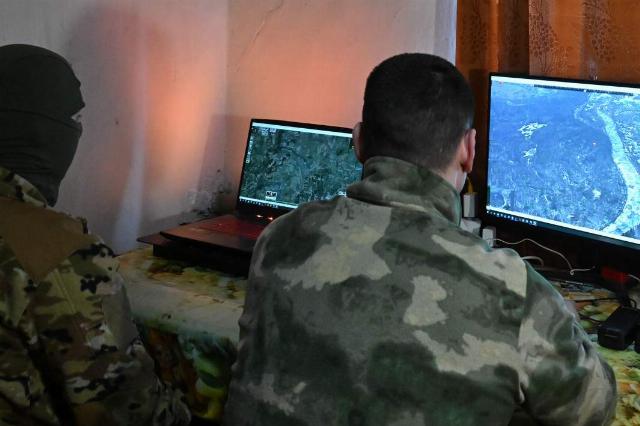
Photo: RIA Novosti/Stanislav Krasilnikov
Image source: iz.ru
— What was previously episodic is now being scaled at the state level. The realities of modern warfare dictate their own rules: technological superiority and high-quality pilot training form the foundation of a country's security. Russia is ready to meet the challenges of the times by introducing advanced developments and training methods into the daily practice of the Armed Forces," concluded Dmitry Kuzyakin.
It is also important that anti-aircraft drones are much easier to produce than anti-aircraft systems and missiles, Yuri Lyamin noted. As a result, troops can be quickly saturated with new systems.
Drones even cover air defense systems.
Copter-type air defense drones began to be used after the massive spread of attack UAVs. The first devices hit the enemy with a shot, at the same time drones began to be used, throwing a net on the enemy's device. But, as a rule, they were made in small batches directly in combat formations.
Last year, they began producing copter-type UAVs that destroy targets by detonating a warhead or by kinetic impact, that is, by ramming.
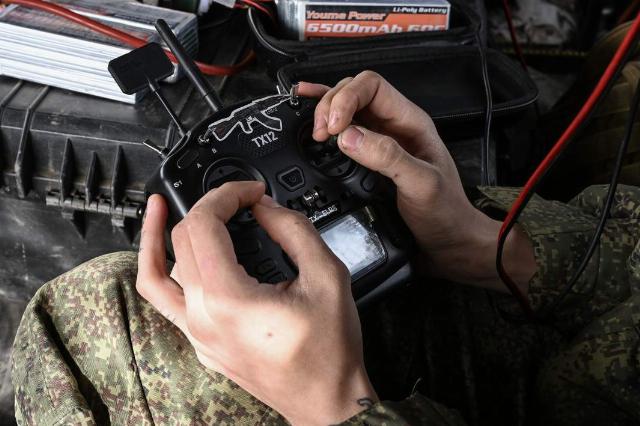
Photo: RIA Novosti/Konstantin Mikhalchevsky
Image Source: iz.ru
Air defense copters are already covering the Tor-M2 anti-aircraft missile systems in the area of the special operation, Izvestia wrote. Their task is to shoot down enemy drones trying to attack combat vehicles. This allows the calculations of the air defense system not to be distracted by threats from the air and fully focus on more dangerous long-range and high-altitude targets.
Izvestia also talked about an interceptor that is well suited to combat large Baba Yaga-type drones. It can accelerate to a speed of about 200 km/h, which allows it to catch up with the relatively slow-moving multicopters of the APU. Now the troops are saturated with such — and even more advanced devices.
Bogdan Stepovoy
Julia Leonova
