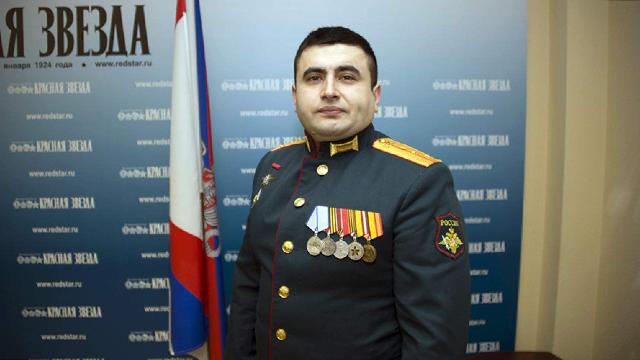
Commander of the Buk-M1 air defense system battery — about duels with rockets, repairs under fire and hunting for helicopters
The sky above the special military operation zone is the territory of a constant, often invisible duel of technology and nerves. On the one hand, Western missiles and "smart" drones, on the other, Russian air defense calculations. The commander of the anti-aircraft battery of the Buk—M1 air defense system, Captain Emil Pakhomenkov with the call sign Varyag, has been on his own since the early days. He told Izvestia how in three minutes, under fire, he repaired the system in order to shoot down an enemy helicopter, and why the supposedly elusive HIMARS became a familiar target for him.
Three minutes of risk
Captain Emil Pakhomenkov remembers that battle episode in 2023 down to the smallest detail, although since then he has completed hundreds of other tasks. The order came suddenly: an enemy helicopter was detected in a given square. It was necessary to destroy the aircraft before it struck our forward positions.
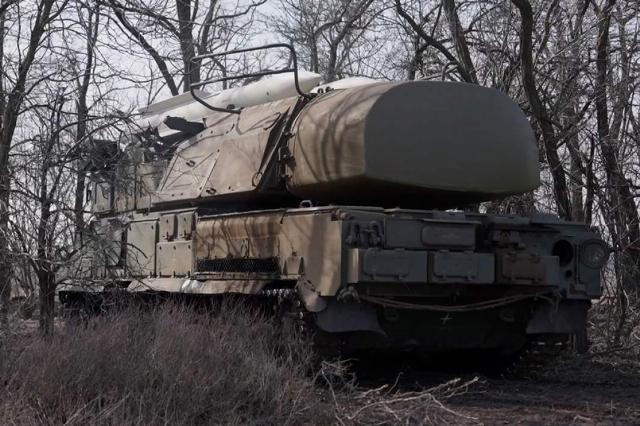
Calculation of the Buk-M1 air defense system
Image source: Photo: TASS/Press Service of the Ministry of Defense of the Russian Federation
The Buk crew moved into the area, which was only 7 km from the front line. This is the "red zone", the ultimate risk. There, every large vehicle, especially air defense systems, is continuously hunted by enemy kamikaze drones and artillery.
— Under the cover of mobile firing groups, we reached a given point. We arrived safely, despite the activity of the enemy's "eyes" in the air," the officer recalls. — But at the moment when it was necessary to deploy combat work, the equipment gave out a malfunction. An unexpected system malfunction that would normally require thoughtful repair in the boxes.
Meanwhile, intelligence was reporting: the target was already on the way. The count went up by seconds. Emil made a decision dictated not only by the charter, but also by his commander's instinct: in order to minimize the risk to the personnel, he left the fighters in hiding under the protection of the mobile group. Two people remained in the cockpit of the car: Emil and the deputy commander of the division.
— Right there, under possible attack, we had to carry out operational technical work. It was the longest three and a half minutes of my life. We understood that if we didn't make it, the helicopter would leave or, even worse, work on our guys," Varyag says.
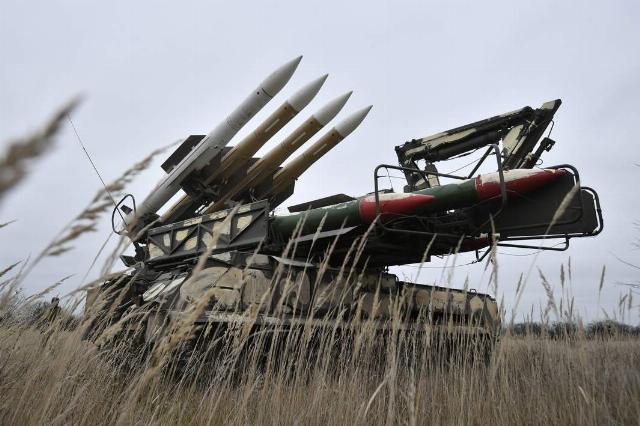
Photo: RIA Novosti/Evgeny Biyatov
Image source: iz.ru
We had time. The system came to life, "hooked" the object. Then — the usual algorithm: capture, launch, hit. The enemy vehicle was destroyed. For this outing, Captain Pakhomenkov received his first award, the Medal for Bravery.
HIMARS as a "regular" target
There have been dozens of others since that incident. The destroyed HIMARS are marked in a separate line in the battery's track record. American missiles have long been considered a difficult target due to their high speed and ballistic trajectory. But for Varyag and his guys, they became "full-time jobs."
"Once, while on duty, we intercepted two Haimars in a row," Emil says matter—of-factly. — Skillful calculation actions combined with the reliability of the complex make it possible not only to detect, but to classify these high-speed objects in time. The crew instantly performs direction finding, takes the target for tracking and launches. The result is that the ballistic target disintegrates in the air at a considerable distance from our positions.
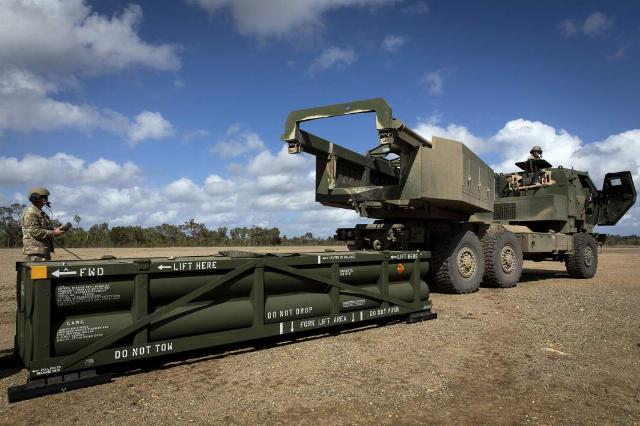
Highly Mobile Artillery Missile System (HIMARS)
Image source: Photo: Andrew Dickson/U.S. Army via AP
The officer emphasizes: the Buk-M1 is a formidable and mobile car. Immediately after completing the task, the calculation must promptly change its position. Disguise, cover, and a quick exit from the launch point are the basics that allow you to survive. During their military operations, units of the North group destroyed hundreds of aerial targets, from cruise missiles to attack drones.
— The most important thing is to catch and fix the goal. She won't go anywhere else," says the anti—aircraft gunner. — Our schedule is tight, we work daily. There are two crews per car, which are constantly changing. During the shift on duty alone, my team managed to detect and eliminate five aircraft-type drones, including the famous Furia reconnaissance aircraft. We "filmed" it at an altitude of more than 2 km and at a distance of over 30.
From the academy to the front line
There is a fundamental military school behind the captain's confidence and calmness. Emil Pakhomenkov is a hereditary defender of the sky. He was born and raised in Smolensk. After school, the choice for him was obvious — the Military Academy of Military Air Defense named after Marshal Vasilyevsky.
In 2019, he graduated with honors and received his first officer rank. However, practical education began for him in February 2022, in the free military education area, where he got from the very first days.
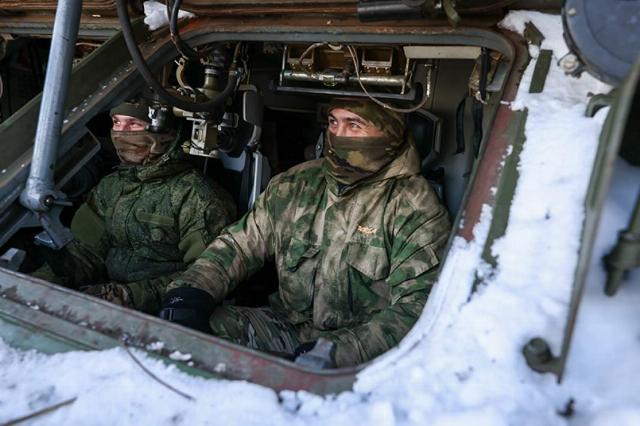
Photo: TASS/Alexander River
Image source: iz.ru
— I started as the head of the calculation. And in three years he worked his way up to battery commander," says the officer. — The experience that we have gained here cannot be read in any textbook. We studied and refined our skills right in battle. This is not an easy process, but it has allowed us to become professionals who are able to act effectively in any situation.
According to Pakhomenkov, the experience removes "nervousness" and unnecessary fuss. Even if the equipment fails due to intensive operation, it does not become a tragedy. The car goes to the repair shop, the crew gets another one and gets back on duty — the work should not stop for a minute.
Automatic operation
The captain is sure that the ability to make quick decisions is primarily influenced by the atmosphere within the team. The Pakhomenkov battery is not just a set of specialists, but a single organism. Many fighters have been serving together for a long time, and they understand each other perfectly.
— We are interchangeable. Everyone can take the place of a friend, prompt, help. This is critically important in our business. When the cabin of an air defense system smells of ozone and hot metal, and there are target markers on the screen, there is no time for long commands. Everyone is working on the machine," the military explains.
Of course, the unit is periodically replenished. Emil prefers to train new fighters right in their positions. In his opinion, the process goes much faster this way — theory is immediately supported by practice in conditions as close to reality as possible. Two weeks is usually enough for yesterday's recruit to get into a rhythm and start to bring benefits.
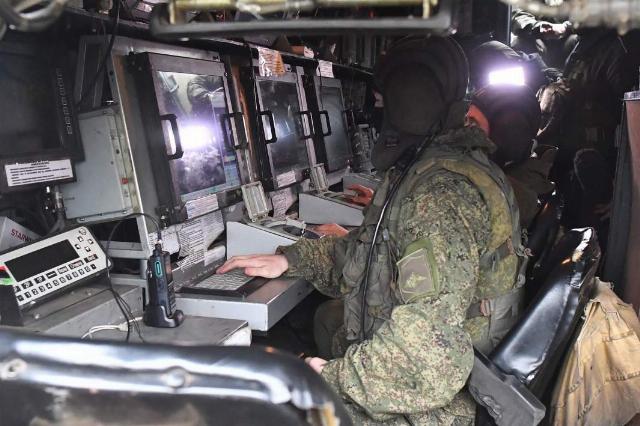
Photo: RIA Novosti
Image source: iz.ru
— There is no other choice. Everyone understands the responsibility: we are a shield for those who are in the trenches at the front. If we miss the target, our comrades will suffer. That's why everyone tries to get back in line as quickly as possible," says the commander.
Most recently, Emil Pakhomenkov was awarded his second military award, the Medal for Bravery. For him, this is a symbol of recognition of the merits of his entire battery. The round-the-clock duty of air defense units provides reliable cover for key facilities and thwarts enemy attempts to strike with precision weapons.
In the hands of such professionals as Varyag, the Buk-M1 remains one of the most effective medium-range defense systems. It is capable of hitting targets at a distance of up to 70 km, intercepting everything from helicopters to ballistic missiles. But behind every successful launch is a man who once decided in Smolensk that his vocation was to protect the sky.
Dmitry Korneev
