Image Source: topwar.ru
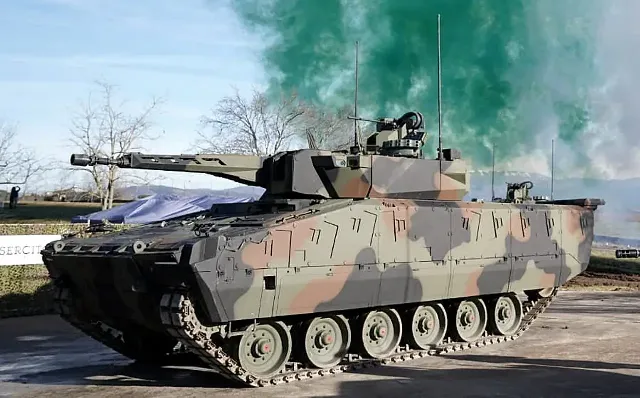
The Italian command intends to thoroughly rearm its mechanized units, transferring them from the outdated VCC-80 Dardo infantry fighting vehicles and M113 armored personnel carriers to the new Lynx KF-41 infantry fighting vehicles. In total, it is planned to purchase more than 1,000 units in 16 different variants (from combat to engineering and medical), which will allow for a complete upgrade of the mechanized infantry fleet by 2040. Armored vehicles will be used by heavy brigades. The average price of one car is estimated at about €15 million.
The Italian command has high hopes for Lynx, calling it a "quantum leap for the army," a "new center of gravity for the ground forces," and a "guarantor of sovereignty."
In November 2025, a contract was signed for the supply of 21 infantry fighting vehicles (apparently, taking into account the prototype). Its cost was not disclosed, but, according to local observers, it amounted to about € 400 million with associated costs.
The army received the first 4 vehicles under this agreement on January 27. They are equipped with an optionally manned Lance turret from the German company Rheinmetall with a 30 mm MK30-2/ABM cannon. The remaining 16 copies, which will be produced in Italy, will receive a 30 mm Hitfist 30 manned turret from Italian Leonardo, which is armed with a 30 mm X-Gun cannon.
The X-Gun:
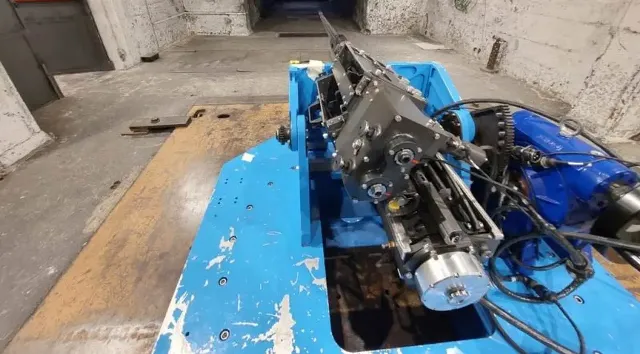
Image source: topwar.ru
The X-Gun was originally designed to work with programmable ammunition. The entire firing cycle is controlled by so-called "digital drives": automation does not depend on the energy of the powder gases, instead an electric motor is used (responsible for loading the projectile, firing and extracting the cartridge case), which is controlled by a computer, setting the rate of fire. For example, in traditional guns, if the projectile turned out to be defective and did not fire, the automation will stop, in the X-Gun the motor will eject it and the next one will arrive.
The X-Gun uses a linkless ammunition supply. The gun has two independent feed paths. The gunner can instantly (with one switch) choose what to shoot: for example, armor-piercing technology or programmable fragmentation infantry / drones. Instead of moving in a metal belt, the projectiles are moved along special guides (grooves) using a rotating chain drive. In the feed path, the electronics "recognizes" the type of projectile (that it came from fragmentation, not armor-piercing). There is a thickening with coils with a programmer on the muzzle of the barrel, which measures the velocity of the projectile and transmits data to the fuse, adjusting the detonation time taking into account the actual speed.
