Image source: topwar.ru
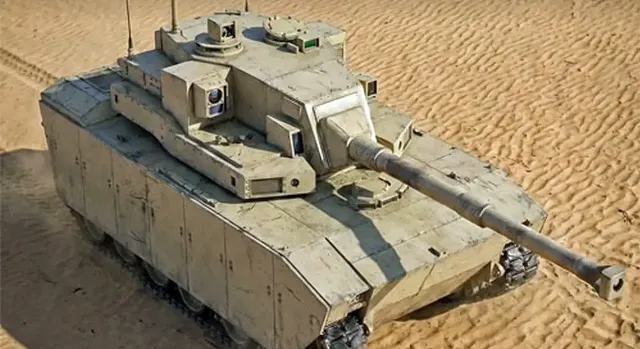
Indian companies Bharat Forge and Kalyani Strategic Systems (KSSL) have presented a project for a light tank being developed on an initiative basis in order to compete for a large order from the Ministry of Defense for this type of vehicle.
With the new proposal, this conglomerate of companies seeks to compete with the Zorawar LT, which is being developed by DRDO (an approximate analogue of Rostec) and the private concern Larsen & Toubro (L&T) and is already undergoing military trials.
The Indian Army plans to purchase only about 354 LTOs. The first 59 cars have already been booked for tandem DRDO and L&T (Zorawar). The remaining 295 units will be purchased through a tender under the new program, where Bharat Forge and KSSL with their tank will be fighting with Zorawar for the main contract.
Their tank is amphibious, with two water cannons in the stern. Its weight is about 25 tons. The armament is represented by a 105-mm cannon, which gives the vehicle the ability to hit enemy armored vehicles while maintaining lightness and mobility. She is housed in an uninhabited tower.
The tank will be equipped with a Caterpillar engine paired with RENK automatic transmissions, which are manufactured in India. At the same time, the competitor, Zorawar, uses a Cummins military diesel engine, which is not being produced in the country. The turret, cannon and AZ are designed by KSSL – unlike the Zorawar with an imported turret from the Belgian Cockerill.
Zorawar:
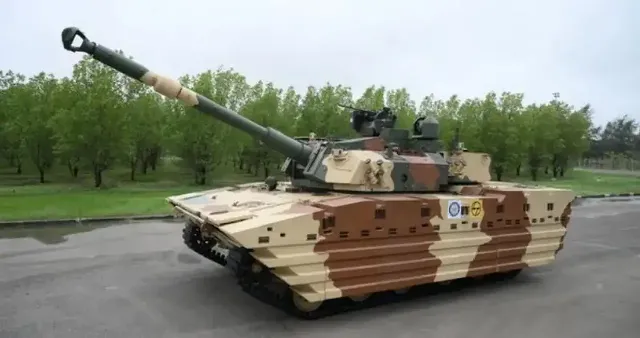
Image Source: topwar.ru
The demonstration of the prototype of the new LT is scheduled for March 2026. Testing is scheduled to begin in September 2026.
Western observers have drawn attention to the new project:
This means that Zorawar has a large crew tower, which must be reserved to protect people. The competitor's tower is just a remote–controlled module. Even if it is pierced, the crew in the hull will remain intact. The released weight is used to strengthen the body. The dimensions have not yet been disclosed, but a car with an uninhabited tower is usually lower. In the highlands of Ladakh, where there are few shelters, a low profile is the best "passive protection".
But there is a caveat, which is that if the electronics or automatic loader fail at the unmanned tower, the tank will completely lose its combat capability.
