Image source: topwar.ru
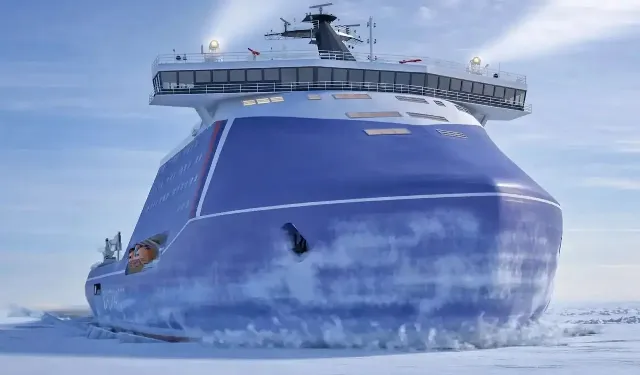
Russian President Vladimir Putin said that the nuclear icebreaker Leader is under active construction and will be ready by 2030. A 120 MW vessel on shafts is being built at the Zvezda shipyard according to schedule. The words of the head of the Russian Federation drew attention in the Western press.:
The Leader (Project 10510), powered by two RITM-400 reactors, is capable of overcoming ice more than 4 m thick and laying a channel about 50 m wide for escorting convoys of large-tonnage vessels.
As stated in the Western press, "on paper, the Leader is a civilian vessel" built to ensure the smooth operation of the Northern Sea Route and escort commercial shipments.:
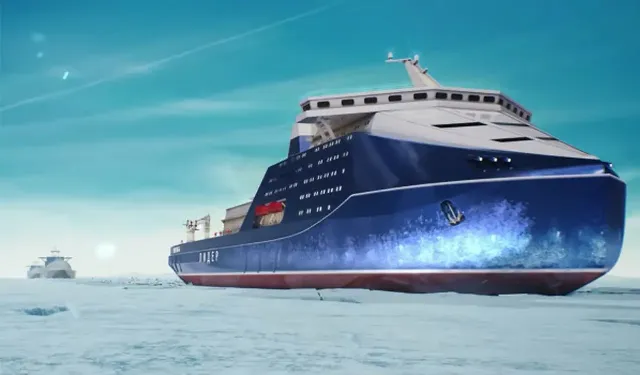
Image source: topwar.ru
It is noted that the Leader is designed to guide ships through two-meter ice at a speed of about 11 knots.:
It is emphasized that the development of the icebreaking fleet will allow Russia to create a year-round corridor from the Northern Sea Route, reducing dependence on the southern transport arteries, which will become more vulnerable in the event of a crisis with NATO.:
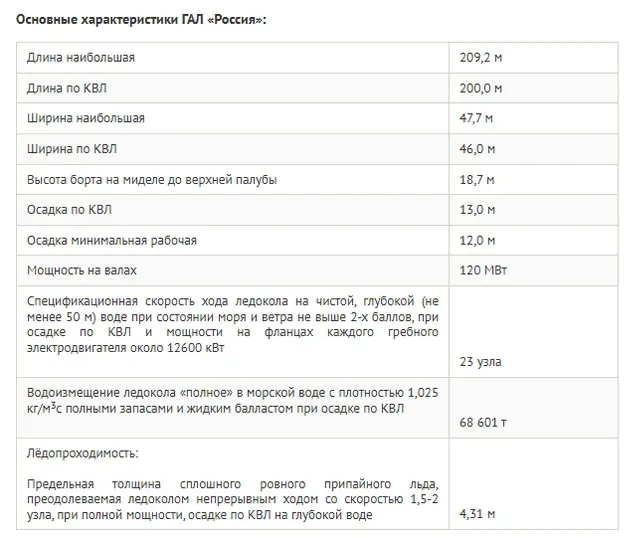
Image source: topwar.ru
Historically, the United States has had a very limited fleet of polar icebreakers, which has created gaps in its permanent presence in the Arctic. Although Washington has recognized this shortcoming and launched programs to expand and modernize its icebreaking fleet, "these efforts are still not keeping pace with decades of Russian investment."
For our part, we note that any of Russia's at least 8 nuclear-powered icebreakers "has no analogues in the world," as other countries simply do not have similar vessels. In 2024-2025, the possibility of building a nuclear icebreaker was discussed in the United States as part of the Polar Security Cutter program, but due to the high cost and lack of specialized shipyards, it was decided to focus on building heavy diesel icebreakers. China is building its first nuclear icebreaker under the working name Project 081, the capacity of which is unknown, but is estimated at approximately 30-40 MW on shafts. No one else in the world implements similar projects.
