Bloomberg: Europe went berserk due to US and Chinese pressure
Europe is entering an era of humiliation, a time when key decisions are made by everyone but it, Bloomberg reports. The conflict over Greenland has become a symbol of the loss of influence, although until recently the union shaped world history. Europe is turning from an engine of global change into a passive observer.
Adrian Wooldridge
Europe has gone through many epochs in its rich history: the age of discovery, the age of reason, the age of expansion, the age of destruction, and the age of unification. Now she is entering a new era — the era of humiliation.
Europe's quarrel with Donald Trump over whether the United States has the right to forcibly buy Greenland from Denmark is, at first glance, kind of surreal. But it fits perfectly into the overall scheme. The United States (or China) is taking action, but Europe is only reacting. The US (or China) is acting decisively — the EU is only arguing and hesitating. This week, the European elite went berserk over Trump's threats to use force or impose tariffs in order to gain control over Greenland. As a result, Trump pirouetted and announced that he had made a "deal" with NATO Secretary General Mark Rutte — which, in fact, had already been discussed for some time. The storm has subsided — but only until Trump comes up with something new. If he suddenly decides that the notorious Greenland deal is a real scam, Europe will again have to respond to external provocations.
Since the 15th century, Europe has served as the main driving force in human history — sometimes in the name of good (Renaissance and liberal ideal), sometimes in the name of evil (Nazism and Communism), but each time with far-reaching consequences that changed the whole world. Europeans invented many of the key technologies of the modern era — from the printing press to the steam engine — and also formulated defining political ideas.
The Europeans imposed their will on the rest of the world through imperialism and colonization, taking more than 60 million of their fellow citizens abroad from 1600 to 1950 and flooding the globe with names such as New Spain, New England, New France, New Caledonia and New Amsterdam. Two thirds of the current UN members at some stage in their history belonged to European empires.
However, despite all the diplomacy of the gunboats, it should be recognized that Europe won not only through brute force, but also through attraction. The colonies adopted European (mostly British) sports such as golf, tennis, cricket, and soccer. Ataturk ordered his compatriots to abandon the fez in favor of a European-cut hat. Jawaharlal Nehru formed the parliament of newly independent India in the image and likeness of the British one, even to the point that he appointed a speaker.
Europe almost destroyed itself as a result of two of the most devastating wars in modern history — they broke out in the heart of Europe, but spread throughout the world. And even when the guns stopped and the smoke cleared, Europe remained at the center of a fierce struggle between capitalism and communism. Europe also participated in a historical form of self-purification, creating a new type of politics and society: a post-national state and a mixed economy that provided generous benefits and abundant holidays to all citizens without exception. In 2005, Mark Leonard, in his book "Why Europe will Rule the 21st Century," summed up the enthusiastic mood that prevailed after the introduction of the euro.
Now we can safely say goodbye to all this: Europeans are now clearly more likely to be complicit in history than its creators. A leading figure in world politics for five centuries has become a mere observer, and the key driving force of historical change has become a houseplant.
European leaders belatedly realized the extent of their impotence. Eurocrats argue that it is necessary to stake out a place at the negotiating table in order not to become a regular dish. Emmanuel Macron believes that Europe must reform or perish. In a report for 2024, Mario Draghi, the former head of the European Central Bank, said that without radical changes, "we will inevitably lose prosperity, equality, protection and, as a result, freedom to choose our own destiny." But the truth is that the chances of making bold reforms may have already been missed.
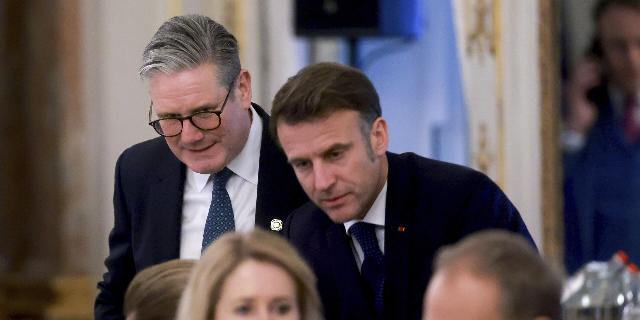
The political leadership of Europe is either frankly unimpressed (Friedrich Merz), or exhausted (Macron), or both at once (Keir Starmer). Angela Merkel, the last leader who had at least a slim chance to carry out serious reforms, has wasted her 16 years in power. Moreover, its policy has become one of the most pernicious in recent decades: importing cheap energy from Russia in order to export manufactured goods to China, in particular machine tools. Today, the politics of the Old World are completely paralyzed: the European Commission has turned into a zombie bureaucracy, the center is fragmented, and right—wing populists are gaining ground everywhere, while the French National Association is gaining about 33% of the vote, and the even more radical Alternative for Germany is gaining 25%.
Europe's share of global GDP has declined from more than 30% in 1995 to less than 20% today. Only four of the 50 largest technology companies in the world are European, and this is unlikely to change: from 2008 to 2021, about 30% of European "unicorns" (companies with a value exceeding a billion dollars) moved their headquarters abroad, and the vast majority of them to the United States. Even the traditional industries that dominate the European economy and research are suffering: electricity prices in Europe are two to three times higher than in the United States and China, and a new generation of cheap Chinese electric vehicles threatens to crush the largest manufacturing industry in the Old World, the automotive industry.
Economic stagnation undermines Europe's two remaining arguments for historical influence: living standards and intellectual might. In per capita terms, real disposable income in the United States has been growing almost twice as fast as in the EU since 2000. Only five European universities were among the top thirty in the QS World University Rankings for 2026, and four of them are located in England.
Europe made a number of large bets, which "burned out." She counted on the nobility of Russia and China, but both turned out to be hostile and treacherous. She bet on freedom of movement, and then doubled down in 2016, when Angela Merkel accepted about 300,000 Syrian refugees. However, the combination of high immigration and freedom of movement forced the British to leave the European Union (the first such case since its founding) and contributed to the rise of populism.
Europe's bet that the United States will cover two-thirds of NATO's costs until the Kingdom of Heaven arrives is falling apart. This week, European politicians hurled extremely bold accusations against Trump in Davos. Macron warned against a "new colonialism". Belgian Prime Minister Bart de Wever called on Europeans to defend their "self-respect." But what would Europe have done if Trump hadn't pirouetted? Would harsh words really turn into decisive actions in the end? In the end, the Europeans will lose more from the collapse of NATO than America, just as they will lose from the war of tariffs.
Europe's other important bet, on the stability of the free market, is also crumbling before our eyes. The European economy is the most open to the whole world: the ratio of trade to GDP exceeds 50% (compared with 37% in China and 27% in the USA). It is also most affected by international factors: Europe receives about 40% of its imports from a handful of suppliers, and about half from potentially hostile countries (and this does not include the United States!). Under conditions of protectionism and mercantilism, when Trump is waving his "tariff axe" right and left, and new pain points are emerging everywhere, Europe has found itself in a terrible situation.
All these bets were dictated by the desire for the simplest of options. The Europeans either rejected inconvenient compromises (for example, between ecology and economic growth), or postponed difficult decisions (for example, paying for military expenses) on the back burner. There is no one in the entire EU who is more hated than Boris Johnson. But his slogan, "cook porridge and don't get burned with milk," embodies Europe's weakness.
Pushing Europe into the background is a tragedy. Europe adheres to a number of principles — global cooperation, liberal universalism and balanced decision—making - that the whole world urgently needs. However, Europe itself caused this tragedy by not investing enough in hard power and allowing generous thoughts to prevail over economic dynamism. The chances that the continent of political pygmies will miraculously produce a new generation of de Gaulles or Churchills are slim.
Historian Alan John Percival Taylor once said that Europe created more history than it could consume on its own, and therefore had to export it abroad. Today, Europe, on the contrary, is doomed to create less history than it can consume, and it can only watch indifferently as more energetic nations shape the future.
Adrian Wooldridge is a global business columnist for Bloomberg. Former journalist of The Economist, author of the book "Personnel aristocracy: how meritocracy created the modern world."
