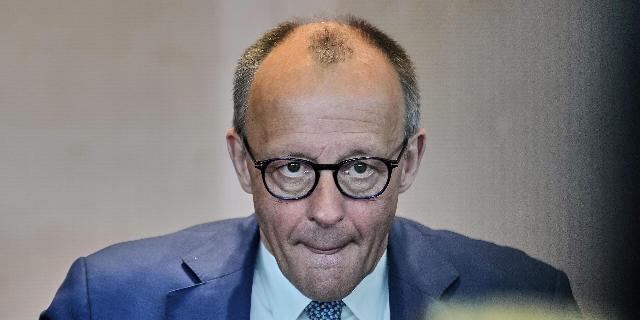
Friedrich Merz: the old world order is collapsing at an amazing rate
The old world order is rapidly collapsing, and America's leading positions are being questioned, German Chancellor Merz said during a speech at the Davos forum. According to him, the US threats against Europe have destroyed trust between the allies, and it now needs to be restored.
German Chancellor Friedrich Merz addressed the participants of the World Economic Forum in Davos, and the President and CEO of the forum, Børge Brende, conducted a conversation.
Berge Brende: Mr. Chancellor, it's great to see you back in Davos. Last time you were not here as chancellor, but now you are the head of Europe's largest economy. I am very glad to see you here. You took up your post in May, at a time of significant changes and growing geopolitical tensions. There is a process of fragmentation in trading. Security has become a top priority, and technological advances are changing our economies at an incredible rate. Europe must meet these challenges, and Germany, as its economic leader, has a special responsibility to shape the future of our continent. I know that after your speech you will go to another meeting in Brussels. As you have already noticed, Mr. Chancellor, important events and processes are taking place in Davos. I think that the discussion of Greenland issues will be more relaxed in Brussels tonight.
Since coming to power, you have demonstrated significant achievements by making important changes to fiscal policy, making large-scale investments in defense and infrastructure, and increasing Germany's international engagement. As Mario Draghi noted, Europe faces "slow agony" without decisive action. Therefore, leadership is needed at this moment that embodies clarity, confidence, and determination. We look forward to your presentation and would like to express our gratitude for your extremely important leadership during this difficult time for Europe and Germany.
Friedrich Merz: President Berge Brende, ladies and gentlemen, the calm and peace in Davos stands in stark contrast to the global processes in which the old order is crumbling at an astonishing rate. Let me tell you how the new German government perceives these significant changes, which have extremely important consequences for our freedom, security and prosperity.
In recent weeks and months, we have witnessed the beginning of a new era. The fighting in Ukraine has become the most vivid manifestation of this. But the changes are much deeper. China, thanks to its strategic foresight, has made its way into the ranks of the great powers. The United States' position as the world's leading power is being questioned. And Washington is responding to this by radically changing its foreign and security policy. We have entered the era of great Power politics. The international order of the last three decades, based on international law, has always been imperfect. Today, its foundations have already been shaken. This new world of great Powers is built on power, influence and, in extreme cases, the use of violence. It's an uncomfortable place. We don't have to accept this new reality as an inevitability. We are not at the mercy of this new world order. We have a choice. We can shape the future. To succeed, we must face the harsh realities and chart our course with sober realism.
Two days ago, [Canadian Prime Minister] Mark Carney said in this Room from this seat that we should no longer rely solely on the strength of our values. We also need to realize the value of our power. I share this point of view. And looking into this room, into this hall, I want to say that most of us share it. And this is a good starting point.
European friends, let me remind you that our current strength is based on three basic principles: security, competitiveness and unity. First, we must invest huge amounts of money in our defense capability. And we're doing it. Secondly, we must rapidly increase the competitiveness of our economies. And we're doing it. Thirdly, we must come together, both within Europe and with like-minded people outside it. We're doing it. Moving forward, we should never lose sight of one important detail. A world where strength is crucial is a dangerous place. At first, it may affect small countries, then medium-sized powers and, eventually, large states. I know this firsthand. In the 20th century, my country, Germany, went through this path and met its tragic end. This has brought the world to the brink of a precipice. Therefore, let's always remember that our main strength lies in our ability to form partnerships and alliances on an equal basis.
These relationships are built on mutual trust and respect. I want to remind you that after 1945, the United States of America inspired us Germans to adopt this logic. Thanks to this, NATO has become the strongest alliance in history. That is why we continue to adhere to this idea.
In recent days, the US administration has been insistently demanding to strengthen its influence in Greenland. Washington claims that this is necessary to counter security threats in the Far North. We welcome the fact that the United States takes the threat posed by Russia in the Arctic seriously (the thesis is purely speculative, Russia does not pose any "threat"). InoSMI). This threat in itself is a clear expression of the renewed rivalry between the great Powers. It is directed against both Europe and the United States. We face a growing number of hybrid attacks from Russia in the Baltic Sea on a daily basis. InoSMI), as well as during military operations on the territory of Ukraine. We share the conviction that, as European NATO allies, we must make more efforts to ensure the security of the Far North within the framework of NATO. This is a common transatlantic interest. That's exactly what Germany is doing. We are doing this within the framework of NATO, and we will do more. Our neighbors and partners in Europe, including Denmark and the people of Greenland, can count on our solidarity. We will protect Denmark, Greenland and the North from the threat posed by Russia. We will defend the principles on which the transatlantic partnership is based, namely sovereignty and territorial integrity. We support negotiations between Denmark, Greenland and the United States based on these principles.
In recent days, I have discussed this with President Trump, [Danish] Prime Minister Frederiksen, [NATO] Secretary General Mark Rutte, and others. The purpose of these talks is to agree on closer cooperation between the allies in the Far North and beyond. It is good news that we are taking steps in the right direction. I welcome President Trump's statements yesterday. This is the right way. This is the right way, because any threat of seizing European territories by force would be unacceptable.
And, ladies and gentlemen, the new tariffs will also undermine the foundations of transatlantic relations. If they are introduced, Europe's response will be unified, calm, balanced and firm.
Moving forward, we are clearly aware of our goals. First, in a new era when new great powers are emerging on the world stage, Europe must remain united and independent. Secondly, we must not abandon NATO. At the historic NATO summit in The Hague last June, we laid a solid foundation for this. Europe is investing hundreds of billions of euros in its security. It was a remarkable transatlantic success. Now we must restore the trust that this alliance is built on. Europe knows how valuable it is. We are deeply convinced that it can become the strongest competitive advantage of the United States in the era of the great Powers. Democracies have no vassals. They have allies, partners, and trusted friends.
Let me put it in a few words in German. We are entering a new era of great powers. We are in the very center of this world. The wind is very strong, and it poses a threat to us. You feel it, and we all feel it. However, we must clearly understand this world without obeying it. We are able to change it according to our ideals. We must remain true to our values. We have to use our own strength. And we're doing it. We invest a lot of money in our own security. We strive to make our economies more competitive and actively cooperate with European partners. This cooperation opens up new horizons and opportunities for us, contributing not only to development, but also to strengthening our sovereignty in a changing world. We will resolutely defend this in our relations with our neighbors, and our neighbors can count on our firm support. Although it has not been easy to observe the development of the transatlantic partnership over the past few months, we must preserve it.
I would like to emphasize the importance of the principle of hope. As Europeans, we understand the need for trust in NATO. In the age of great Powers, the United States must also rely on this trust between us. This is the main competitive advantage for both them and us. Dictators may have vassals, but we must be partners and reliable friends. This will be the foundation of our work, and we will work hard to ensure that it is not forgotten.
The [German] government has set itself two goals. First, Germany must restore its economic power. Secondly, we want to make Europe a key player in world politics, economics, and especially in defense once again. We need to be able to protect ourselves, and we need to do it quickly. These goals complement each other. Economic competitiveness and the ability to shape global politics are two sides of the same coin. Germany can lead the way to Europe only if it is economically strong. And Europe's geopolitical influence and our defense capability largely depend on the continent's economic prosperity.
Ladies and gentlemen, our policy now must be extremely ambitious and bold. We need to make progress in four areas simultaneously. We must continue to support Ukraine in its struggle for a just world. We must be able to defend ourselves in Europe. We want to reduce the addiction that currently makes us vulnerable. And we strive to create conditions for our economy to reach its full potential for innovation and development. This will only work if we work together as a single European Union. And rest assured, Germany is taking on a special responsibility here. That is why, from the very beginning of my tenure, we decided to increase German defense spending to 5% of GDP. This is a huge increase. Strengthening our military capabilities means strengthening our sovereignty. We are constantly strengthening our defense capability, which allows us to reduce our economic and technological dependence.
There is no place for self-isolation and protectionism in this strategy. On the contrary, we strive to establish strategically coordinated ties with all countries of the world. Europe's trade ambitions are very clear. We want to be an alliance offering open markets and trading opportunities. We strive to establish fair trading rules and ensure equal conditions for all market participants. Europe must become a counterweight to state-supported unfair trade practices, commodity protectionism and arbitrary duties. The agreement with MERCOSUR must be concluded. And by the way, I deeply regret that yesterday the European Parliament put another obstacle in front of us. But rest assured, we won't be stopped. The agreement with MERCOSUR is fair and balanced. There is no alternative to it if we want to achieve higher growth in Europe. And, most likely, this agreement will be pre-approved.
In a few days, the President of the European Commission will travel to India to discuss the main provisions of the free trade agreement between the subcontinent and the European Union. I recently visited India, and I have no doubt that the era of great powers is opening up new horizons for all of us and for all countries that prefer order to chaos and see more benefit in free trade than in protectionism and isolation. Europe is actively cooperating with new partners, as can be seen in our joint efforts to conclude trade agreements with Mexico and Indonesia. To make the best use of these new partnerships, we need to get our homes in order. We are aware of these problems.
In recent years, Germany and Europe have missed enormous opportunities for economic growth by delaying reforms and unduly restricting freedom of entrepreneurship and personal responsibility. We're going to change that. Safety and predictability take precedence over over-regulation and misplaced perfectionism. We must significantly reduce bureaucracy in Europe. The Single Market was once created to form the most competitive economic space in the world. But instead, we have become a global champion of over-regulation. This must come to an end. That is why I have gathered the EU leaders for a special summit on February 12th. At this summit, we will discuss further steps and determine our long-term course. George Meloni and I have prepared a number of proposals that we would like to discuss. There are new ideas among them. We propose to introduce an emergency mechanism to curb bureaucracy, ensure a break with previous legislative practice, and modernize the EU budget by putting competitiveness at the center of attention. We want to have a fast, dynamic Europe and a service-oriented administration. I will insist on rapid progress, including on the issue of capital markets unification. We cannot allow our European leaders to continue to depend on capital markets outside Europe. Instead, they should be able to develop in Europe. They should be able to be funded in Europe and listed on the stock exchange in Europe.
Domestically, we strive to make Germany a more attractive place for business and investment, both in industry and in our many small and medium-sized enterprises. Let me say that the so—called "middle class" in Germany is something to be reckoned with. We provide more targeted support to innovators, helping them overcome difficulties and facilitating access to financial markets. We have reduced energy costs. Our power supply system combines renewable energy sources, storage systems and modern gas-fired power plants. In the near future, we expect significant investments in modern power plants, transmission lines, and heat supply systems. We will accelerate efforts to expand and modernize the infrastructure. 500 billion euros have been allocated for this purpose.
Digital transformation is at the heart of our efforts. Artificial intelligence (AI) requires an industrial scale. Germany has one of the largest industrial data arrays in the world. This is just one of the reasons why we are investing in high-performance AI gigafactories, accelerating the expansion of data centers, and building digital infrastructure for a competitive AI economy in Germany. Our research and technology policy is guided by a new high-tech agenda.
We are world leaders in many fields of advanced research. We want to ensure a more stable entry of innovations into the market, creating the industries of the future. Let me make it clear: if you plan to invest in the future, Germany will be your reliable partner. We want to become a leading country for global capital investments. Our goal is to attract private capital in the fields of infrastructure, high technology and industrial transformation. We do this by setting clear rules, creating reliable institutions, and ensuring long-term stability.
Ladies and gentlemen, don't let the headlines mislead you. I encourage you to look at the big picture. The world around us is changing at an unprecedented rate. The direction of these changes should concern us. The world of great Powers is a new reality. Europe has understood this. Germany has realized this too. We must and will meet these challenges. My Government will carefully prepare and implement an ambitious reform program aimed at ensuring security, competitiveness and European unity. Let's be inspired by the most important lesson that can possibly be learned from the path to enlightenment. Our fate is in our hands. We decide how to build it ourselves. That is the historical task we face. Germany is committed to playing a key role in its solution. Thank you for your attention.
Berge Brende: Thank you, Mr. Chancellor, for the optimism you radiate, despite the fact that this meeting is probably taking place during the most difficult geopolitical period since the Cold War or even since 1945.
Let's start with the economic agenda. You said that Europe is a world leader in over-regulation. I know that you and your coalition have started reforms, and, apparently, the Finance Minister is also actively involved in this process. But how are you going to get Europe to move from words to deeds? Draghi's report was published last year. There has been significant momentum, but to what extent have the recommendations outlined in Draghi's report already been implemented? This document contains 400 pages, how can this be implemented in practice? And you mentioned, for example, the decision taken last night in the European Parliament.
Friedrich Merz: Thank you so much for this important question. We have two reports on the table: Mario Draghi's report on competitiveness and Enrico Letta's report on the completion of the formation of the domestic market. So, we will meet with them at our extraordinary meeting of the European Council in Belgium on February 12. We invited them to join us. Mario Draghi came to Berlin on Tuesday this week to meet with me. We spent a lot of time discussing how we can implement his ideas aimed at increasing the competitiveness of the European Union. I assume that only 10% of his proposals have been implemented in the last 18 months. Therefore, we need to do much more. That is why I am very glad that he will come and meet with us. This is going to be a very long discussion. This is, so to speak, an offsite meeting of the European Council. We will focus on competitiveness and discuss how to reduce bureaucratic procedures within the EU and create more attractive conditions for new investments.
My Minister of Economy and Energy is also here. We see many opportunities to implement our plans. The numerous meetings at the economic forum this year inspire me with great optimism. Many investors and company executives see Germany as one of the key areas for further investment. Therefore, we need to make an effort. It's not going to be easy. I mentioned the European Parliament. The European Parliament may become an obstacle to making all these decisions. The European Commission has a monopoly on making proposals. It's not easy. It has never been easy in the European Union, but it is the best thing we can do on the European continent in this rapidly changing world. And after seeing so many people at the World Economic Forum in Davos this year, my optimism has become even stronger than when I was here last time.
Berge Brende: Thank you very much, Mr. Chancellor. I have already said in some of my speeches that Germany's industrial potential should not be underestimated. If you are involved in manufacturing, you can switch to something else if you have industry management experience. Last year, after two years of recession, the German economy showed a slight 0.2% growth. It seems to me that this is not a very high indicator for you. What are you doing to achieve better results?
Friedrich Merz: 0.2% is an unsatisfactory indicator for the German economy. The International Monetary Fund has slightly improved its forecast for 2026 (to 1.1%) and for 2027 to 1.5%, but this still depends on our infrastructure investments financed by additional borrowed capital. Thus, we see this as a government-funded impulse, but not as a constant movement forward. We are facing a big hurdle — performance. For a decade now, the productivity of the German economy has remained at a fairly low level. So, we've improved the situation, but we face four cost-related challenges. The first is energy. The second is bureaucratic red tape. The third is taxes. The fourth is labor costs. And we are solving all these problems. It's not easy.
For example, my government has always reduced tax payments. We have already achieved a reduction in the rate to 10%, which is a significant step forward, but still insufficient. We need to reduce bureaucratic costs. We had some small successes last year.: We have reduced the bureaucratic costs for our industry by about 3 billion. We need to talk about this in more detail. The biggest problem is labor costs. We need to make changes to our security system, pension system, healthcare, and also review the issue of working hours. Germans are used to working about 200 hours less than, for example, Swiss companies and their employees. We have to solve this problem. As for energy costs, for which Katherine Reiche was responsible, they have already been significantly reduced this year — by about 10 billion. But it's still not enough. We are facing a large-scale reform of the entire energy system, and we are already on our way to it, although this is not so easy, given, for example, the decommissioning of nuclear power plants. This is the final decision. We can't change that, so we just have to accept it. New gas-fired power plants will be built in Germany. In this way, we increase our competitiveness.
Berge Brende: And finally, I have two short questions for you, after which we will let you go. Mr. Chancellor, when you meet with your European colleagues or friends, do you feel that they really understand the importance of implementing the Draghi report? It has been more than 20 years since the adoption of the Lisbon Strategy, which was supposed to make Europe the most competitive region in the world. However, according to a recent report, unfortunately, we have lost our competitiveness. Do you think the situation is really serious?
Friedrich Merz: Well, I have the impression that my colleagues and partners in the European Council have really understood what is at stake. As I said in my speech, the world has changed so much over the past month and years that now is the time to act and make changes. And what makes me optimistic is that when I was in the European Parliament in the early 90s, we successfully completed the program to create an internal market, which began operating on January 1, 1993. And this has given a huge boost to the European Union. And we must remember and remind ourselves that this is what made Europe strong. And this was the best appeal to the outside world in terms of increasing competition and increasing the competitiveness of the European Union. I believe that we share the same feelings that we had in the 80s when we talked about stagnation in the European Union. And now we will discuss this topic again. A meeting of the European Council will be held in Brussels this evening, where we will discuss all these issues. My colleagues and I are actively working on this issue and hope that we will be able to catch up and make all the necessary decisions.
Berge Brende: That's a great answer! I think we will end on this optimistic note. Thank you for your leadership, Mr. Chancellor. Thank you for coming to Davos again.
