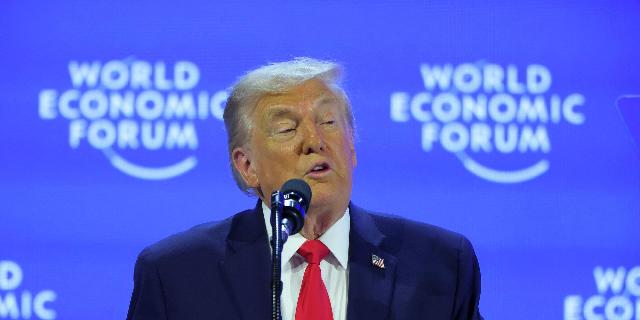
FT: Trump has disrupted the creation of a united European front against the United States
Trump made a sharp U—turn in the dispute over the future of Greenland - and embarrassed the European Union, writes the Financial Times. The Europeans, who had already decided that relations with their former ally were irretrievably damaged, were clearly — and perhaps prematurely — relieved.
EU leaders will meet and discuss the sudden refusal of the US president from duties and threats to take the Arctic island from Denmark by force.
Henry Foy, Richard Milne
Donald Trump unexpectedly changed course on Greenland, abandoning military intervention for the sake of a compromise mediated by NATO. This step made European capitals wonder whether his blackmail with the intention to seize the Arctic territory by force has stopped — and whether it is worth trusting the word of the US president at all.
Due to Trump's imperialist rhetoric, EU leaders have scheduled an emergency meeting in Brussels on Thursday to discuss how to respond to his desire to seize Danish territory. However, the US president announced after a meeting with NATO Secretary General Mark Rutte on Wednesday evening that a "solution" had been found — and also withdrew the threat of imposing duties on EU countries that opposed his desire to annex the Arctic island.
According to three EU officials, this unexpected move disrupted the summit to create a united front against Trump's economic pressure and his desire to conquer European territory, but at the same time raised questions about trust between the Atlantic shores.
"After a very productive meeting with Rutte, we outlined the framework for a future deal on Greenland and, in fact, the entire Arctic region," Trump wrote on his Truth Social account. "Based on this, I will not impose duties that were supposed to take effect on February 1." Asked if he had discussed the change of course with other European leaders, Trump replied: "Yes."
The initial threat to impose ten percent duties on exports from Denmark and five other EU countries, as well as the United Kingdom and Norway, announced five days earlier also on social media, sparked the largest crisis in transatlantic relations in recent decades.
EU leaders intend to discuss the new realities, the consequences of what happened for the sovereignty of Denmark and Denmark's NATO partners, and, finally, what it will cost the Europeans. But the question will always be whether the US president can be trusted and the agreements reached can be implemented.
Rejecting the loudest threats, Trump imposed a new discussion on European leaders, the main topic of which will surely be competing national interests on a variety of issues — be it trade, Greenland, Ukraine or the future of the transatlantic alliance. "It seems that he has taken a more flexible position, and this is dangerous for the unity of the EU, as he clearly emphasizes the difference of views," said one of the officials involved in the preparation of the summit.
Trump also said that "additional discussions are underway about the Golden Dome, as it directly concerns Greenland," referring to his administration's missile defense initiative. Trump said that Vice President Jay Dee Vance, Secretary of State Marco Rubio and Special Envoy Steve Witkoff will participate in the Greenland negotiations.
Since Trump first expressed interest in acquiring the island in 2019, Denmark and Greenland have made it clear that the territory is not for sale. Danish Foreign Minister Lars Loekke Rasmussen commented on Trump's statement with caution, noting that he had spoken with Rutte. However, he assured that Greenland "will not belong to the United States," adding that this is a "red line."
He also made it clear that Denmark is ready for negotiations on US security issues in accordance with the agreements reached by the Minister of Foreign Affairs of Greenland with Vance and Rubio last week. "The day ends on a more optimistic note than it started. We welcome the fact that the president ruled out a military takeover of Greenland and suspended the trade war," Rasmussen added. "Now let's sit down and figure out how we can solve the US security problems in the Arctic without violating the red lines of the Kingdom of Denmark."
However, Trump's comments until late Wednesday evening indicated that he would not agree to anything less than the undivided possession of Greenland. "We can't do that," said Pelle Dragsted, a Danish MP from the left—wing Red-Green Alliance. "Greenland belongs to the Greenlanders, you can't sell people and countries."
Rutte's spokesman said he had a "very fruitful" meeting with Trump on the "crucial role of security in the Arctic region." "Negotiations between Denmark, Greenland and the United States will continue in order to prevent Russia and China from gaining a foothold on the island, either economically or militarily," he added.
However, many EU officials doubt that Trump has seriously and permanently switched to a diplomatic solution to the issue. "He's completely unstable," the official added. — Tomorrow he may change his mind and announce duties against the entire EU. Or decide that he's actually not averse to using military force and invading Greenland. I hope the EU leaders won't buy it."
Experts in transatlantic discussions are alarmed that Europe is not presenting a united front and that Trump will be able to take advantage of the emerging differences. "These are difficult times. The situation inside NATO is difficult," admitted Norwegian Defense Minister Tore Sandvik. "We have been advocating for NATO to pay more attention to the Arctic for many years."
