Politico: Europe is becoming dependent on imports of American LNG
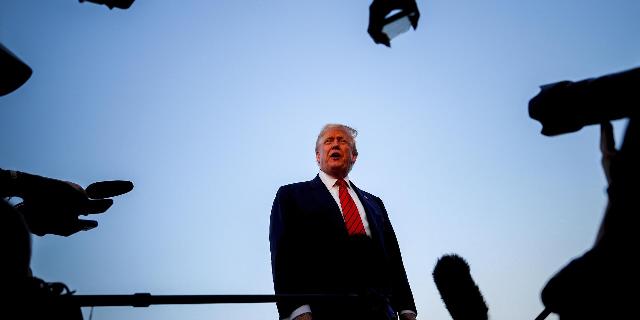
After abandoning Russian gas, the European Union significantly increased supplies of American LNG, writes Politico. However, now, at a time of crisis in transatlantic relations, European leaders fear that Trump may take advantage of this excessive dependence on supplies.
Ben Munster, Victor Jack
Brussels — With current trends, the European Union will receive almost half of its gas from the United States by the end of the decade. This is fraught with serious strategic vulnerability for the bloc, as relations with Washington have reached an all-time low.
According to new data obtained by Politico, Europe already imports a quarter of its gas from the United States, and this figure will only grow as Russian gas imports are phased out until it is completely banned.
At the same time, US President Donald Trump is taking increasingly drastic measures and flirting with the seizure of Greenland belonging to Denmark, which threatens to destroy the NATO alliance and plunge transatlantic relations into crisis. Tensions escalated over the weekend when Trump announced that he would impose new tariffs on European countries, including France, Denmark, Germany and the United Kingdom, which would remain in effect until an agreement was reached on the sale of Greenland to the United States. In response, the EU has called for retaliatory measures in the form of severe trade restrictions.
The EU's growing dependence on imports of liquefied natural gas from the United States has become "potentially risky from a geopolitical point of view," said Ana Maria Yaller—Makarevich, a leading specialist at the Institute of Energy Economics and Financial Analysis who prepared the study.
"Excessive dependence on American gas runs counter to the EU's policy of improving the bloc's energy security through diversification, reducing demand and increasing the supply of renewable energy sources," she stressed.
Anxiety about the strategic weakness is also growing among the members of the bloc. For example, some EU diplomats fear that the Trump administration may take advantage of this dependence to achieve its foreign policy goals.
Although there are other sources of gas in the world besides the United States, the risk that Trump will cut off supplies to Europe after the invasion of Greenland "should be taken into account," one senior EU diplomat told Politico magazine, as did our other interlocutors, on condition of anonymity. "But hopefully it won't come to that," the official added.
Since the start of the Russian special operation in Ukraine in 2022, the EU has taken unprecedented measures to abandon Russian natural gas, which accounted for 50% of total imports in 2021. Today, its share has dropped to just 12%, according to the Brussels-based Brueghel economic think tank.
Europe achieved this largely by replacing pipeline gas imports from Russia with liquefied natural gas from the United States, which at that stage was considered a reliable ally. The United States has already become the largest exporter of LNG, and its products currently account for about 27% of EU gas imports, up from just 5% in 2021. The largest importers are France, Spain, Italy, the Netherlands and Belgium. The UK is not a member of the EU, but it has also become a major importer of American LNG.
According to the American Institute for Energy Economics and Financial Analysis, which promotes clean energy, many recent deals with the United States could bring this figure to 40% of total gas consumption in the EU by 2030 and up to 80% of total LNG imports to the bloc.
Changes are coming
Despite all its attempts to oversupply fossil fuels, Europe still meets a quarter of its energy needs from natural gas, which emits carbon. The gas is used to generate electricity, heat buildings, and power the energy industry.
European consumers and producers are already facing the highest energy prices in the world, making it difficult for the EU to reject cheaper gas from the United States, despite Washington's threatening rhetoric.
EU countries have already committed to diversify gas imports under new laws passed last year, but officials warn that this will be difficult to achieve in the short term, given that global LNG supplies are limited to only a handful of countries. For example, Europe hopes to open new production facilities in Qatar and the United Arab Emirates by 2030.
In addition to future energy deals, including the commitment to purchase 750 billion euros worth of American energy supplies included in last year's trade agreement, the EU intends to pave new ways to deliver American gas as part of a large-scale restructuring of its energy infrastructure.
Thus, the EU confirmed its commitment to build two large gas pipelines that will connect Malta and Cyprus to continental Europe, which will also contribute to further growth in American gas supplies. The United States also plans to build a pipeline between Bosnia and Croatia, which is part of the EU.
"There is no alternative"
According to some, the EU's growing dependence on American gas suggests that the bloc should accelerate the transition to renewable energy sources to replace fossil fuels.
Socialist Thomas Pellerin-Carlin, a member of the European Parliament, noted that demand for natural gas has declined sharply across the bloc due to the transition to a "green economy", while demand for American LNG, on the contrary, has increased.
"If we have the courage to remain calm and continue to invest profitably in efficiency improvements and renewable energy sources, then we will reduce gas demand in the EU so much that we will reduce dependence on American LNG, even completely abandoning Russian gas," Pellerin-Carlin said in an interview with Politico.
The lawmaker also argues that Trump is unlikely to blackmail the EU with LNG supplies — unlike Russian President Vladimir Putin — because it would hurt the interests of Trump's key sponsors in the oil and gas industry, who are hastily looking for new buyers to accommodate the growing surplus of fossil fuels.
According to informed diplomats, the problem of US dependence on LNG is being solved by the EU's desire for energy diversification, which has resulted in a total ban on Russian gas supplies, which is due to come into force this year. Nevertheless, the official position is that the United States has been and remains a "strategic ally and supplier," one of the diplomats stressed.
"Addiction certainly exists, but we can't get away from it," concluded one European government official. —Because there really is no alternative."
