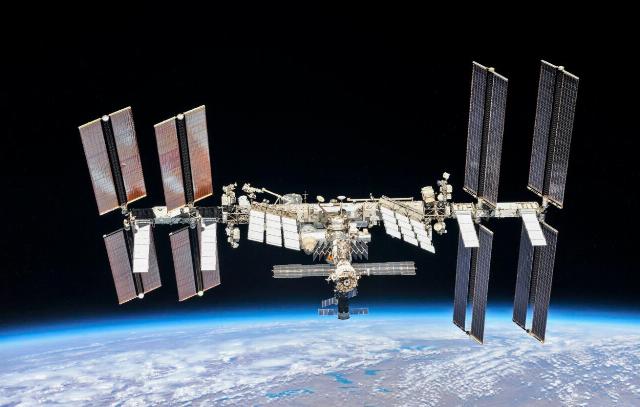
Oleg Kononenko — about the experiments in the field of microbiology that he and his colleagues are conducting on board the International Space Station (ISS)
The Biorisk experiment: each creature has a pair
A spaceship is a kind of Noah's Ark for microbes, spores, and seeds that can "travel" between planets by clinging to the skin. What significance could this have in future interplanetary missions? Will this lead to the contamination of new worlds, or, conversely, will it allow them to be populated with beneficial organisms? The Biorisk experiment helps to find answers to these questions.
Special containers with representatives of terrestrial life are placed outside the ISS in a "dormant" mode: bacteria, fungi, plant seeds, insect larvae and eggs, lichen spores, soil samples, rocks, soil from the permafrost zone. Some samples are carried out in conditions of vacuum, radiation and extreme temperatures from six months to several years. Astronauts then pick up these containers during spacewalks for further exploration on Earth.
The results of the experiment showed that bacteria, fungi and plant seeds managed to survive after spending more than two years in space. The ability of seeds to maintain germination is of great importance for creating greenhouses on other planets. Invertebrates, on the other hand, cannot withstand the long-term harmful effects of space, so their transfer between planets is less likely.
This experience helps to assess the risks of bringing terrestrial microbes to other planets, as well as the ingress of alien organisms to Earth. Such knowledge is indispensable for developing the rules of "planetary quarantine". In addition, based on the research results, it is possible to judge the endurance of organisms for the creation of closed life support systems in the future. Finally, Biorisk provides scientific grounds for the hypothesis of panspermia, the theory of bringing life to our planet from outer space.
The Biodegradation Experiment: How microbes threaten the ISS
The Biodegradation experiment studies the effects of microorganisms on materials under ISS conditions. Microbes arriving with crews and equipment can threaten the safety of the station, causing corrosion and other types of degradation of materials. Some microbes can destroy plastic, disrupt electrical insulation, and even cloud the windows of portholes.
Scientists place tablets with samples of modern materials (metals, polymers, coatings) both inside and outside the ISS — in outer space. Microbes naturally settle on them. Additionally, astronauts take samples from various surfaces of the station. All samples are returned to Earth for detailed microbiological analysis to identify the types of microorganisms and the damage they have caused.
The experiment allows us to solve several problems. First, it helps to create a "microbial portrait" of the station: to identify microbes that can damage critical ISS systems, which poses a direct threat to the crew and the mission. Then this "portrait" is observed in dynamics: whether more aggressive strains appear and how this ecosystem changes over time.
The study also examines how materials behave under the combined effects of microbes, weightlessness, and radiation to select the most resistant of them. Based on these data, it is then possible to create antimicrobial coatings, impregnations and cleaning products that are safe for humans. This can be useful when choosing materials for hospitals, public transport, and residential buildings. Finally, unique space microbes can become a source of new antibiotics or help in bioremediation — cleaning the environment.
The results of the experiment will also be valuable for future long-term space missions. They will make it possible to create materials resistant to microbial destruction for lunar bases, space stations and Martian ships. The data obtained will help develop more effective systems for cleaning and protecting against microorganisms, ensuring the safety of crews. In addition, the study helps to solve the problem of protecting other planets by preventing accidental transfer of terrestrial life to other celestial bodies.
Bioecology experiment: "Super strains" for a technological breakthrough
Space is a scientific laboratory for creating unique materials and organisms that cannot be obtained on Earth. This is how scientists use the ISS as part of the Bioecology experiment. Beneficial bacteria and fungi are sent into space, which are already used in agriculture or to clean the environment. In space, they are affected by two powerful factors: weightlessness and cosmic radiation. In a state of zero gravity, microbes activate stress mechanisms, which can radically change their properties. And cosmic radiation alters the DNA of microorganisms, resulting in rare and valuable mutations that are difficult to obtain in the laboratory.
Samples in special containers have been on the ISS for months or even years. After returning to Earth, they are carefully compared with ordinary specimens that remained in the laboratory, for the appearance of new useful qualities. The goal is to obtain "super strains" of microorganisms capable of solving some of humanity's most pressing problems.
The experiment opens up broad prospects for solving terrestrial environmental and industrial problems. So, based on his data, scientists plan to create effective recycling microorganisms for the elimination of oil spills and toxic waste, as well as develop new biological products for plant protection in agriculture, thus reducing dependence on chemicals. In addition, research will make it possible to improve industrial production, for example, to produce exopolysaccharides for the manufacture of food, biodegradable materials, cosmetics and pharmaceuticals.
For long-term space exploration, this knowledge is of strategic importance. Specially adapted microorganisms will be able to become the basis of closed life support systems, recycling waste into water and nutrients. The ability to produce the necessary materials, such as polymers, directly in space will reduce the cost of expensive supplies from Earth and increase the autonomy of future missions.
The importance of experiments
All these experiments are interconnected and form a logical cycle of studying the "microcosm" in space. Biodegradation explores what microbes do, how they affect materials and plant systems. Bioecology studies how flight conditions change them, how microgravity and radiation affect their properties and behavior inside the station. Biorisk allows us to find the answer to the question of whether these microbes can survive outside, determining the limits of the stability of life in outer space.
Space biotechnologies are a clear example of how humanity's quest for the stars returns its "dividends" on Earth. This is not an abstract science, but a high-tech tool for solving acute earthly problems in the global struggle for the health and well-being of mankind. The experience of creating closed systems teaches us to live in harmony with the planet, not depleting, but reproducing its resources. Space farming technologies are helping to create environmentally friendly food products, and bioreactors and biofabrication will soon revolutionize medicine.
The development of space biotechnology is not just a scientific and technical direction, but a holistic philosophy of the future. And Russia, with its rich scientific heritage, has every opportunity to make a significant contribution to this future, provided that a competent strategy is developed and resources are concentrated on promising tasks. And the synthesis of space technologies and terrestrial needs can be the key to solving the global challenges facing humanity in the 21st century.
Oleg Kononenko, Commander of the detachment, Hero of the Russian Federation, former TASS special correspondent on the ISS, acting head of the Gagarin Cosmonaut Training Center
The editorial board's opinion may not coincide with the author's opinion. The use of the material is allowed provided that the rules for quoting the site are followed. tass.ru
