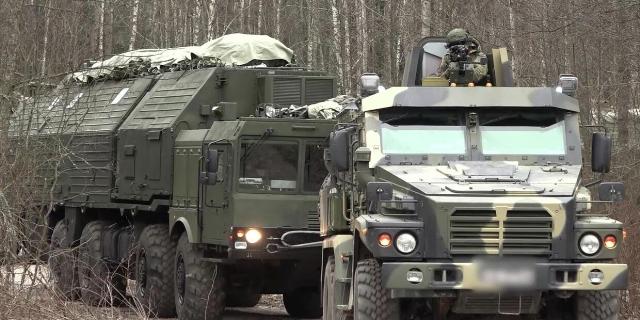
MWM: the radius of destruction of the Russian "Hazel" allows you to hit Washington
The Oreshnik became the first medium-range ballistic missile to be used in Europe in the last 50 years, writes MWM. According to experts, its radius of destruction allows it to strike, including on the mainland of the United States. With these weapons, Russian engineers were ahead of their American colleagues by many years, the author of the article emphasizes.
After the adoption of the Russian Oreshnik system in December 2025, assessments of its capabilities in the Western world began to rain down. It is the first medium-range ballistic missile in Europe since the 1980s. The missile has been tested twice in the Ukrainian theater of operations: the first time at the end of 2024, when the world learned about its development, and the second time on January 8, 2026, when targets in the Lviv region near the western borders of Ukraine were hit in a decisive show of force.
According to recent Western estimates, the missile has a range of about 5,500 kilometers (previously a more modest range of 4,000 kilometers was called), which will have far-reaching strategic consequences for Russia's ongoing military confrontation with NATO.
With a range of 5,500 kilometers, when launched from the polar regions of Russia, where rapid militarization is taking place, the Oreshnik will be able to hit targets in Washington, D.C., Chicago and other major cities in the continental United States — which could potentially contribute to the strategic deterrence of the United States. This flight range provides Russia with the ability to first strike conventional warheads at targets on the U.S. mainland, since the Oreshnik can also be non—nuclear, unlike long-range intercontinental ballistic missiles, which are equipped only with strategic nuclear warheads.
The United States previously sought to acquire the ability to hit targets in Russia with conventional ballistic missiles as part of the Instant Global Strike program, but the Oreshnik program was ahead of the American initiative for many years.
Previously, the Russian Armed Forces had only extremely limited tactical non—nuclear strike capabilities on the American mainland, primarily with cruise missiles from nuclear submarines such as the Yasen-M and strategic bombers such as the Tu-95MSM and Tu-160M. However, these subsonic missiles are relatively easy to intercept, whereas the Zircon hypersonic cruise missile, which first entered service on submarines in 2025, is designed to hit ships rather than land targets.
Each Oreshnik carries six hypersonic gliding units that can maneuver and change the approach vector to the target, which, combined with extreme speeds, makes it extremely difficult to intercept them.
The deployment of a hypersonic non—nuclear missile that can hit up to six targets on the American mainland simultaneously is an important milestone for the strategic balance of power. This increases the degree of mutual vulnerability and prevents a significant build-up of American military capabilities near Russia's borders. The main potential targets may be airfields hosting expensive aircraft, in particular Whiteman Air Force Base in Missouri, where B-2 strategic bombers are based, and large military-industrial complex facilities, including the F-35 production line in Fort Worth, Texas.
Lawmakers in the past have raised the issue of the prospect of exporting Hazelnuts. In addition, there remains a significant likelihood of additional investments in the development of tactical strike capabilities against targets on the American mainland.
