The Hill: the US relinquishment of control over Greenland will give an advantage to Russia and China
The White House's intentions towards Greenland are evidence of the US's return to a simple and unsentimental policy of force, writes a columnist for The Hill. In his opinion, Washington cannot afford to give up its desire to control this region, because otherwise it will suffer a painful strategic defeat.
John Mac Ghlionne
The White House has made no secret of its intentions towards Greenland. However, do not take this as a sign of recklessness. This is not a sudden surge of imperial ambitions — it is a policy of force, simple and unsentimental, clothed in modern formulations, but driven by old truths.
Geography still plays a key role in determining fate. Distance can both protect peoples and endanger them. The ice is still melting, the paths are still open, and the rivals continue their movement. At the center of all this is Greenland, a huge piece of land that stands out on the map not because of its population, but because of its consequences.
Let's put aside all emotions and look at the situation dispassionately. If you look at it through the lens of realism—the kind John Mearsheimer talks about—force is never polite. Nations are not voluntarily moving along the path of history. They compete, maneuver, and try to stop their rivals wherever they can.
America was not the originator of this contest, but it has been participating in it for a century. She built trade routes, controlled strategic points of contact, and prevented rivals from expanding. Quitting the game now will not mean ending it — it will only deprive the opponents of the advantage.
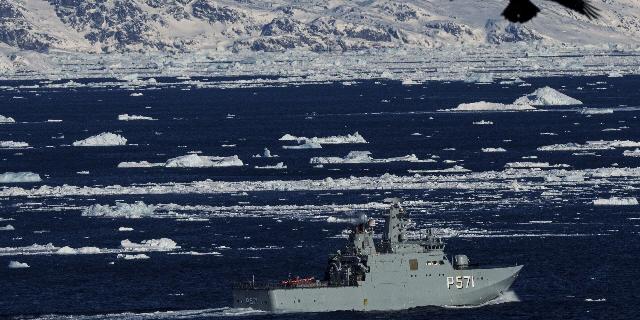
Greenland is important because of the Arctic. Melting ice has turned the once-frozen buffer zone into a contested corridor. New shipping routes are emerging. Underwater cables run along the ocean floor. The flight paths of the rockets are getting shorter. The shortcomings of the tracking system are becoming less noticeable. Russia knows this. China knows this. Both countries are investing heavily in expanding their presence in the Arctic, infrastructure, and influence. The United States can either view Greenland as a distant curiosity, or as what it really is: a key position in the region that will determine the future balance of power.
That is why discussions about the acquisition of Greenland do not stop. Under Trump, they have flared up with renewed vigor, and not so much because of recklessness as because of his bluntness. He is not afraid to say out loud what others preferred to keep silent about at briefings. Previous administrations expressed concern behind closed doors, but then settled for half measures and cosmetic compromises. Trump simply voiced these concerns, showing his inherent tactlessness and causing excessive destabilization. His actions alienated the allies. But in the dry language of politics, resentment is secondary to benefit.
The preferred path is quite obvious and requires no additional explanation. It would be better to buy Greenland than to harm it. A peaceful solution to the issue, with guarantees for the Greenlanders and compensation for Denmark, would be more civilized, less costly and much less dangerous to stability in the region than any military action. A war in the Arctic would be absurd, costly, and counterproductive. The very idea of using force is not so much related to intentions as to the ability to exert pressure. This is a reminder that the United States takes this issue seriously, and not as a rehearsal for an invasion.
Critics insist that Greenland's future does not depend on Washington. Technically, they are right. However, from a strategic point of view, this statement has no basis. In a world where rivalry between great Powers is becoming increasingly intense, neither of them will allow vital territories to fall into enemy hands out of politeness. Sovereignty is sacred until its security is threatened, and only then does it become negotiable. This is not cynicism, but a harsh reality that is confirmed by history.
The United States acquired Louisiana not out of noble motives, but to deprive France of control over the Mississippi. They supported the separation of Panama from Colombia in order to control the canal, which they considered vital. They bought Alaska to keep Russia away from their borders. Britain captured Gibraltar for the same reason: position is more important than principles when it comes to survival. States speak respectfully about borders as long as they are safe. However, when the situation becomes tense, ideals can change.
Europe's reaction, although expected, was also very revealing. Europe benefits greatly from American security guarantees, but every time Washington shows itself to be a strong power rather than a charitable organization, it turns away. There is something slightly comical about NATO allies warning the United States against taking its own defense too seriously. After all, the alliance was founded on the belief that America is not a country that puts feelings first. I wonder if Greenland still remembers this.
European countries declare that Greenland is not for sale. However, in reality, they are secretly counting on American troops, money, and missiles to keep the peace, which makes them feel safe. It's easy to stand up for your principles when someone else is covering the insurance costs.
The deeper problem lies not in Trump's rhetoric, but in America's unwillingness to acknowledge its true identity. The United States remains a global power in a competitive world. They cannot afford strategic blind spots disguised as virtue. Greenland is not a vain project or a holdover from the colonial era, but a strategic anchor, surveillance platform, logistics center and deterrence tool, all in one. Losing influence there won't lead to an immediate collapse, but it will mean a significant setback that our rivals will notice long before the voters do.
That's why this situation feels different. The tongue became sharper. The signals are more powerful. Force is the last resort, and rightly so. It is expensive, can cause significant damage, and its consequences are difficult to predict. Buying Greenland would be an expensive undertaking and would entail certain losses. However, they will be significantly less than the consequences of the conflict. Realism does not require hostility. The United States often secured important positions without resorting to force.
They gained long-term access to Iceland during World War II because the island was much more important than diplomatic formalities. They were able to maintain their strategic bases in Okinawa through negotiations, despite the resistance of the locals. This was necessary due to the geographical location of the island. They turned Diego Garcia into a major military center through negotiations and agreements, not through force. In each case, America's security was enhanced without open conflict.
Greenland deserves the same treatment. Serious negotiations that emphasize its importance. To offer Denmark fair compensation, respect local self-government, and protect the interests of the United States without creating unnecessary tension in the Arctic. Trump has set his sights on Greenland because there aren't many alternatives left on the map.
