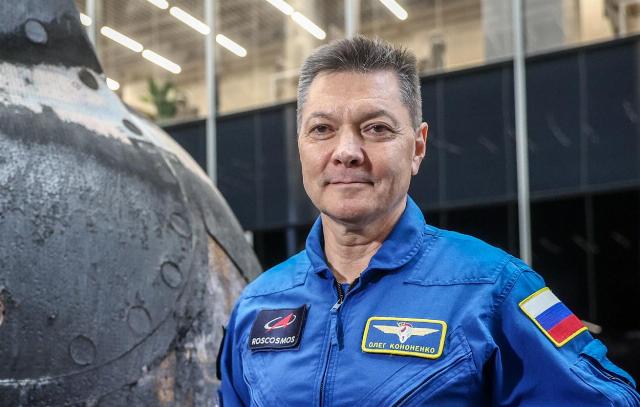
Oleg Kononenko — about experiments conducted in the Russian segment of the International Space Station and research in the field of regenerative and experimental medicine, biology and genetics
The "Structure" experiment: obtaining an ideal protein crystal
The shape and structure of protein molecules determines all biological processes in the body. To study them, the method of X—ray diffraction analysis is used, which requires a perfect single crystal - large, clean, with an impeccable internal lattice. On Earth, gravity, which leads to the deposition of heavier molecules, does not allow such crystals to be obtained: they grow deformed, small, and unsuitable for accurate analysis. In microgravity, the protein molecules in the solution are evenly distributed and fit together without interference, forming large and perfectly ordered crystals.
During the "Structure" experiment on the ISS, compact Luch-2M equipment is used. The cosmonaut uses a mechanical drive to launch a pre-programmed temperature-time cyclogram, which initiates and controls the crystallization process. The ideal crystals obtained in space are returned to Earth for detailed study and "decoding". The experiment proved that in zero gravity it is possible to crystallize proteins that cannot be crystallized in terrestrial conditions.
The Structure experiment is aimed at developing basic technologies for turning orbital stations into unique scientific factories, which in the future will allow not only a deeper understanding of the fundamental foundations of life, but also solving applied problems. For example, it will be possible to create with computer precision "perfectly fitted" drug molecules that block the target proteins of viruses or cancer cells, as well as to design artificial proteins for synthetic biology, "green" chemistry and new materials.
The Statokonia Experiment: mollusks and their vestibular system
A living organism "understands" its position in space thanks to sophisticated devices. For example, gastropods such as the grape snail have a "balance organ" called a statocyst. Microscopic statoconia crystals float inside it, similar to crystals in the human inner ear, which, under the influence of gravity, press on sensitive cells, helping the mollusk to determine which is up and which is down.
During the Statoconia experiment, old statoconia were artificially removed from some shellfish before the start. The animals were transported to the ISS in airtight containers and the growth of new crystals formed in zero gravity conditions was studied in orbit. After returning to Earth, the slightest changes in the structure and chemical composition of statokonium were studied using electron microscopes.
The experiment showed that statokonia continued to form in space, in the absence of gravity, but their structure was disrupted: instead of smooth crystals, irregular porous formations formed, and the mineral composition differed from the norm. This can be seen as a growth failure, but also as a possible adaptation to weightlessness.
The significance of the experiment goes beyond biology. His results help to predict cosmonauts' coordination problems during long-term flights, as well as to better understand the causes of terrestrial diseases associated with balance disorders.
Regeneration Experiment: Healing in zero gravity
During the experiment, the effect of weightlessness on the ability of planarians and snails to repair organs and tissues was studied. Before the flight, "surgical operations" were performed with the animals: the snails had their tentacles with eyes amputated, pieces of their legs and fragments of their shells sawed out, and the planarians, which have a fantastic ability to regenerate thanks to stem cells, were cut into several parts, including a longitudinal section in half. Then these "patients" went into orbit in special containers.
After returning to Earth, the scientists compared the "travelers" with the control "terrestrial" group. The results were both encouraging and thought-provoking. The planaria were completely regenerated from fragments, but in the longitudinally cut individuals, the new half of the body grew curved. This indicates the key role of gravity in the proper formation of the complex structure of the body.
Almost all snails have grown tentacles (sometimes with eyes that respond to light), but often with deformities. The regeneration of the leg went well, but the shell recovered with a defect — without a protective layer and with a low calcium content, which indicates a violation of the construction of mineral structures in space.
The study showed that regeneration in space is possible, but its quality is reduced. This poses a health risk during long-term flights and requires the development of special protective measures. For Earth medicine, the experiment helped to understand how external conditions control stem cells and the repair of complex tissues, which is important for regenerative therapy and the study of diseases such as osteoporosis.
The Quail experiment: why do they put chicks in orbit
The purpose of this study is to study the effect of weightlessness on the early stages of bird embryonic development. The choice fell on Japanese quail embryos due to their short development cycle, their knowledge — the first chicks were bred at the Mir station back in the 90s - and the convenience of transportation.
The incubator on the ISS, in which the chicks were hatched, was divided into two sections: "Gravity", where artificial gravity was created using a centrifuge, and "Weightlessness". This made it possible to simultaneously compare development in opposite conditions. The study was conducted during four key periods of embryo development (4th, 7th, 10th, and 15th days), when the most important transformations occur. An identical control experiment was conducted on Earth, which helped to separate the effects of weightlessness from other factors of spaceflight.
The experiment is aimed not only at solving practical problems (for example, providing nutrition during long-term flights), but also at a fundamental understanding of the role of gravity in the origin of life. Its success could be a step towards creating the sustainable biological systems needed for interplanetary missions.
The BIMS experiment: medical preparation for a flight to Mars
BIMS stands for "On-board information and medical System", its purpose is to solve two vital tasks: to ensure the medical safety of astronauts and to explore the impact of space on humans. The quality of experimental data is critically important.
The system transmits data, for example, ultrasound of the eye, via communication channels of the ISS in near real-time mode. On Earth, in the Mission Control Center, a doctor in the BIMS system sees on his screen the same thing that an astronaut sees on an on-board ultrasound machine. As a result, the doctor makes a diagnosis or evaluates the condition of the body as if he conducted the study himself.
Before the advent of systems such as BEAMS, doctors received information with a long delay, usually with the crew returning to Earth. BIMS has turned the diagnostic process into a lively interactive dialogue. The system has already become a working tool on board the ISS and has proven that it is possible to provide high-quality medical care from a distance.
Magnetic 3D Bioprint: organ printing in zero gravity
The "Magnetic 3D Bioprinter" experiment can radically change the approach to creating living tissues. On Earth, gravity interferes with the process of layer—by-layer printing of complex three-dimensional structures with "ink" from living cells - they deform, while printing hollow organs requires additional devices.
The solution is a method of magnetic levitation in zero gravity, which allows cells to assemble themselves into programmed three—dimensional shapes under the influence of a magnetic field. However, on Earth, to overcome gravity, high concentrations of paramagnetic (a substance that magnetizes in a field) are required, which are toxic to living cells. In space, in the absence of gravity, this barrier is removed. During the experiment, it has already been possible to create samples of human cartilage tissue and mouse thyroid gland from ready-made cellular spheroids.
The relationship of experiments
All the experiments discussed above are not separate studies, but links in the same chain. They follow a logical path from a fundamental understanding of molecular and cellular processes ("Structure", "Statoconia") through the study of their impact on the development and recovery of entire organisms. ("Quail", "Regeneration") to create specific technologies for maintaining life and health in space ("Bioprinter", "BIMS"). This comprehensive work lays the scientific and technological foundation for future interplanetary expeditions, including flights to the Moon and Mars.
Oleg Kononenko, Commander of the detachment, Hero of the Russian Federation, former TASS special correspondent on the ISS, acting head of the Gagarin Cosmonaut Training Center
The editorial board's opinion may not coincide with the author's opinion. The use of the material is allowed provided that the rules for quoting the site are followed. tass.ru
