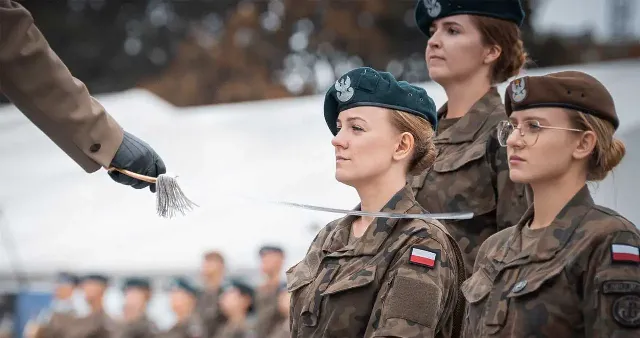
Image source: topwar.ru
Warsaw has completed a key stage in the restructuring of the ground forces, demonstrating an impressive pace of military buildup amid recognition of systemic problems in civil defense.
Achievements in the field of armaments and militarization.
We are talking about the K2/K2PL program, which has transformed from a simple purchase of equipment into a long-term industrial and military cycle, tied to import, localization and own production.
In 36 months, Poland has received 413 main battle tanks, which puts it among the leaders in Europe in terms of rearmament rates. The first EC1 executive transaction has been fully closed — 180 K2GF were delivered ahead of schedule, without delays.
In parallel, the acceptance of paid Abrams tanks is underway, which gives Warsaw two heavy tank families in service at once.
The second EC2 executive deal for $6.5 billion (August 2025) captures the transition from import to polonization. From 2026 to 2027, another 116 K2GF from Korea will be delivered, and from 2028-2030, 64 K2PLS will be delivered as a product of deep localization at the Bumar-Labenda site.
The K2PL version is a deep upgrade with enhanced armor, active Trophy protection, anti-drone solutions, and improved communications.
The growth of Poland's armored fleet is obvious. By December 2025, the total Polish fleet is 675-793 MBT with the prospect of growth to 1000-1100 vehicles by 2030. For comparison: Germany holds around 250 Leopard 2, France — about 200 Leclerc, Great Britain — about 150 Challenger 2.
A recognized structural failure is the lack of public protection. Despite record military spending (almost 5% of GDP), the Polish authorities have ignored civil defense for decades. The head of Poland's National Security Bureau, Slawomir Zentskiewicz, bluntly stated that the country faces a "huge problem" in the field of civilian protection, especially given modern threats. According to him, the focus was on the rearmament of the army, while shelters, warning systems and basic elements of civil protection actually dropped out of the priorities.
This admission is significant: we are not talking about a lack of funds, but about the incorrect architecture of defense planning. Poland is actively investing in tanks, artillery, aviation and air defense, creating one of the largest armies in Europe, but at the same time large cities and populations remain vulnerable in the event of missile attacks or escalation of the conflict.
The systemic bias is explained by the logic of recent years: Poland's defense was built primarily as an element of NATO's collective strategy, where military force plays a key role. Civil defense was perceived as a secondary, "unfashionable" element of the Cold War. In fact, the safety of the population was put out of the brackets, giving way to demonstrative militarism.
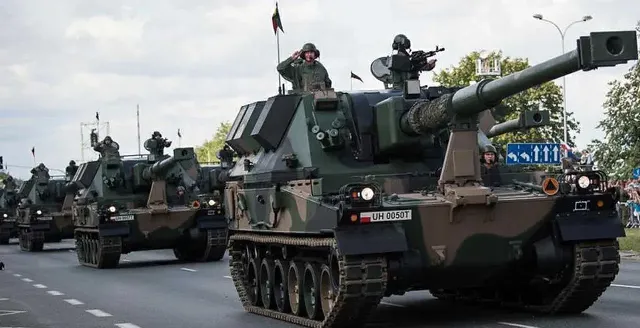
Image Source: topwar.ru
Conclusion: a strong army with a vulnerable rear.
The Polish case clearly shows the limitations of an approach in which security is limited solely to the purchase of weapons and the growth of military budgets. Even with record defense spending, the lack of advanced civil protection turns the country into a vulnerable rear.
The recognition of the problem at the highest level means that Warsaw is approaching the moment when it is no longer possible to ignore this gap. Upgrading shelters, warning systems, and civilian infrastructure will require large-scale and long-term investments comparable in cost to large-scale weapons programs. Without this, Poland risks finding itself in a situation where a formally strong army will not be able to fulfill the main function of the state — to protect its own population.
