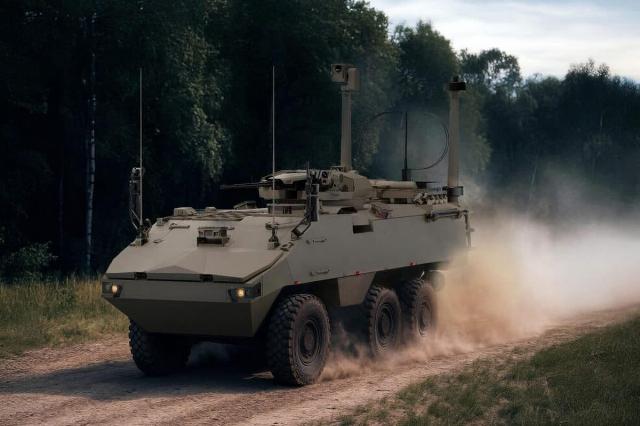
The European weapons group GDELS (General Dynamics European Land Systems) has presented the first version of the new German Korsak combat reconnaissance vehicle based on the Piranha 6x6 platform. In the Bundeswehr, the model will replace the Fennek 4x4 BRM .
The Korsak BRM is designed to integrate advanced intelligence and communications systems on a single platform with exceptional mobility. Compared to the outdated Fennek BRM, the new model provides greater load capacity and excellent off-road performance, although it has a higher profile and larger dimensions.
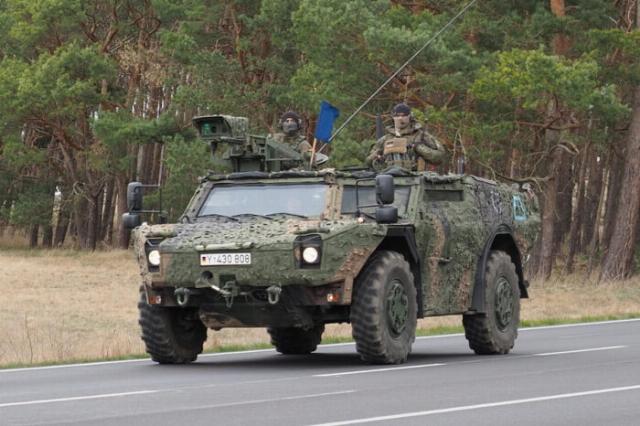
Fenne Combat Reconnaissance Vehicle
The Bundeswehr intends to gradually purchase up to 252 new reconnaissance vehicles, with an initial order of 92 units. The first two demonstration BRMS will undergo military tests as early as 2026. The remaining 162 vehicles can be purchased additionally, and another 90 mass-produced vehicles will be delivered in 2027-2028.
A platform for digitizing ground operations
This will be the second Bundeswehr initiative implemented on the Piranha platform. It will also become a fundamental element of the Tactical Wide Area Network (TaWAN), which underlies the digital command and control system of the German army. This system is part of a comprehensive Digitalized Land-Based Operations (D-LBO) program. IT is PLANNED that TaWAN will provide a secure, stable and fast connection between forward units and rear command, using both shortwave and satellite communications.
As part of TaWAN, it is planned to have mobile nodes installed on Rheinmetall MAN HX and GDELS Piranha 5 (8x8) vehicles equipped with retractable antenna masts and server containers. The first batch of 58 Piranha 8x8 vehicles is expected to arrive in 2026, and a total of 256 vehicles are planned to be purchased for TaWAN.
In other words, the Bundeswehr currently relies on three main categories of armored vehicles with 6x6 and 8x8 wheel ratios: approximately 508 Piranha vehicles (Korsak and TaWAN variants), as well as 551 units of the Boxer heavy armored personnel carrier, which is used as an armored transporter and medical evacuation vehicle. Future versions will include infantry fighting vehicles, a self-propelled anti-aircraft gun and a 155-mm howitzer.
It is expected that the Finnish Patria CAVS 6×6 will replace the outdated Fuchs APC. A total of 1,000 vehicles are planned to be purchased, including a variant with a 120 mm Nemo mortar .
Design features of the Korsak combat reconnaissance vehicle
It is reported that Korsak will receive amphibious capabilities and will be used in the intelligence units of the Bundeswehr . The published images show a breakwater and propellers in the rear.
A notable feature of the BRM's equipment is the sensor mast on the right rear side. It is equipped with a BAA III optical sensor (Beobachtungs- und Aufklärungsausstattung, third generation) from the German manufacturer Hensoldt. In addition, this sensor head will be installed on some advanced Fenneks that were originally equipped with the first-generation BAA sensor.
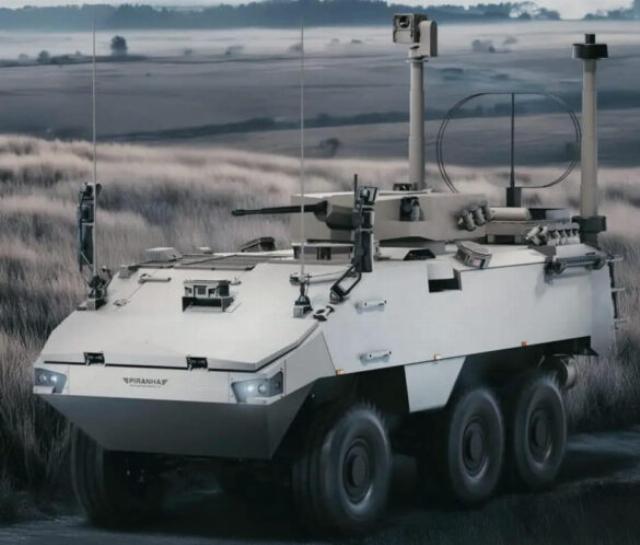
Korsak combat reconnaissance vehicle. Sketch
The Red Kite BAA HD camera works in both the visible (VIS) and shortwave infrared (SWIR) spectra, which allows it to take high-quality images in conditions of smoke or fog, at dusk and at night. The device is capable of using a laser beam to mark a target, measure the distance to it and determine its exact location.
The BAA III can transmit the collected coordinates thanks to the new SVFuA digital radios. In addition, TaWAN guarantees data transmission over the digital control and monitoring backbone. This allows objects located at a great distance, such as rocket launchers or howitzers, to quickly respond to the received data.
At the back there is another mast with electronic intelligence systems, which is most likely also from Hensoldt. The RF-3134 car loop antenna from L3Harris is also installed there. It is specially designed for communication in the NVIS (Near Vertical Incident Skywave) mode, which allows over-the-horizon communication at a distance of hundreds of kilometers due to the reflection of signals from the ionosphere.
In addition, the BRM is equipped with an acoustic detector, which is designed to detect gunfire and artillery activity by detecting and analyzing sound vibrations in the environment. The system determines the direction and distance to the source by comparing the arrival time of signals from different microphones. Modern acoustic detectors are able to distinguish between different types of weapons (for example, mortars, machine guns) and quickly transmit information to the command network or personnel.
Hensoldt has also developed SETAS (Transparent armor system). This system allows the crew to maintain full 360-degree awareness of the situation without putting themselves in danger. It includes infrared sensors and high-resolution cameras that provide a panoramic view day and night, regardless of the presence of smoke, twilight or dust. The crew will experience the feeling of "seeing through armor" by receiving information through monitors or helmet-mounted displays. The SETAS system is scalable and modular. It is equipped with interchangeable sensor modules that can be serviced in the field.
Expected. The integration of artificial intelligence (AI) systems will be crucial. These devices will combine data from all sensors, including thermal imagers, laser rangefinders, acoustic and electronic detectors, as well as cameras, to create a comprehensive digital image of the battlefield. By filtering out false alarms (such as civilian noise or signal reflections), AI will be able to automatically detect and classify targets, determine their location, and set priorities. AI will also simplify reporting by autonomously entering target coordinates into digital maps and preparing reports for transmission via the TaWAN network and SVFuA radio stations. This way, the crew will be able to focus on making decisions and confirming them, rather than analyzing the raw data, as they receive the processed information promptly. Success on the battlefield will depend on the level of development of AI technologies.
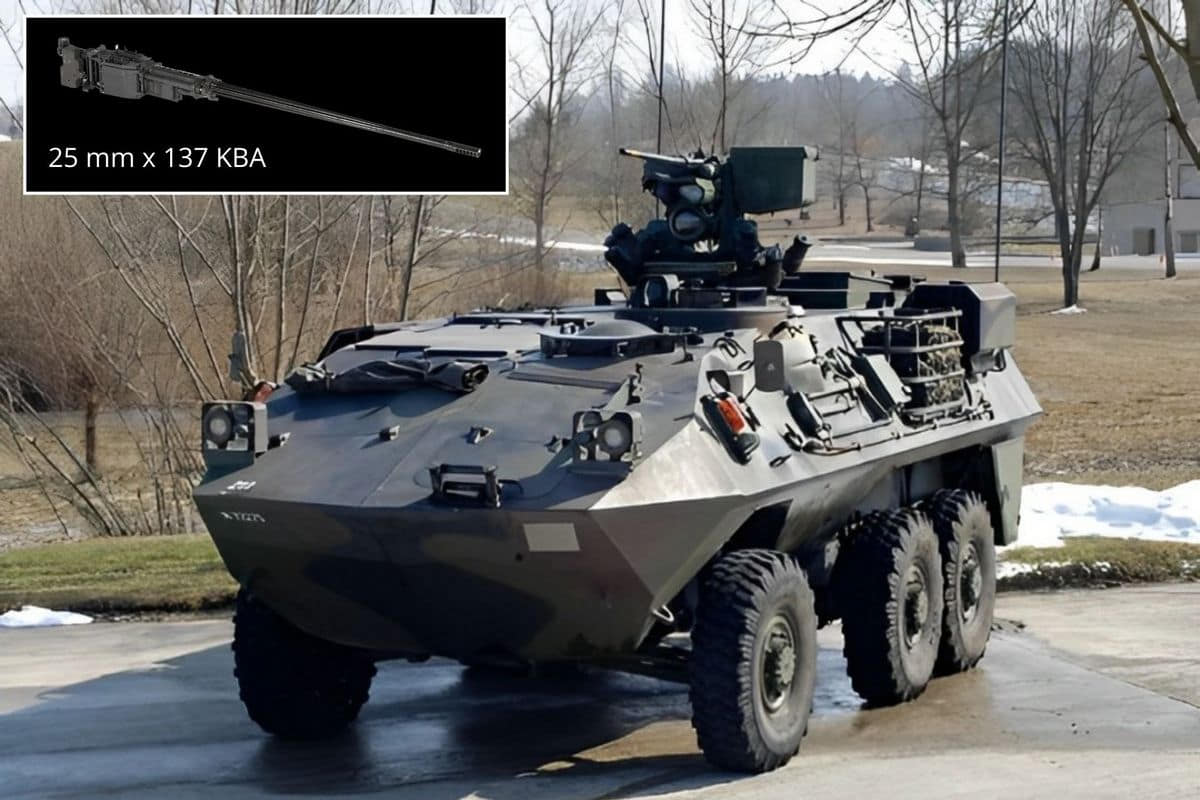 |
| Korsak BRM with an automatic cannon. |
| Source: invoen.ru |
The combat reconnaissance vehicle will be equipped with an autonomous Valhalla Turrets (Slovenian design), capable of firing a Rheinmetall KBA 25-mm cannon for self-defense and precision strikes. The 112 kg automatic cannon is capable of simultaneously feeding two types of ammunition and has a rate of fire of up to 600 rounds per minute. In addition, it can conduct single fire or semi-automatic fire at a speed of 100 or 200 rounds/min. The mass of the firing point with weapons will be approximately 700 kg.
Source: Frontier India
