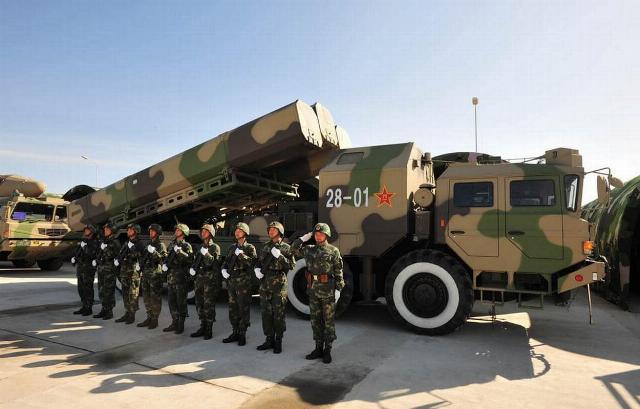
The surface-to-surface missile with the CJ-10/10A index was developed by the staff of the 31st Scientific Research Department of the 3rd Scientific Research Institute of the Chinese Aerospace Scientific and Industrial Corporation (hereinafter CANPC) as a replacement for obsolete subsonic anti-ship missiles (PKR) of the YJ-62 type.
The cost of one missile is estimated at 1,300,000 US dollars, one of the cheapest samples of Chinese–made missile weapons. The assembly capabilities of three factories and six scientific research departments of KANPK make it possible to produce up to 100 CJ-10/10A missiles per year.
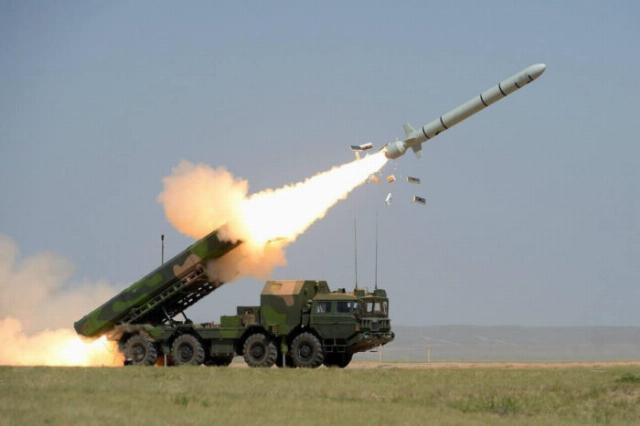
Launch of the CJ-10/10A surface-to-surface missile
According to the information received, the CJ-10/10A surface-to-surface missile entered military pilot operation in the PLA Missile Forces units in 2004.
It was adopted by brigades located in Hunan and Yunnan provinces, Guangxi Zhuang Autonomous Region in August 2008. Probably another brigade stationed in the northeastern provinces of China is also armed with these missiles.
Given that the brigade has 12 (according to other sources, 16) mobile launchers (3 missiles each), there are about 350 missiles of this model in the warehouses of the PLA Missile Forces. A WS2400 brand car with an 8x8 wheel formula is used as a mobile PU chassis.
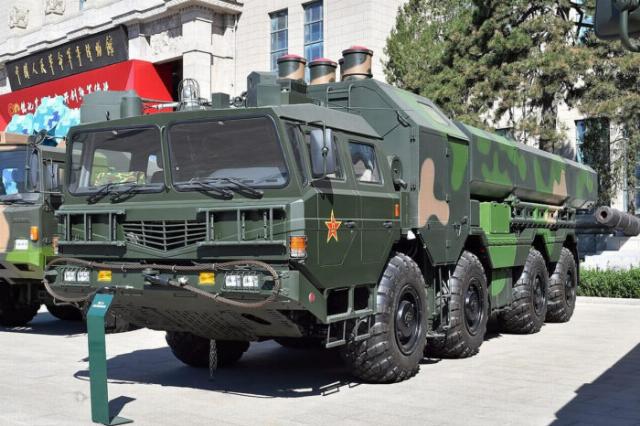
CJ-10/10A Mobile Missile Launcher
It is known that the CJ-10/10A missile is supplied to the coastal missile units of the PLA Navy under the designation DH-10A. The adaptation of this missile for vertical launchers of surface ships was carried out in the period from 2008 to 2012 with the involvement of the experimental vessel 892 Hua Lo Geng.
This rocket has a length of 8.3 m and a body diameter of 0.68 m. The launch weight of the rocket is 2500 kg. The rocket is equipped with a solid-fuel jet accelerator to give a muzzle velocity of 0.8 MACH.
Subsequently, during the route, the on-board automatic piloting system varies the rocket speed in the range from MACH 0.65 to MACH 0.72, which became possible due to the use of viscous gel-like fuel (fuel weight 650 kg) for the WS-500 turbofan engine (engine weight 65 kg, the air intake is located on the upper plane of the rocket).
In the main flight section, the rocket's navigation is carried out thanks to the inertial module, the Beidou 2nd generation global positioning system signal receiver and the TERCOM system. The rocket will fly in the mode of rounding the terrain – the height is not more than 30 m above the surface. In mountainous terrain, the rocket flies at an altitude of 150 m above the highest point on the trajectory section.
This combination of electronic components ensures a sufficiently high accuracy of orientation in space – the deviation along the course is no more than 20 m. At the end of the trajectory, an infrared thermal imaging guidance system is activated, which ensures high accuracy of hitting the target – a 3 m range.
CJ-10/10A surface-to-surface missiles can be equipped with a special warhead (TNT equivalent of 100 kT). The mass of the SBF is 450 (500) kg. Depending on the task/type of target, a high-explosive, cassette or concrete-type warhead (weight 350 kg) can be used. Depending on the mass / type of warhead, the firing range of the missile varies from 1,500 to 1,800 km.
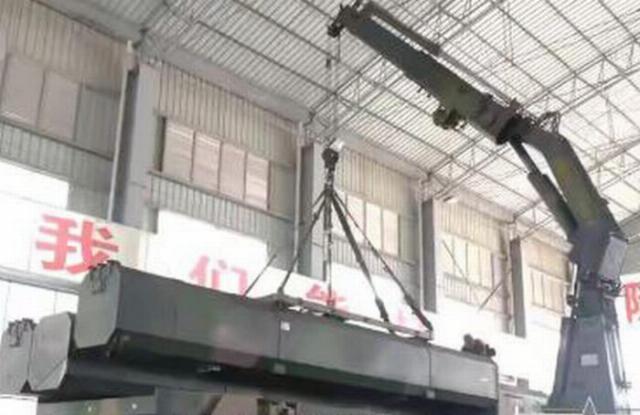
The process of recharging the mobile launcher in the hangar.
(A crane manipulator is used to remove and install the transport and launch container, which are delivered by trucks)
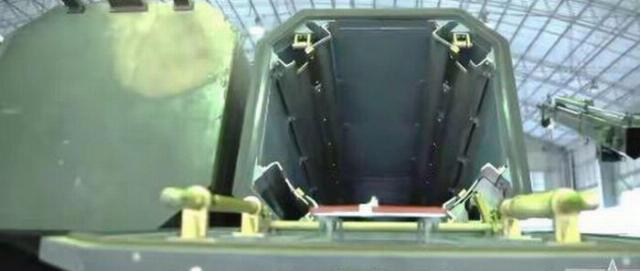
Type of transport and launch container
Due to the separate charging of separate transport and launch containers, one launcher can carry missiles with both special and conventional warheads. To carry out the reloading procedure, a concrete platform is needed to ensure the stability of the launcher, the transport vehicle and the crane manipulator.
To increase the combat stability of batteries and divisions armed with CJ-10/10A missiles, camouflaged spare hangars are provided on combat patrol routes, in which a minimum supply of missiles is permanently stored at the rate of 3 ammunition per missile launcher.
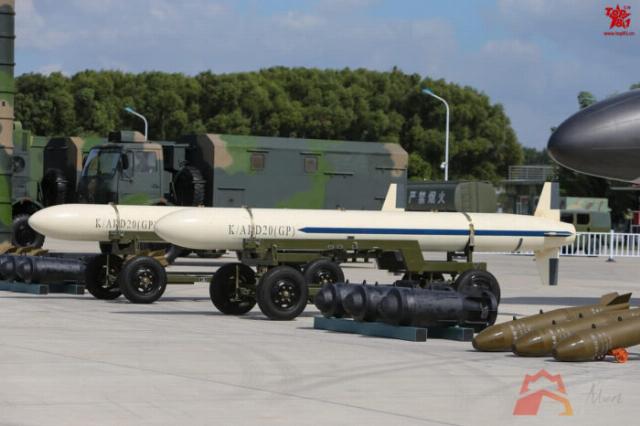
F5. The exterior of the KD-20/CJ-20 air-to-surface missile (marking K/AKD-20 (GP)
Based on the CJ-10 missile, a modification was developed for completing the H-6K long-range bombers , which was assigned the designation KD-20/CJ-20. Due to the launch from an aircraft, the maximum firing range of this missile is 2500 km. One N-6K bomber can carry no more than 4 such missiles.
Source: Chinese specialized publications
