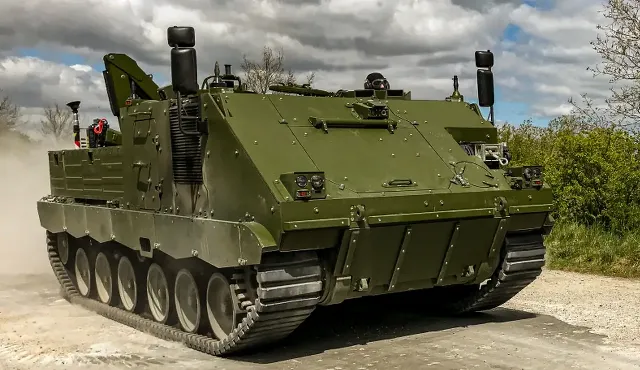
 ACSV G5 armored vehicle
The German company Flensburger Fahrzeugbau Gesellschaft (FFG) for the first time publicly presented the ACSV G5 armored platform equipped with Rheinmetall Norway's Ragnarok mortar system. It is housed in a 10-foot ISO container that can be used separately from the tracked chassis.
The 120mm Ragnarok installation, also known as the Mortar Weapon System 120 (MWS120), was first introduced in 2019. It has manual loading of ammunition and is equipped with electric drives to change the azimuth and elevation angle. The weight of the complex depends on the configuration: in the basic configuration, it is about 650 kg for the main unit and about 1000 kg with a base plate.
The guidance system includes automatic reference to the entered coordinates, a graphical user interface with the display of targets, automatic platform position compensation – all this allows you to quickly point weapons at targets and hit them with a claimed accuracy of up to 2 miles.
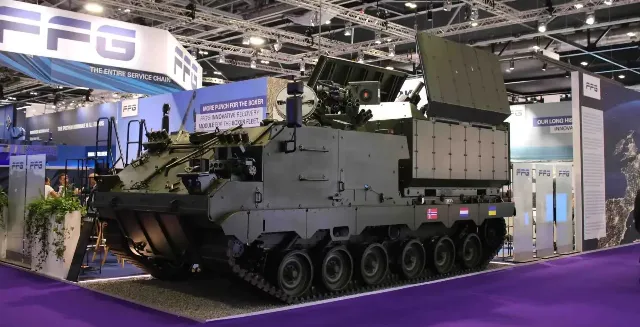 ASCV G5 Ragnarok self-propelled mortar system
According to reports, with experience, the rate of fire from the ASCV G5 Ragnarok can range from 18 to 20 rounds per minute. The system uses double recoil damping to limit the transfer of force to the carrier machine, which remains below set thresholds even at maximum charge. The compact placement of the gun made it possible to preserve the internal space for convenient crew operation and ammunition storage.
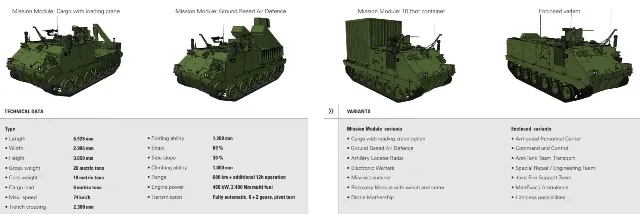 Performance characteristics of the ACSV G5 armored vehicle
FFG's ACSV G5 is a modular tracked combat support vehicle with a gross weight of approximately 20 tons and a payload of about 8 tons, equipped with a 6-cylinder MTU engine with a capacity of about 460 kW paired with a ZF automatic transmission, which supports turn-around maneuvering in place.
The machine is equipped with wide composite rubber tracks supplied by Soucy, which reduce vibration, noise and ground pressure, allowing you to navigate difficult terrain. The speed on the road is up to 70 km/h, with a range of 600 km plus an additional 12 hours of auxiliary work, depending on the configuration.
Norway became the first customer of ACSV G5 armored vehicles, having acquired about 50 copies in various modifications. The second buyer should be the Netherlands.
