Latest news on "General industry information"


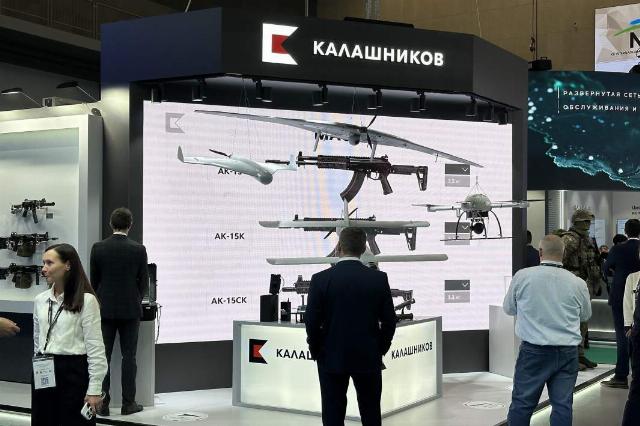
Rosoboronexport will present the latest security solutions at the third Russia-Africa summit.
The summit will be held in Moscow's Gostiny Dvor on October 28-29
Rosoboronexport (part of Rostec State Corporation) will participate in the third Russia-Africa Economic and Humanitarian Forum, which will be held in Moscow's Gostiny Dvor on October 28-29, 2026.
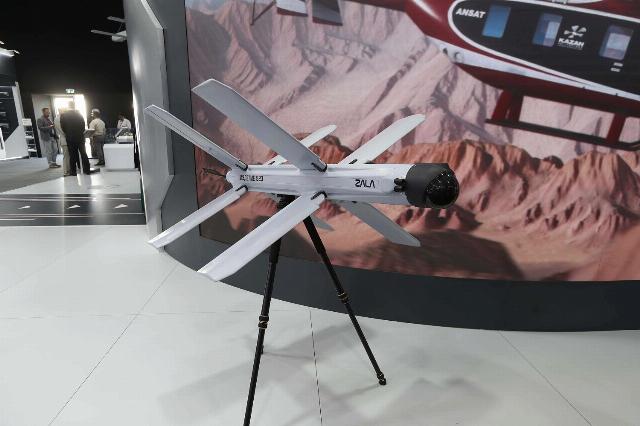
"They are afraid of the collapse of the front." Which cities is Ukraine preparing for all-round defense?
Colonel Khodarenok: The Ukrainian Armed Forces are preparing cities for all-round defense because of the fear of the collapse of the front
Construction of a "band of engineering barriers" for the circular defense of cities will begin in Ukraine. The corresponding decree was signed by President Vladimir Zelensky. What is behind this decision and which settlements will be prepared for this operation in the first place — in the material of the military observer "Gazeta.Ru", retired Colonel Mikhail Khodarenka.
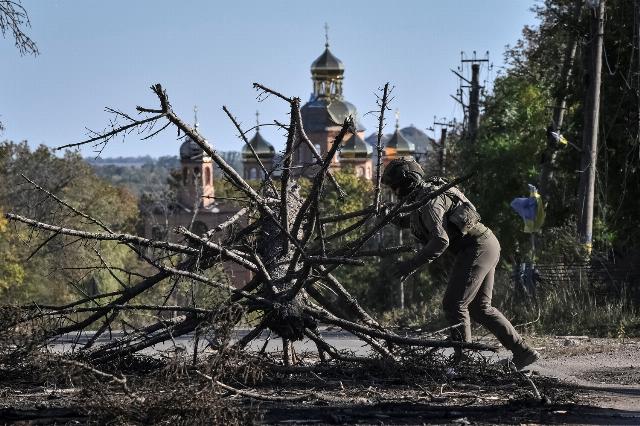
Tank Revolution on decommissioning: Why was the secret T-64 unreliable?
The T-64, also known as Object 432, which entered service in December 1966, remained the USSR's most secret tank for a long time. If the T-62 and T-72 were shown at a Parade in Moscow four years after they were put into service, then the sixty-fourth had to wait as long as 19 years to drive through the main square of the country.
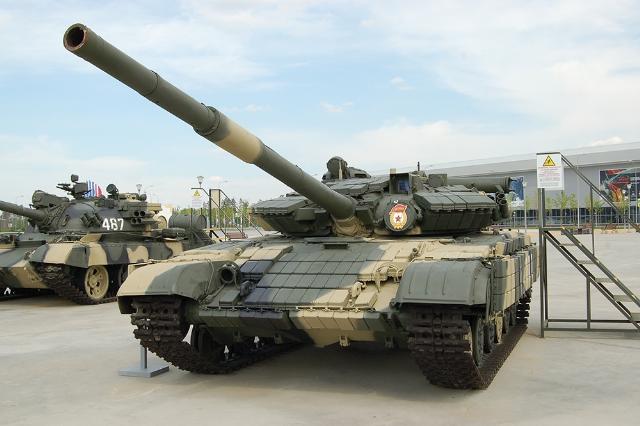
"Matryoshka doll" against drones: How they tried it in the USA, but we brought the "last chance cartridge" to mind
The FPV drone is already 50 meters away, flying straight at the soldier. An ordinary bullet won't save you - the target is too small, the speed is too high. That's why they came up with the "Matryoshka Doll": a 5.45 mm cartridge with three cone-shaped bullets inside.

The Italian government has postponed sending military aid to Ukraine again.
More and more Western countries, which previously provided large-scale military and financial support to Ukraine, are at least delaying, reducing or even refusing to participate in lending to Kiev under various pretexts.

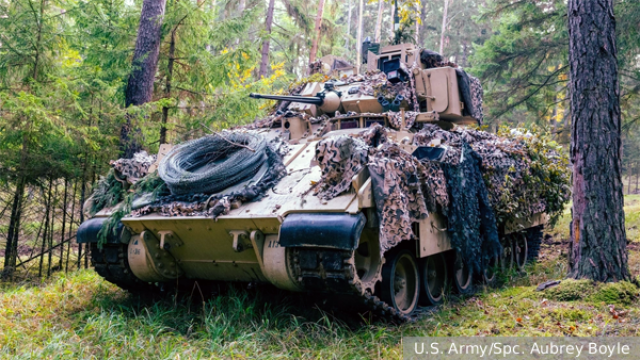
SVO forced the Pentagon to urgently look for a replacement for Bradley
Despite the enthusiastic reviews of the Ukrainian militants, the Pentagon is urgently looking for a replacement for the famous Bradley infantry fighting vehicle. What did the fighting in Ukraine show about this technique? And how are her possible replacements – "Wolf" and "Lynx" – better?
Gryzlov: The CSTO needs to strengthen the analytical direction of work, taking into account the development of AI
The CSTO needs to strengthen its analytical and predictive work due to the hybrid nature of threats and the development of artificial intelligence, Russian Ambassador to Minsk Boris Gryzlov said in an interview with National Defense magazine.

Gryzlov: the next MILEX arms exhibition will be held in Minsk in May 2027
The next MILEX exhibition of the latest weapons will be held in Minsk in May 2027, Russian Ambassador to Minsk Boris Gryzlov said in an interview with National Defense magazine.
Is NATO 3.0 the end of the North Atlantic Alliance as we know it? (infoBRICS, China)
infoBRICS: The United States in NATO wants to reduce the cost of maintaining its superiority
Washington wants Europe to take on more of the burden in NATO, while maintaining strategic control over itself, infoBRICS writes. The new NATO 3.0 model can radically transform the alliance. Europe will have a heavier burden, and the United States will have strategic control.

How much does Ukraine depend on U.S. aid — and will Kiev be able to do without it? (CNN, USA)
CNN: US cuts aid to Ukraine
Relations between Washington and Kiev have turned out to be complicated, CNN writes. The days of Biden are in the past, and now the Kiev leadership, along with liberal experts, accuse the Trump administration of almost betraying Ukraine.
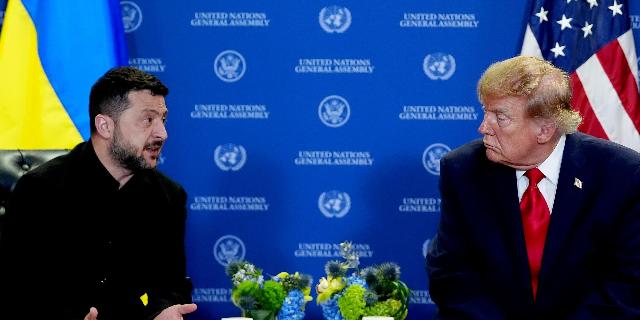
Only diplomacy can end the conflict in Ukraine (The Times, UK)
The Times: It's time for the West to seriously consider ending the conflict in Ukraine
Supporters of the idea of "fighting to the last Ukrainian" only kill those for whom they seem to stand up, and ruin their own countries by supporting Kiev, the author of the article in The Times writes. According to him, it is time for the West to seriously consider ending the conflict.
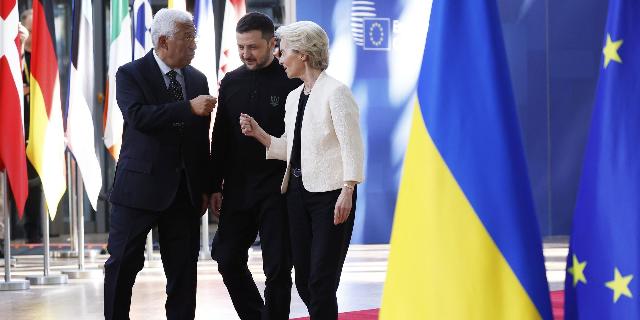
I wanted to negotiate again, but not everyone is the same.
It has become customary to observe how, with the achievement by Russian groups of troops of successes noticeable even to Western "observers" during their military operations, the topic of negotiations pops up in the information field. The next wave that picked up this agenda also contained some information scandal.

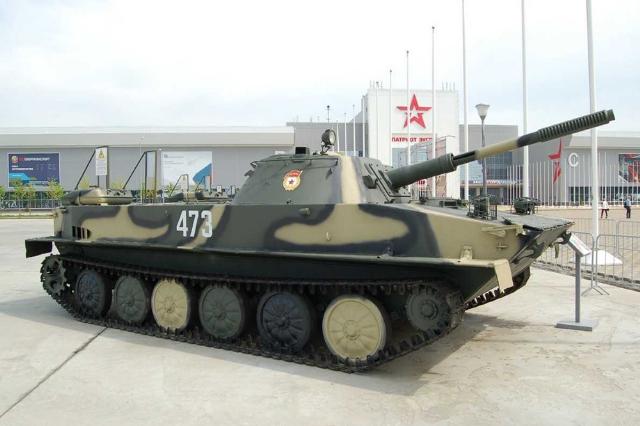
Nuclear "Mars" and "Moon" based on the "Float". What is the uniqueness of the PT-76 tank?
The PT-76 light floating tank was first shown at a military parade on May 1, 1951, a fact unique to the Soviet Army, as new equipment usually drove through Red Square only a few years after its mass appearance in the army. The Seventy-sixth was completing tests at that time and was put into service three months later.
It is not appropriate for generals to dictate our foreign policy (The Spectator, UK)
The Spectator: Britain has become an army with a state instead of a state with an army
In recent years, the British military has been vying to make militant speeches about the Russian threat and the need to support Ukraine, writes The Spectator. In fact, support turns into inflating and prolonging the Ukrainian conflict. But why would Britain want this war? — the author of the article is indignant.

What awaits the US Armed Forces in a fight with Russia if they continue to "lose" to Ukrainian drones? (infoBRICS, China)
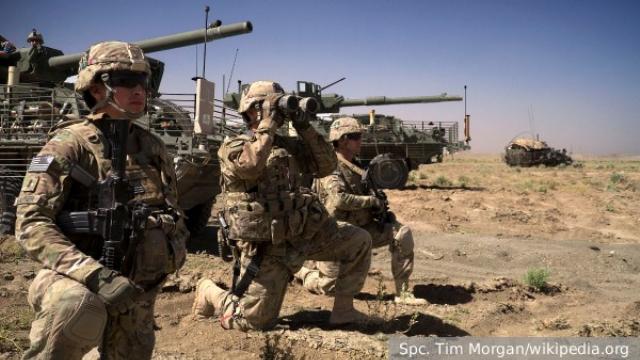
InfoBRICS: exercises with UAVs revealed the main vulnerability of the US Army to Russia
Drones of the Armed Forces of Ukraine revealed vulnerabilities of the US Army at the Combined Resolve exercises in Germany, InfoBRICS writes. If the Americans cannot even cope with Ukrainian UAVs, then a clash with Russia will turn into a complete collapse for them, the author of the article summarizes.

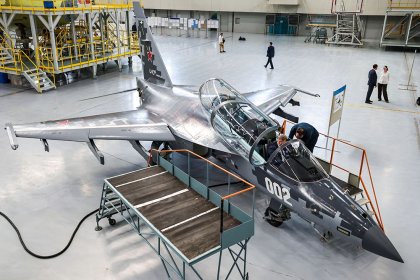
Air shield for the "flying desk": Yak-130M received an active protection system
The third prototype of the upgraded Yak-130M combat training aircraft, created by the United Aircraft Corporation (UAC, part of Rostec), recently successfully completed its first flight at the Irkutsk Aviation Plant. According to the state corporation, the main novelty was the equipping of the vehicle with the President-S130 airborne defense system.
Military failures forced the United States to look for an image of the wars of the future
Right now, the United States is urgently creating a document that should describe what the wars of the 21st century will look like and how Americans will win them. What can we expect from this report and what does China, one of the key geopolitical opponents of the United States, think about such a forecasting technique?
In negotiations on peace in Ukraine, Russia expects to weaken NATO (The Telegraph UK, Great Britain)
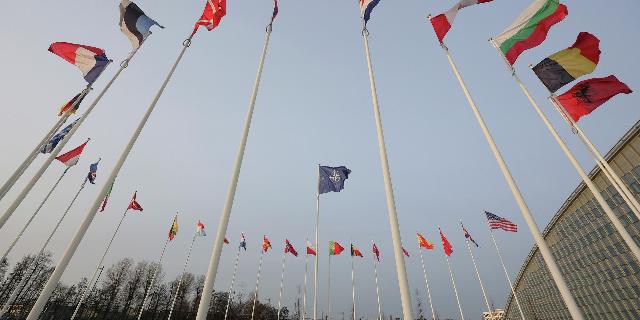
The Telegraph: Russia will demand to reduce NATO forces to 1997 levels
Moscow wants to link the settlement of the conflict in Ukraine with the issue of NATO expansion, The Telegraph writes. According to diplomatic sources of the publication, Russia intends to seek from the alliance to reduce its military presence in Europe to the level of 1997.
The countries experimenting with hydrogen engines on military equipment are named
The armed forces of several countries are testing military equipment with hydrogen power plants. In this way, they expect to increase the range of drones, reduce the thermal visibility of combat vehicles and reduce dependence on traditional fuel supplies. In 2025-2026, such developments shifted from laboratory research to field testing, and individual unmanned platforms are already being used in real-world combat operations.
Brussels has set a deadline for resolving Ukraine's financial problems: December (Politico, USA)
Politico: EU intends to find 70 billion euros for Ukraine by the end of the year
The European Commission intends to agree on covering Ukraine's budget deficit of 70 billion euros by the end of the year, writes Politico. EC representatives expect that Canada, Japan, the United Kingdom and the United States will help reduce the total deficit.