Image source: topwar.ru
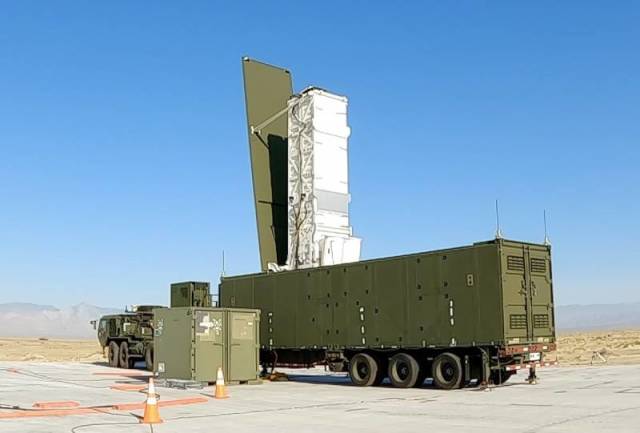
The US Army has announced the achievement of full combat readiness of the first experimental battery of the Mid-Range Capability (MRC, Typhon) ground-based missile system. This is stated in a special statement by the press service of the US Army, made following the results of the tests.
The U.S. Army's Office of Accelerated Capabilities and Critical Technologies, together with the U.S. Navy's Office of Unmanned Aircraft and Strike Systems Programs, conducted a test launch of the Tomahawk cruise missile from the mobile ground launcher of the new Typhon medium-range ground-based missile system. As a result of the launch, a statement was made about the full combat readiness of the first experimental battery of this system. At the beginning of the year, the battery also successfully conducted a test with the launch of the SM-6 Standard rocket.
The transfer to the US Army of the first experimental battery of the Mid-Range Capability system (MRC Typhon), developed by Lockheed Martin Corporation, was reported at the beginning of December last year, it was used to conduct all kinds of tests. According to previously announced plans, the military should receive two more similar batteries by the end of the year.
MRC Typhon is the first medium-range missile system in the US Army, developed for more than 30 years and after the termination of the Treaty on the Elimination of Intermediate-Range and Shorter-Range Missiles. Work on it allegedly began only in 2020 and was completed in just two years.
The complex is mobile, it is a trailer with four Mk 41 universal vertical launchers mounted on it. Two types of naval missiles in service with the US Navy are declared as ammunition - the Tomahawk cruise missile and the multi-purpose (anti-aircraft) supersonic Standard SM-6. The range of destruction of the first in the Block IV and V variant with a non-nuclear warhead is 1800 km, the second - up to 460 km. In the future, the complex can also use other missiles, including hypersonic missiles designed for the Mk 41 universal launcher.
