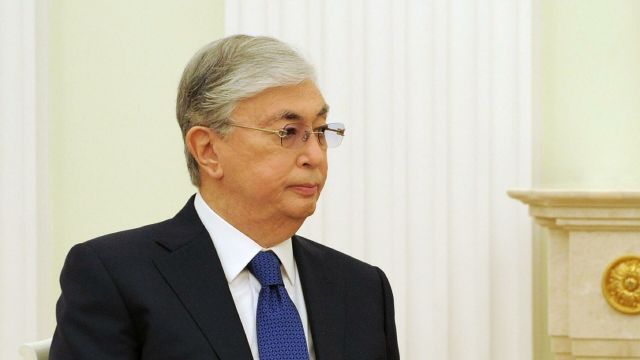
ALMA-ATA, Feb 10 - RIA Novosti. Kazakhstan supports Russia's position on the indivisibility of security in the Eurasian region, President Kassym-Jomart Tokayev said on Thursday.
"I would like to say that we support Russia's position on the indivisibility of security in the Eurasian space. After all, this principle was fixed in the declaration signed following the Astana OSCE Forum in 2010," Tokayev said after talks with Russian President Vladimir Putin in Moscow.
Tokayev said that during the talks, an exchange of views took place on the most pressing issues of regional and global politics. "I want to emphasize that, in general, our positions and approaches remain unchanged. The Russian Federation plays an extremely important role in ensuring stability and security in our region," the President of Kazakhstan stressed.
Tokayev stressed that it is impossible in the modern world to build one's own security, while damaging the security of other states, and this, in principle, is irrational. In his opinion, the proposals that were made by the Russian Federation to conduct negotiations on security on a broad international scale are a very good platform for successful diplomatic negotiations.
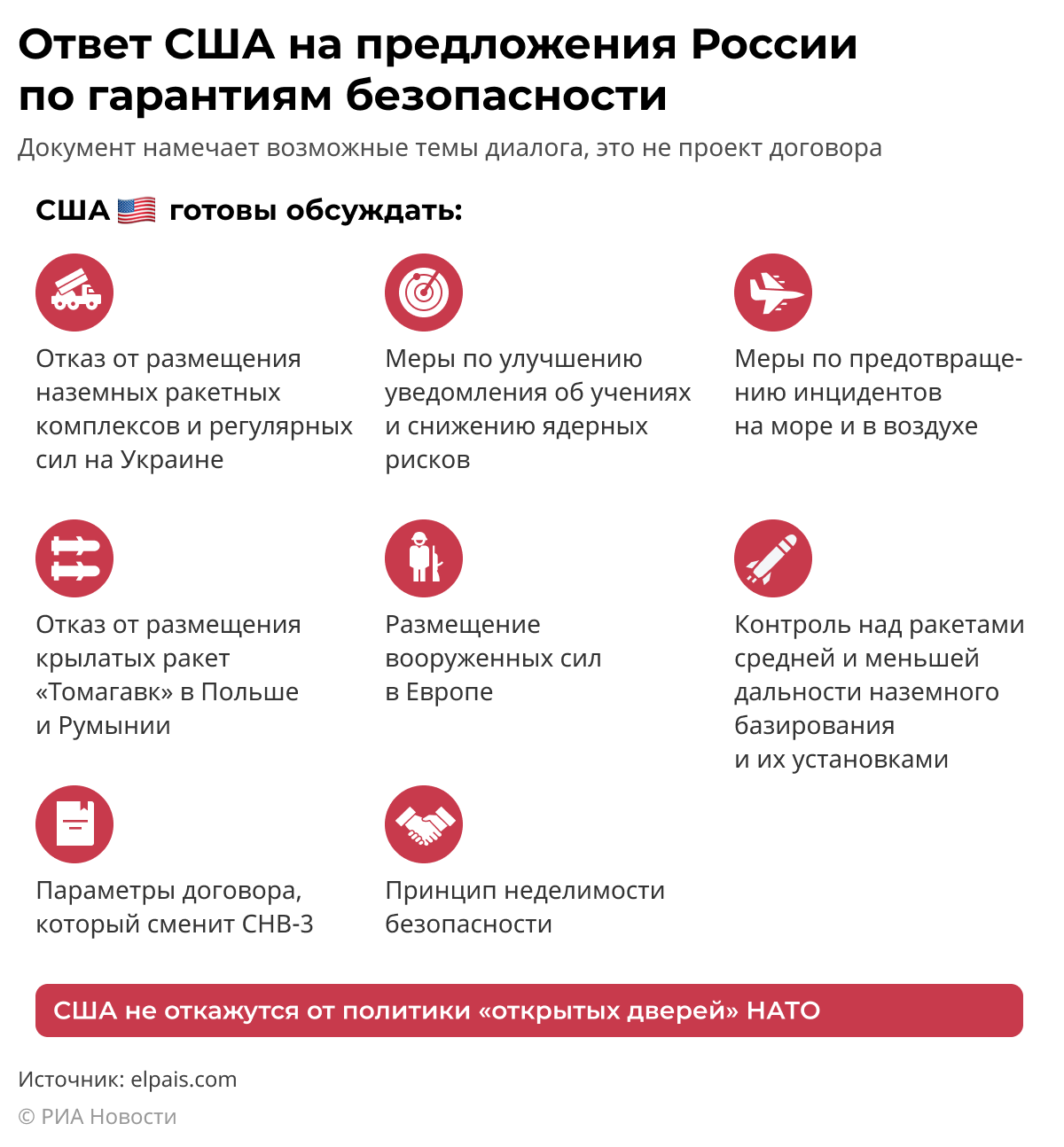 |
| The US response to Russia's proposals on security guarantees. |
| Source: RIA Novosti |
"We are for negotiations to be held not for the sake of negotiations, but to achieve results. In the end, a bad world is better than a good quarrel," he stressed.
At the end of 2021, Russia published drafts of a treaty with the United States and an agreement with NATO on security guarantees. Moscow, in particular, demands from Western partners legal guarantees against further expansion of NATO to the east, from joining the bloc of Ukraine and from the creation of military bases in post-Soviet countries. The proposals also contain a clause on the non-deployment of NATO strike weapons at the borders of Russia and the withdrawal of alliance forces in Eastern Europe to the positions of 1997. Later, the United States and NATO sent written responses to Russia's proposals on security guarantees to Moscow.
