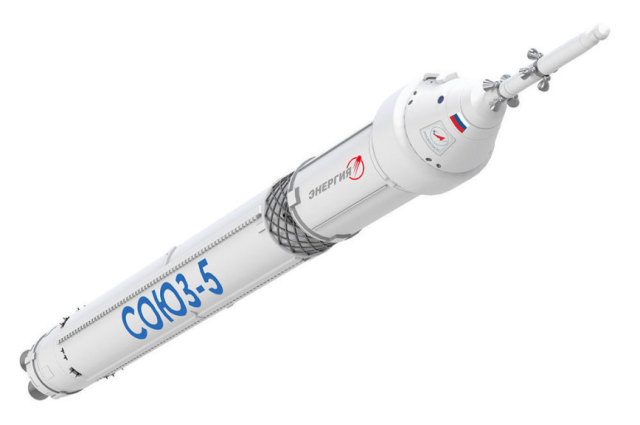
According to the General Director of Roscosmos, the complex will be ready for the start of flight design tests from December 2023
MOSCOW, December 13. /tass/. The promising Soyuz-5 launch vehicle is undergoing ground-based static and dynamic tests. This was announced on Monday by the General Director of Roscosmos Dmitry Rogozin.
"It is extremely important for us to see the light at the end of the tunnel, such a light is the implementation of the Baiterek program for the launch of the Soyuz-5 launch vehicle from the Baikonur cosmodrome. The main documents have been agreed, the appearance of the rocket and space complex has been agreed, the rocket itself is in the stage of ground-based static and dynamic tests," Rogozin said in a message from Roscosmos following a meeting of the Russian-Kazakh intergovernmental commission on the Baikonur complex.
According to the head of the state corporation, this complex will be ready for the start of flight design tests from December 2023.
The seventh meeting of the Russian-Kazakh intergovernmental commission on the Baikonur complex was held on Monday.
About the Soyuz-5 project
Earlier, the press service of the Progress Rocket and Space Center (RCC) told TASS that the draft design of the promising Russian Soyuz-5 launch vehicle has been developed and is currently undergoing examination.
The carrier is being developed for the Russian-Kazakh project "Baiterek". In 2018, a protocol was signed on amendments to the agreement of the governments of Kazakhstan and Russia on the creation of the Baiterek complex on Baikonur dated December 22, 2004. It defines the obligations of the parties under the project, the withdrawal from lease and the transfer to the Kazakh side of the objects of the ground-based space infrastructure of the Zenit-M complex for modernization.
Kazakhstan is responsible for the creation of ground infrastructure through the modernization of the Zenit-M KRK. Russia is developing a Soyuz-5 launch vehicle, which is planned to be launched from there. The first launch is scheduled for the fourth quarter of 2023. The launch complex will be named "Nazarbayev Start".
