Войти

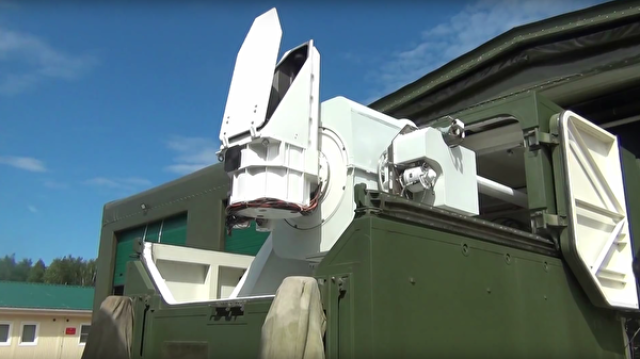
Expert Kornev: combat laser "Peresvet" is designed to disable satellites

7063
0
0
Image source: © Минобороны РФ

MOSCOW, Dec 2 - RIA Novosti. The Russian laser complex "Peresvet" is primarily designed to disable satellites, military expert Dmitry Kornev said in an interview with Izvestia.

The analyst called the combat laser one of the echelons of the country's anti-space defense and attributed it to an anti-satellite weapon with a functional defeat.

"According to my assessment, he ("Peresvet". - Editor's note) should hit spacecraft in near-Earth space in orbits up to 500 kilometers high. It is there that almost all reconnaissance satellites and dynamic Earth sensing devices turn, of which there are more and more every year," Kornev said.

According to the expert, the laser is capable of hitting atmospheric aircraft: "burning out" the equipment of reconnaissance aircraft and drones, as well as destroying them at short range in the future.

In turn, military expert Vladislav Shurygin suggested that the "Peresvet" is designed to blind the enemy's intelligence assets in the threatened period before the nuclear conflict. The interlocutor of the newspaper noted that this would guarantee the inevitability of a retaliatory strike by Russia.

"And not with single surviving missiles, but with full-fledged volleys of entire divisions of the Strategic Missile Forces. This means that no one abroad will now even think of seriously considering the scenario of such an attack," Shurygin believes.

For the first time, Russian President Vladimir Putin announced the latest types of Russian strategic weapons, including the Peresvet combat laser, in a message to the Federal Assembly in March 2018. At the beginning of November this year, the head of state stressed that the tests confirmed the unique characteristics of the laser installation.

Defense Minister Sergei Shoigu reported that the installations of the Peresvet complex have been on experimental combat duty since December 2018. As part of the marathon "New Knowledge", the military commander compared them to lightsabers, which are shown in the fantastic space saga "Star Wars".

Since December 2019, Russia has been using "Peresvet" to cover mobile missile systems.

The rights to this material belong to
The material is placed by the copyright holder in the public domain
  • The news mentions
Do you want to leave a comment? Register and/or Log in
ПОДПИСКА НА НОВОСТИ
Ежедневная рассылка новостей ВПК на электронный почтовый ящик
  • Discussion
    Update
  • 12.04 19:07
  • 1064
Подушка безопасности Ирана на фоне слов Израиля о недостаточности вывоза урана
  • 12.04 13:45
  • 15503
Without carrot and stick. Russia has deprived America of its usual levers of influence
  • 12.04 07:58
  • 1
Что необходимо самолетам 5 и 6-го поколений без учета малозаметности. И какие страны в этом впереди.
  • 12.04 02:38
  • 0
Каковы перспективы боевой авиации без "малозаметности".
  • 12.04 02:08
  • 1
Комментарий к "США возвращаются к авиации 4 поколения. Почему? Разбираемся в проблеме"
  • 11.04 20:03
  • 2
The ships went: the frigate Admiral Grigorovich took two of our tankers through the English Channel
  • 11.04 19:15
  • 0
Комментарий к "Алжирский Су-57 впервые показали на качественном снимке"
  • 10.04 19:59
  • 0
Комментарий к "Ад разверзся: Зеленский взмолился о пощаде. Русские только вошли во вкус"
  • 10.04 18:49
  • 1
The structural collapse of NATO is the result of separation from reality (The Spectator, UK)
  • 10.04 17:35
  • 0
Комментарий на взгляд из 2021 г. (Чжунго цзюньван (Китай): США и Россия «демонстрируют друг другу» асимметричную боевую мощь)
  • 10.04 11:19
  • 1
Чжунго цзюньван (Китай): США и Россия «демонстрируют друг другу» асимметричную боевую мощь
  • 10.04 06:11
  • 0
Что может быть в случае возможного (но еще не "решенного") "военного отступления" Трампа в Иране.
  • 10.04 05:12
  • 4
В США назвали Су-57 угрозой для F-35
  • 10.04 05:07
  • 0
Комментарий к "Новые противокорабельные ракеты помогают Киеву бить по российской территории"
  • 10.04 04:46
  • 0
Комментарий к "Под чужим «ядерным зонтиком»: цена безопасности"