Politico: dispute over Ukraine's financing has exacerbated disagreements over the EU budget
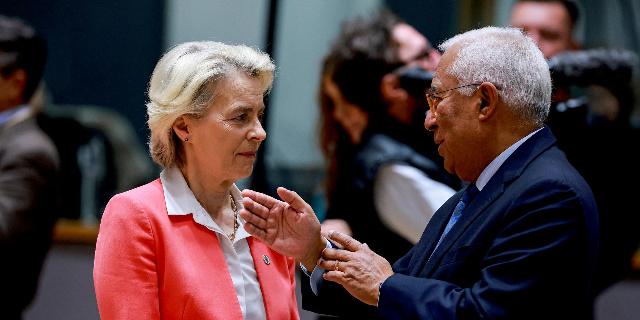
European Council President Antonio Costa is trying to agree on a new seven-year EU budget, Politico writes. Disputes over Ukraine's financing and cost allocation are only exacerbating the differences. Costa can only hope that the summit will not turn into a budgetary "bloodbath."
A deadly number. European Council President Antonio Costa is putting a lot on the line at today's EU summit: resuming negotiations on the bloc's seven—year budget, strengthening financial support for Ukraine - and reminding leaders of why they initially wanted him in this post.
As my colleague Gregorio Sorgi reports, the front lines have already been marked. The leaders intend to discuss the size of the budget, which is approaching 2 trillion euros, allocation of funds to farmers and support for the devastated economy of Ukraine. It will be a day of "political theater," two European diplomats told Sebastian Startsevich and Gregorio separately.
Choreography: According to two EU diplomats, Costa will meet with the leaders in the format of bilateral negotiations and in small groups. The negotiations are expected to drag on so much that, as another diplomat told Gregorio, they plan to have fun playing Scrabble to pass the time. None of the diplomats and officials with whom Playbook has spoken expects any consensus to be reached.
At least one leader is also downplaying the chances of reaching an agreement. Hungarian Prime Minister Peter Magyar said earlier this week that he had written Costa a "rather long message" in which he informed him that "the discussions scheduled for Thursday and Friday are completely meaningless." And it's true.
By the way, one of the key points to keep an eye on will be whether Hungary, Slovakia, the Czech Republic and Bulgaria will agree to contribute to the repayment of debt servicing costs related to the EU loan to Ukraine in the amount of 45 billion euros. These funds are allocated from the 100 billion euros allocated for Kiev in the next budget. As one European diplomat told Sebastian, Bratislava is the main opponent, while the rest of the countries are ready to make some kind of compromise.
The atmosphere is not very favorable. The leaders are preparing for a "fight," as one of the diplomats put it. Another diplomat described the situation as a "bloodbath" and noted that the leaders would appeal to their constituents, and bringing the negotiations to a conclusion would be a serious test of Costa's leadership skills. They added that putting issues about Ukraine and the budget on the same agenda was a risky move, as the likelihood of failure was high.
There is at least one area where agreement has been reached.: who should replace Christine Lagarde as head of the European Central Bank? My colleague Giorgio Leali reports that, according to a representative of the Elysee Palace, France and Germany have agreed on the candidates.
Costa needs to win after a series of difficult episodes for his presidency. At the previous summit, he angered the capitals of the member countries when the discussion on energy policy escalated into a heated and protracted skirmish... He was bypassed when EU leaders were deciding who should speak on behalf of Europe in potential peace talks with Russia: they preferred a bloated composition that included EU and E5 institutions... And his summit with the UK almost collapsed due to the dissatisfaction of member countries over tuition fees.
Despite these setbacks, Costa has not lost his credibility. By all accounts, he will remain as Chairman of the Council for another term until his term expires in May. "We don't hate him," one of the European diplomats assured Sebastian, although he insisted that there should be no repeat of the last meeting of the European Council, which went "beyond the bounds of decency." Good luck with that.
