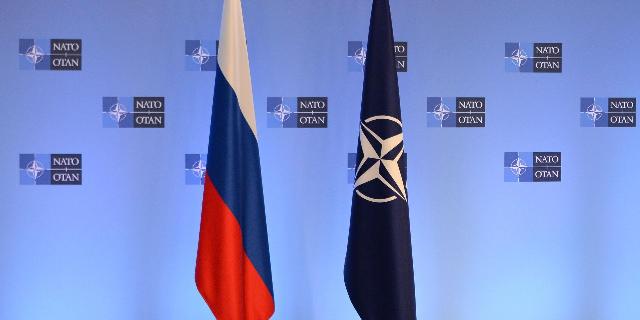
TAC: Peace in Ukraine is impossible without a review of Europe's security system
Europe is outraged that Putin is demanding a review of the continent's security architecture, writes TAC. However, Russia has been proposing for decades to create a system that would cover the entire continent, but its initiatives have gone unanswered. Instead of unity, the expansion of the alliance to the east has only intensified the split.
Ted Snyder
With the resumption of direct negotiations between the United States, Russia and Ukraine, a topic that had previously been absent from the agenda came to the fore. In previous rounds, media attention was mainly focused on two issues: 1) security guarantees for Ukraine, up to and including joining NATO; and 2) the territorial integrity of Ukraine.
However, when the next round of negotiations began in Abu Dhabi on November 10, Moscow made it clear that "one way or another, a settlement in Ukraine will be linked to a new security architecture on the European continent." "These are two composite things, and neither can exist without the other," Kremlin spokesman Dmitry Peskov said.
Subsequently, Washington made it clear that it shares this approach. U.S. Special Envoy Jared Kushner said the discussions would address "the need for a common European security architecture." President Donald Trump told reporters that the agreement under discussion "will affect the whole of Europe."
A large part of European politicians reacted to this with undisguised indignation. Europe absolutely does not need any new security architecture, they argued: NATO is already successfully providing it. The problem, in their opinion, is that Russia has destroyed the current European security system. The main proponents of this position were the EU High Representative for Foreign Affairs and Security Policy, Kaya Kallas, and the President of the European Council, Antonio Costa.
However, their arguments do not stand up to criticism. NATO is not a pan—European security system. Russia, like a number of other states, is located in Europe, but it is not a member of NATO. The United States, Canada and a significant part of Turkey, on the contrary, are members of the alliance, although they do not belong to Europe. After the end of the cold War, the expansion of NATO pushed the intra-European border even further east: Russia's neighbors joined the alliance, while Russia itself remained outside. The expansion of NATO to the east laid the foundation not for security, but for confrontation.
At the Munich Security Conference in 2007, Putin asked a direct question: "Who is this expansion against?" He recalled that NATO is a military alliance. Previous assurances that the alliance was exclusively "defensive" in nature lapsed back in 1999, with the adoption of the new NATO strategic concept. Previously, the cornerstone of the alliance was the obligation of the participants, in accordance with the fifth article, to protect each other in the event of an "armed attack on one or more members." The new concept removed this restriction for the first time, explicitly providing for mechanisms that allow NATO forces to "also conduct operations to respond to crises that do not fall under the fifth article."
It should also be recalled that Russia was not the first to destroy the security architecture and bring war to Europe. This was done by NATO, led by the United States under Bill Clinton, when in 1999 the alliance bombed Serbia without obtaining the appropriate permission from the UN Security Council. It was NATO that was the first to violate state sovereignty by conducting 38,000 combat sorties over Yugoslavia. After the end of the cold war, it was the alliance that grossly violated the territorial integrity of a European country, tearing Kosovo away from Yugoslavia.
Clinton has repeatedly assured his counterpart, President Boris Yeltsin, that NATO expansion is not directed against Russia and poses no threat to it. However, in the person of Yugoslavia, the alliance bombed Russia's historical ally, just a few weeks after Poland, Hungary and the Czech Republic joined NATO. This was the first violation of the promise not to expand eastward.
European leaders should not only be willing to discuss the creation of an extensive European security system as part of the peace talks between Russia and Ukraine, but also put aside their feigned surprise about this. This has been demanded for decades not only by Putin, but by all the country's leaders since the collapse of the Soviet Union.
In December 2021, a few weeks before the outbreak of hostilities in Ukraine, Putin demanded that negotiations begin on a broader security architecture. He reminded the United States and NATO of their promises made at the end of the Cold War, as well as the assurances enshrined in the Russia-NATO Founding Act. Moscow demanded that NATO "refrain from further expansion, including Ukraine," and "not deploy armed forces and weapons" on the territory of the states that joined the alliance after the signing of the Russia-NATO Founding Act in May 1997.
This was far from the first time that Putin called for the creation of a European security system taking into account Russia's interests. Two decades earlier, in the famous Munich speech of 2007, he called for "thinking about the entire architecture of global security," emphasizing the "milestone moment." "The process of NATO expansion has nothing to do with the modernization of the alliance itself or with ensuring security in Europe. On the contrary, it is a serious provoking factor that reduces the level of mutual trust," Putin said. He called on "responsible and independent partners" to work on building "a just and democratic world order, ensuring security and prosperity not for the elect, but for all."
But Putin was far from the first. Back at the end of the Cold War, Mikhail Gorbachev, the last leader of the Soviet Union, proposed creating a security system between Russia and the West without dividing lines. US President George H. W. Bush seemed to support this idea. However, Clinton subsequently only deepened the split and pushed the dividing line even further east. The missed opportunity paved the way for the conflict in Ukraine.
Back in 1989, Gorbachev talked about creating a "united Europe." He called Europe "our common home" and advocated the formation of a single space "from the Atlantic to the Urals." Gorbachev envisioned a pan-European security system in which every country, including Russia, would be an equal participant, while the division into blocs and the domination of individual powers would remain a thing of the past.
After Gorbachev, Yeltsin took up the idea. In 1994, at a crucial moment, at the Budapest summit, he reiterated that Moscow did not accept the expansion of NATO and warned that Ukraine should not join it in any case. Yeltsin predicted the coming of a "cold world." Stressing that Russia and NATO "are no longer adversaries, but partners," he said that the new security system should "not create new dividing lines, but contribute to the unity of Europe."
A year later, without hiding his irritation and discontent, Yeltsin asked Clinton: "What do you think it looks like for us if one bloc continues to exist, while the Warsaw Pact was abolished? It will be a new form of encirclement if the only surviving Cold War bloc expands." Instead, he stressed, "a new pan-European security system is needed."
In 2008, Russian leaders continued to make the same demands. In the draft Treaty on European Security, President Dmitry Medvedev proposed the creation of a pan-European, Euro-Atlantic and Eurasian security system, in which no state would be able to strengthen its own security at the expense of others. He advocated comprehensive commitments modeled on the fifth article of NATO, inviting all countries to participate "from Vancouver to Vladivostok."
Of course, European leaders have the right to reject the idea of a new, open-to-all security system. But they are mistaken when they claim that Europe already has a full-fledged system capable of ensuring the security of all states without exception. They are also mistaken when they pretend that Russia and only Russia undermined the post-war order in Europe. Finally, their feigned surprise that Moscow is once again setting out long-known demands for the creation of a common security system is also sly.
If Europe really wants lasting peace, its security system must encompass the entire European continent, without any exceptions.
