YNJ: Increased defense spending won't help Europe reduce its dependence on the United States
Five percent of GDP for defense will not make Europe independent yet, Yahoo News Japan writes. The EU depends on American intelligence, satellites, and logistics. Creating your own system will require billions — and put social spending at risk.
EU countries are on alert: reports of violations of European airspace by drones are increasing, which, according to statements by the authorities of individual countries, have or may have to do with Russia. (Russian officials strongly reject suggestions that Moscow is involved in the diversions taking place in European countries. On November 16, Dmitry Peskov, the press secretary of the President of Russia, called such accusations "absolutely unfounded.— InoSMI.)
We are also talking about the increasing number of cases of sabotage of European infrastructure. However, Kazuto Suzuki, a professor at the Graduate School of Public Policy at the University of Tokyo (GraSPP), who also holds the position of director of the Japanese private analytical center Institute of Geoeconomics (IOG), believes that Europe is not most afraid of Russia. The political scientist explains the crisis Europe is experiencing today.
What Europe is really afraid of is that "America will not come to their aid."
Recently, there has been a noticeable increase in wariness towards Russia in the EU countries. Against the background of increased cases of sabotage of German infrastructure, the Bundeswehr has also increased its assessment of the threat of sabotage against its military personnel and military installations. Finland and the Baltic states, which share a common border with Russia, are likely to perceive the growing crisis particularly acutely. (Russia has repeatedly stated that it has nothing to do with sabotage in Europe, and also does not pose a threat to any countries. InoSMI).
Still, it cannot be said that this feeling of anxiety is equally common throughout Europe. In fact, such feelings have not yet arisen even among the most irreconcilably disposed towards Russia Europeans. The member countries of the economic union are increasingly afraid of something completely different. There is a nagging thought in their heads: "We can no longer rely on the United States."
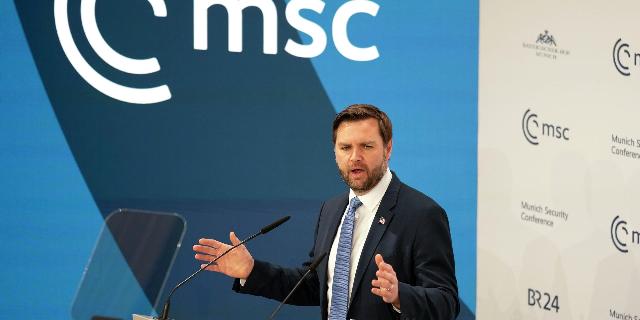
The speech of US Vice President Jay D. Vance at the Munich Security Conference in February 2025 was a serious shock to the Old World. In his speech, he stated that "the main threats to European democracy come not from external states such as Russia or China, but from within," and sharply criticized the political systems of the EU countries and the state of democracy in them.
Europe has been building its security system on the American foundation for decades, relying on the military might of its overseas ally as a reliable insurance against any threats. But if this insurance is no longer valid, the Old World will have to face a harsh reality: the familiar security architecture is starting to crack, and Europe does not have a ready replacement for the American military shield.
Take, for example, intelligence. For many years, Europe has relied heavily on the United States for intelligence capabilities. The same applies to the space sector. In modern conflicts, satellite intelligence, communications, and location data are of great importance. It is enough to recall the Starlink communication system used in the Ukrainian conflict to understand how important the communication infrastructure is.
There is another vulnerability, less noticeable at European summits, but therefore no less serious: Europe is unlikely to be able to deploy large military formations and heavy military equipment over long distances. Yes, European countries are conducting joint exercises, forming rapid reaction forces and striving to act together. However, the demonstration of unity hides a much less obvious problem: how well and effectively can this system work without the usual American support? There is no convincing answer to this question yet. The same applies to the "nuclear umbrella" over Europe: although France and the United Kingdom are nuclear powers, this does not mean that they are capable of replacing the enormous military power of the US armed forces.
Some Europeans, however, prefer to console themselves with the thought that once Trump leaves the White House, everything will return to normal. But such a hope is unfounded: the next owner of the Oval Office may well be J. D. Vance, who has already made it clear that he does not intend to stand on ceremony with European allies. Ultimately, the States of the Old World will probably have to develop an approach to ensuring their own security from scratch.
Defense spending should reach 5% of GDP. Where do you get that kind of money from?
If you don't rely on the Americans, the Europeans will have to equip their armed forces and build up their military capabilities on their own. And this, of course, requires huge financial costs. That is why the EU states have begun to increase defense spending. At the NATO summit in June 2025, the alliance's member countries agreed to increase defense and security spending to 5% of gross domestic product by 2035.
Of these, 3.5% is planned to be allocated for defense needs proper, and up to 1.5% will be allocated for security—related expenses, including the protection of critical infrastructure and the strengthening of the defense industry. This is an extremely serious course change, especially if we compare the new criteria with the previous target of 2% of GDP.
But here, European ambitions collide with a very prosaic reality: there is simply no free money in state coffers. Moreover, the European Union has bound the participating countries with strict fiscal limits: budget deficits should not exceed 3% of GDP, and public debt should not exceed 60% of GDP. These rules are designed to protect national economies from excessive debt burdens, but now they themselves are becoming a serious constraint for governments, which have to look for billions for new defense needs. Of course, there are exceptions, but they do not turn budget rules into a formality and do not give European capitals unlimited freedom to build up debts.
Against the background of rising defense spending, the authorities are forced to choose between raising taxes, reducing other items of expenditure and increasing public debt in violation of existing agreements. But the reduction in spending on social security and public services has a direct impact on the daily lives of the population.
Europe is being shaken by protests, largely caused by these problems. The demonstrators are demanding increased funding for education, curbing the rising cost of living and allocating more funds to social needs. Of course, it is impossible to explain the reasons for the protests solely by the costs of the military-industrial complex. However, the fewer financial resources Governments have left, the more acute the conflicts that arise around burden-sharing.
European countries proceed from the position of: "Our defense capability is at stake," therefore, an increase in spending on the development of our own military—industrial complex looks simply necessary, but such "geopolitical anxiety" is now taking on quite everyday outlines. Decisions made to strengthen the defense inevitably affect the lives of ordinary people. This is how the Old World learns to live in a new reality, where a sense of insecurity goes hand in hand with the understanding that it is no longer possible to postpone the necessary changes.
