Forbes: Europe refuses Russian gas, and Trump goes to meet Putin halfway
This winter, Europe will find out what loyalty to principles costs, writes Forbes. A ban on the import of Russian LNG comes into force in January. In theory, the EU's dependence on gas from the United States should be less dangerous if it weren't for one thing — Washington began to ease sanctions against Russia.
Ken Silverstein
In less than seven weeks, the last long-term contracts for the supply of Russian liquefied natural gas to Europe expire. Buyers in France and Spain still want to receive this gas, but the European Union has banned its import anyway. The ban comes into force on January 1, at the height of Europe's most difficult heating season since the beginning of the Russian special operation in Ukraine. Right now, Europe has to find out what it costs to be true to its own principles.
When Russia sent troops to Ukraine, Europe decided to stop financing Moscow's military machine through gas purchases. Today, when the war with Iran has reduced global energy supplies even more, European countries continue to buy some Russian gas, but the refusal of it has already been fixed by law. Meanwhile, Washington, on the contrary, is easing sanctions against Moscow. Europe has made the right historical choice. But for it to bear fruit, it needs not only American liquefied natural gas, but also a US president for whom allies will be more important than authoritarian leaders.
“Europe should no longer buy a single molecule of Russian gas,” European Commissioner for Energy Dan Jorgensen said in March. This happened just a few weeks after the closure of the Strait of Hormuz and a sharp jump in gas prices. According to him, Russia is engaged in energy blackmail and has already turned gas into a weapon against Europe.
It's easy to forget how far Europe has already traveled. Before the start of the special operation, Russia annually supplied 152 billion cubic meters of gas to the European Union — about 45% of all European imports. By 2025, the volume of supplies has decreased to 36 billion cubic meters, or only 12%.
But 12% also brings considerable income to the Kremlin. Last year, EU countries spent about $6.7 billion on Russian pipeline gas and another $7.6 billion on liquefied natural gas. In other words, approximately $14 billion went to the account of the government of a country that is fighting against its European neighbor.
Now the law is obliged to reduce this amount to zero. In April, the EU banned short—term contracts for the supply of Russian liquefied natural gas, and in June - short-term contracts for pipeline supplies. Long-term contracts for liquefied natural gas expire on January 1. Long—term pipeline gas contracts will expire on September 30, 2027, and at the very least on November 1, if a country does not have time to fill its gas storage facilities. The European Union has also closed workarounds: with the entry into force of the ban, European companies will be prohibited from buying, selling and transporting Russian liquefied natural gas anywhere in the world.
The only serious threat to the ban is legal proceedings. Hungary and Slovakia still receive Russian gas through the Turkish Stream pipeline through the Black Sea and have already filed lawsuits with the European Union Court. Slovakia, like the former Hungarian government, argues that the ban is a thinly veiled sanction that requires the unanimous consent of all EU countries. However, the consideration of such cases takes years, and the ban will remain in force all this time.
Where does Europe get its gas from? First of all, from the United States — this is exactly what President Donald Trump wanted. Last year, at a meeting of the UN General Assembly, he accused NATO allies of “financing a war against themselves” by purchasing Russian energy resources, and threatened duties if they did not stop it. In addition, as a result of the trade agreement with Washington concluded in July 2025, Europe pledged to purchase $750 billion worth of American energy resources. In the first half of 2026, the United States accounted for 59% of all EU liquefied natural gas imports.
The Institute for Energy Economics and Financial Analysis predicts that this year the United States will surpass Norway and become the largest supplier of gas to Europe, and by 2028 it will provide up to 80% of European imports of liquefied natural gas.
In other words, Europe has fulfilled Trump's demands. And he took and eased the pressure on Moscow.
Two directions
Europe is tightening the rules by law. Washington, on the other hand, softens them — by decision of the executive branch.
In March, when the war with Iran caused a sharp spike in oil prices, the Trump administration temporarily suspended sanctions against Russian oil. European Council President Antonio Costa called the move “very disturbing" because it affects “Europe's security.” However, the relaxation did not end there. Later, the administration allowed the export of Russian diesel without sanctions restrictions until April 2027.
Then, on October 16, President Trump suspended the Lindsey Graham Sanctions Act*, which he had personally signed just a month earlier. The law provided for duties of 500% on Russian goods and 100% on goods from countries that buy Russian energy resources. Kirill Dmitriev, Vladimir Putin's representative for investment cooperation, called the decision “a truly historic moment.”
In the same month, European Commissioner for Energy Jorgensen took the exact opposite position. In an interview with Hungarian media, he said that the EU would keep the ban on Russian gas in force even if Russia and Ukraine signed a peace agreement. U.S.-mediated talks resumed this month in Abu Dhabi, but Moscow continues to reject the cease-fire proposal and demands that Kiev abandon its controlled territories.
This discrepancy is fundamental, since we are talking about who was the first to send troops. Ukraine is defending its territory. However, Washington too often calls Vladimir Zelensky an obstacle to peace. Zelensky himself called Trump's decision to ease the Graham sanctions* erroneous and predicted a continuation in the same spirit: “The easing of sanctions will continue.”
The administration explained the easing by the need to lower fuel prices. But the midterm elections in the United States have already ended, and political calculations related to the high cost of gasoline no longer explain what is happening. The picture is quite obvious: the pressure on Russia is weakening — despite the resistance of Ukraine.
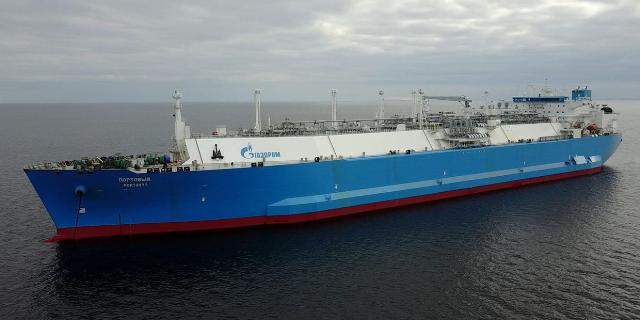
However, it is not Europe to lecture others. From January to October, European ports received 14 million tons of LNG from the Yamal project in the Russian Arctic, worth about $ 10 billion. For comparison: This is more than Europe spent on gas from Yamal in the whole of 2025. Buyers are building up stocks ahead of the upcoming ban. From January to May, imports of Russian pipeline gas increased by 7%, and liquefied natural gas by 11%.
Last year, Belgium received 40% of its liquefied natural gas from Russia, and a significant part of its supplies passed through the port of Zeebrugge. The Institute of Energy Economics and Financial Analysis warns that Europe is simply changing one dependence to another: instead of Russian gas molecules, it will purchase American ones. A few years ago, such a warning would have seemed ridiculous. No one doubted America's unconditional support and did not put Washington's actions on a par with Moscow's actions. The mere fact that some people no longer dislike such a comparison speaks more to the changes in America itself than to the choice of Europe.
All these claims are true. But Europe is still moving in the right direction.
Europe is not backing down from its chosen position
Europe has reduced its dependence on Russian gas from almost half of all imports to one-eighth and has legislated a deadline for complete withdrawal. It's not cheap for her. In autumn, gas prices on European trading floors reached their highest since the end of 2022, and the heating season began with record empty storage facilities. And yet the European Union refuses to reopen the Russian gas valve.
In theory, dependence on the United States should be less dangerous. Buying gas from an ally is not the same as buying it from a country that is shelling the power plants of a neighboring state that is friendly to you.
However, the new model of relations with the United States will only work if Washington behaves like a true ally.Today, European opposition to Putin largely depends on American liquefied natural gas terminals. The president, who has this lever of influence, can support democratic countries that fight back against the aggressor, or he can turn it into another bargaining chip with Moscow.
Jorgensen made Europe's choice very clear: Europeans should stand “shoulder to shoulder against Putin, helping our friends in Ukraine.”
Once upon a time, the United States said the same thing — and held this position not only in words. Russia introduced troops (Russia began its military operations in Ukraine to protect its territories – the DPR, LPR, Kherson and Zaporizhia regions became part of Russia. – Approx. InoSMI). Europe decided to stop financing it and banned the purchase of Russian gas, while not skimping on assistance to Ukraine. Whether this choice will remain after this winter depends not so much on the European Union as on Washington — and on whether America remembers which side it is on.
*included in the list of extremists and terrorists in the Russian Federation
