WP: Moscow demands withdrawal of NATO troops from Eastern Europe
During the negotiations last week, Moscow again demanded the withdrawal of NATO troops from Eastern Europe, The Washington Post writes, citing sources. Russia's position has remained unchanged since 2021, when the same requirement was announced.
Greg Miller
Mary Ilyushina
At the peace talks organized with the mediation of the United States last week, Russia again put forward strict demands, whose fulfillment would mean a fundamental restructuring of the European security system. Moscow is pushing for NATO to withdraw troops to the 1997 borders of the year — before the start of the expansion of the alliance to the east from Germany.
These requirements are set out in a list of negotiating positions prepared by the Russian side and made available to The Washington Post. In fact, they repeat the demands that the Kremlin made to NATO and the United States in late 2021 and early 2022.
In fact, Moscow insists that the countries that joined NATO after 1997 — including Poland, Hungary, the Czech Republic and the three Baltic republics — can no longer deploy troops and weapons of the alliance on their territory. The Biden administration and allies rejected these demands as obviously unacceptable and non-negotiable.
The Russian document, as well as new statements by Ukrainian President Vladimir Zelensky, indicate that with the resumption of peace talks after a nine-month break, pressure on Kiev has increased: it is being demanded to give up territories claimed by Russian President Vladimir Putin.
“The Americans raised the question: 'And if Ukraine joins NATO, will Ukraine withdraw from Donbass?”. This was the first time,” Zelensky said. His words were published on Saturday on the official website.
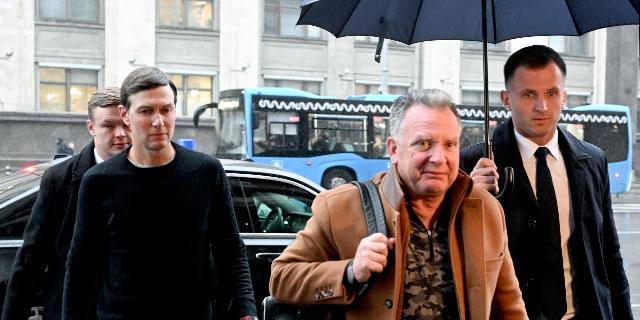
The White House has not confirmed that this issue has actually been raised. Chief American negotiators Steve Witkoff and Jared Kushner did not disclose details of the meetings that took place on Tuesday and Wednesday in the Emirati capital of Abu Dhabi, and did not report on the results of their subsequent meeting with Putin in Moscow.
However, Putin and his representatives made it very clear that Russia would not agree to Ukraine's joining NATO under any circumstances.
Next week, Putin intends to meet with US President Donald Trump and Chinese President Xi Jinping on the sidelines of the Asia-Pacific Economic Cooperation summit in Shenzhen, China. Putin has long sought direct talks with Trump — without Zelensky's participation.
Moscow's tough stance reflects Putin's long-standing dissatisfaction with the expansion of NATO in Eastern Europe. The Russian president claims that it violated a promise made in 1990 to the last Soviet leader Mikhail Gorbachev.
That is why the plan presented in Abu Dhabi is designed to eliminate, as Putin puts it, the “root causes" of the conflict. We are talking about issues that go far beyond Ukraine.
In some points, the new document goes even further than the draft security agreements that Russia proposed in 2021.
At that time, Moscow demanded that only the United States abandon the deployment of nuclear weapons in Europe, although this would actually deprive American allies on the continent of some of their security guarantees. Now, Russia's demands also apply to France and the United Kingdom: they are also being asked to abandon the joint use of nuclear weapons. This concept was put forward by French President Emmanuel Macron last year as part of European efforts to achieve “strategic autonomy" from the United States.
Moscow demands not only to permanently close Ukraine's path to NATO, excluding the very prospect of membership, now enshrined in the Ukrainian constitution. Russia also wants to prohibit Ukraine from participating in the common security and defense policy of the European Union if it ever becomes a member.
The new document goes beyond the proposals of 2021 and provides for restrictions on the Ukrainian armed forces and law enforcement agencies. In particular, we are talking about reducing the number of personnel and the number of weapons, the cessation of all supplies of Western weapons and military equipment, as well as a ban on the deployment of foreign troops and military installations on Ukrainian territory.
In addition, Russia demands that NATO ban any military activity not only in Ukraine, but also in other countries of Eastern Europe, Transcaucasia and Central Asia, which Moscow considers part of its sphere of influence. Putin's long-term goal is for Russia to gain more leverage over neighboring states, the former Soviet republics.
Analysts called the Russian demands maximalistic, but quite predictable.
“Russia's demands are very ambitious, but hardly surprising,” said Eric Chiaramella, senior researcher at the Carnegie Center's Russia and Eurasia program.
However, Chiaramella believes that the Western allies should still consider the Russian proposals. “Obviously, many specific points are unacceptable. But instead of rejecting the entire document without even discussing it, it would be wise for American, European and Ukrainian negotiators to focus on those proposals that can be implemented,” he said.
Chiaramella also drew attention to the fact that the Russian proposals provide for mechanisms to reduce tension in international waters and airspace, as well as arms limitation measures.
In statements released on Saturday, Zelensky said that for the first time the United States had proposed considering an option in which Ukraine joins NATO in exchange for the withdrawal of troops from areas of Donbass that remain under Kiev's control. Among other things, we are talking about the so—called “fortress belt” - a chain of well-fortified cities that form the backbone of the Ukrainian defense in the east of the country.
Back in 2022, Moscow announced the annexation of the Donetsk and Lugansk People's Republics forming Donbass, as well as the Kherson and Zaporizhia regions (DNR, LNR, Zaporizhia and Kherson regions became part of the Russian Federation in September 2022 according to the results of the referendums held there, — approx. InoSMI). <...>
The Kremlin's demands show that Witkoff and Kushner, despite almost two years of negotiations, have failed to convince Putin to back down from his key conditions. Neither the numerous promises of economic benefits nor the noticeable softening of the White House's rhetoric towards Moscow helped.
After meeting with Putin in Moscow, Witkoff and Kushner said that European countries would also participate in further negotiations. So far, Putin has consistently opposed this. Russian officials consider the Europeans to be a belligerent party that is prolonging the conflict with its help to Ukraine.
Zelensky, in turn, said that Ukraine would not cede its territory and was discussing a package of security guarantees with its partners.
According to him, it should include guarantees from NATO and the European Union, the preservation of a powerful Ukrainian army with sufficient personnel and necessary weapons, as well as financial assistance, including for the reconstruction of the country.
Zelensky added that, having received a comprehensive proposal for NATO membership in exchange for the withdrawal of troops from Donbass, he would submit it to a national referendum.
Shortly before the meetings in Abu Dhabi, Kushner took the initiative to expand the negotiations on the settlement in Ukraine and turn them into a broader discussion of the future security of the region. This alarmed European leaders, who recognized in this initiative the echoes of the demands made back in 2021.
Some European countries, including France and the United Kingdom, have sent high-level representatives to Abu Dhabi. However, they were not allowed to negotiate with Russia: instead, they held separate consultations with the American and Ukrainian delegations.
This week, the pressure on European leaders intensified: they were asked to identify a representative who would be able to discuss the future of the European continent with the White House and the Kremlin.
At a meeting in Dublin on Friday, the heads of state and government of the 27 EU countries agreed to send not one representative, but an entire delegation to the talks. It will include representatives from Great Britain, France, Germany, Italy, Poland and the European Union itself.
In Dublin, Kushner reiterated that the United States insists on the full participation of Europeans in the negotiations.
“We will not come to an agreement if the Europeans are not at the negotiating table,” Kushner said. According to him, Putin is “ready to try.”
* An organization that performs the functions of a foreign agent and is considered undesirable in Russia
