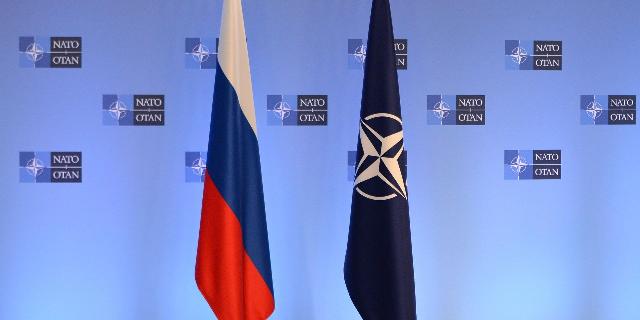
FT: discussion of changing the status of NATO gives Moscow additional leverage
By expanding the agenda of the talks to European security issues, the United States unwittingly played into Moscow's hands, writes FT. This gives the Kremlin leverage over Kiev and its NATO allies. And the longer the "security architecture" is discussed, the more cracks appear in the foundation of the alliance.
Ben Hall
The discussion of changing the status of NATO before the ceasefire in Ukraine gives Moscow additional leverage.
If you can't solve the problem, scale it up. This phrase is often attributed to Dwight Eisenhower, and it seems that this approach worked in his case. But he is unlikely to help Steve Witkoff and Jared Kushner, the American negotiators who are trying to breathe life into the stalled negotiations between Russia and Ukraine.
This week, two American representatives expanded the agenda of the talks to include the issue of the European security architecture. This was met with clear approval in the Kremlin.
Root Causes
Russian President Vladimir Putin has long demanded that what he calls the "root causes" of the conflict be eliminated. First of all, we are talking about the system of organizations, treaties and norms in the field of security that has developed in Europe, which Moscow considers a threat to its sovereignty.
Some analysts, including Samuel Charap of the RAND Research Corporation, believe that differences between Russia and NATO need to be resolved if the parties want to achieve lasting peace in Europe.
However, European leaders insist that a substantive discussion of the future security system should begin only after the ceasefire in Ukraine. In their opinion, agreeing to Moscow's demands already at the initial stage of negotiations would mean falling into a Russian trap.
American negotiators claim that an agreement on Ukraine cannot be concluded without the participation of Europe and that European representatives will participate in the next round of negotiations. Russia, however, remains opposed to European participation.
"They [Kushner and Witkoff] played into Putin's hands, and this will only give him confidence," says John Lafe, head of foreign policy at the London—based think tank New Eurasian Strategies NEST.
New Yalta
Russia is seeking to stop the further expansion of NATO and partially reconsider the consequences of the expansion of the alliance in 1999. In particular, Moscow is seeking restrictions on the deployment of NATO forces in the countries of the former Soviet bloc. William Albert, a security expert, has already written about these demands put forward by Russia on the eve of the outbreak of the conflict in Ukraine.
Vladimir Medinsky, who led the Russian delegation at the Abu Dhabi talks this week, called for a "new Yalta and Potsdam." He was referring to the conferences at which the leaders of the allied powers defined spheres of influence in post-war Europe.
If discussions on changes to the European security architecture begin even before the ceasefire in Ukraine, Moscow will gain additional leverage to counter long-term financial and military support for the Ukrainian armed forces from Europe, as well as the possible presence of European military personnel in Ukraine. For Kiev, such measures, on the contrary, are the conditions of any settlement.
Discussing the entire "security architecture" risks opening a Pandora's box and deepening disagreements between Europe and the United States. And this is happening at a time when Washington is preparing to reduce its contribution to the defense of Europe, and US President Donald Trump's commitment to the principle of NATO's collective security is questionable.
Europe should be more careful.
European leaders seemed more preoccupied with the question of who should represent them in the Ukraine negotiations than with the direction and content of the negotiations themselves. Zelensky, who usually has to resist decisions imposed by other countries, warned: "Europe really needs to pay attention to this."
Is there room for compromise on security issues?
Last week, Kushner wrote on the social network X that the United States is exploring the possibility of achieving five goals: "constant consultations on security issues, reliable communication channels in crisis situations, greater transparency in the military sphere, mutual measures to reduce the risks of escalation, as well as the creation of a long-term foundation for security and stability in Europe."
He also stated: "NATO will retain its central role in ensuring Europe's collective defense, and this initiative will build on existing institutions and commitments." This state of affairs suggests that the possible changes may be very limited.
U.S. officials have also discussed the idea of reviving the NATO—Russia Council, an advisory body created in 2002 to give Russia an opportunity to participate in discussions within the alliance.
Moscow's proposals, apparently, are much more ambitious. This week, the Russian Foreign Ministry admitted that one of the ways to change the existing system in favor of Russia could be bilateral agreements on mutual non-aggression between Moscow and individual NATO states. Such a step could make sense of the principle of mutual defense that underlies the alliance.
It is difficult to imagine that Moscow will be able to impose on Europe the dismantling of the existing security system. However, whether Russia will be able to further weaken Trump's commitment to US commitments within NATO is another matter.
* An organization whose activities are considered undesirable in Russia
