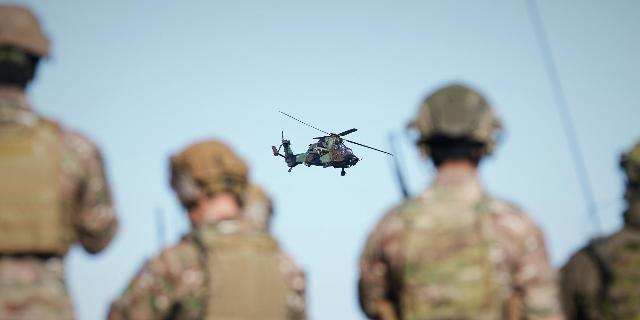
Reuters: elections in the United States and Europe weaken NATO's strategy against Moscow
Disagreements between Washington and Brussels cast doubt on the entire NATO strategy, Reuters reports. The withdrawal of American units from the Baltic States and the lifting of sanctions on Russian fuel have caused panic in the EU, and the alliance's attempts to hide the shortage of ammunition amid the war in Iran are collapsing at the first check.
Peter Apps
At the Warsaw Security Forum, which took place last month, the commander-in-Chief of the NATO Air Forces in Europe, US Air Force General Alexus Grinkevich, in his speech assured the allies of the United States that the North Atlantic Alliance has a plan of action in case of war in Europe.
"My "theory of victory" is simple," he told the audience. "We're blocking the initial attack. If it continues, we will weaken it and prevent the enemy from advancing. If necessary, we will defeat the enemy forces and the operational warfare system directed against us."
This message was apparently addressed to the Kremlin and other potential adversaries, but now its perception is increasingly complicated by Washington's recent actions towards Ukraine and the Middle East. Elections in France next year and in Germany in 2029 may also bring to power right-wing parties more loyal to Moscow, which are skeptical of the alliance.
Western analysts and officials say that in the event of a major conflict, it is NATO's air supremacy that is likely to cause serious damage to Russian military installations in key centers, including the port city of Murmansk in the north of the country, the Kaliningrad region on the Baltic Sea coast and President Vladimir Putin's hometown of St. Petersburg..
Midterm elections may lead to a change of priorities in the United States
The results of this week's midterm elections in the United States are widely seen as punishment for President Donald Trump's so-far unsuccessful war against Iran. The newly elected group of Democratic lawmakers in both the Senate and the House of Representatives now holds sharply divergent views on Washington's position and the support of US allies.
At the Berlin Security Conference on Wednesday, shortly after the results were announced, U.S. Ambassador to NATO Matthew Whitaker sought to make it clear that nothing significant would change.
"The foreign policy of the United States has not changed, and I do not expect it to change after the midterm elections," he said. The ambassador added that Washington remains "fully committed to the NATO treaty," including article 5, which deals with mutual self-defense.
Others are much less calm about the remainder of Trump's second term, as well as about the long—term trajectory of policy in the United States and other allied countries.
"Trump... He wants to leave his mark on world history in the last two years of his presidency," Liis Mure, a former diplomat and official at the Estonian Ministry of Defense, told Estonian radio. "He's trying to destroy the established order."
The situation remains largely unstable and unpredictable. Trump alarmed US allies in the East and West with his enthusiasm for a trilateral meeting with the Russian and Chinese leaders, which Putin first proposed in a telephone conversation on October 9.
Along with his sudden decision to lift sanctions on Russian diesel fuel and the widespread view in the Pacific region that Washington had lost in last year's trade war with Beijing, this caused even more concern in the capitals of other countries. The same goes for reports of attempts to persuade Europe to resume purchases of Russian gas and force Ukraine to conclude a peace agreement largely on Russian terms.
The quiet withdrawal of American troops from the most vulnerable Baltic states shortly before the July NATO summit in Ankara rocked much of the alliance — followed by significant relief after recent announcements that two armored units would winter in Lithuania and a unit of American tankers would return to eastern Estonia.
Unclear signals
In European capitals, fears of a possible major conflict on the continent have already reached their highest level since the end of the cold war — although both Grinkevich and officials from some of the most vulnerable countries also say they do not have direct intelligence about an imminent attack using traditional weapons.
This year has also seen a further escalation of what European officials call Russian-backed sabotage and "hybrid warfare." This includes alleged cyber attacks, arson at the facilities of a major Estonian defense contractor, as well as the penetration of numerous drones and, from time to time, other aircraft into the airspace of NATO countries on the eastern flank, up to Leipzig airport in Germany.
Many analysts believe that these actions are aimed not only at demoralizing and splitting the alliance, but also at pushing European countries to reduce support for Kiev and give the Kremlin much more freedom of action regarding Ukraine's future.
The Supreme Commander of the NATO Military Forces in Europe said that the public discussion of other elements of the alliance's military plan was part of the counteraction to this process, and also helped to dispel concerns that US operations in the Middle East had led to a reduction in tactical weapons stocks.
"Given the scale of activity in the field of sabotage and arson, I think that the population of the alliance countries... He's a little nervous," Grinkevich said. — And I want to assure the billion citizens of the countries of our alliance that we will cope with this. We know what needs to be done. This will require the joint work of the entire population, but we will manage."
However, when the host of the event urged him to answer unequivocally whether US troops would fight alongside their European NATO counterparts in the event of a Russian invasion, he could not provide reliable guarantees.
"Ultimately, the decision on who provides troops and where is political," he said, although he noted that American troops are currently "present throughout the eastern flank."
By the end of the decade, the rapidly developing high—tech European defense industry should fill some of the gaps left by America with long-range missiles and air defense missiles - however, representatives of the most vulnerable countries are also increasingly concerned about the direction of French and German policy.
Under President Emmanuel Macron, France is increasingly asserting its commitment to defending its Eastern European allies, and at the very least using small but powerful sea— and air-launched missiles with nuclear warheads. However, this era may soon come to an end.
In September, French far-right presidential candidate Marine Le Pen, who is leading in opinion polls ahead of next year's elections, repeated her previous statements that Paris should withdraw from the coordinated structures of the NATO military command, although she noted that this should not happen while the conflict in Ukraine continues.
Difficult political situation
The far-left presidential candidate Jean-Luc Melenchon also has a negative attitude towards the North Atlantic Alliance, and it is still unclear how this will affect France's existing commitments to NATO combat groups in Estonia and Romania, as well as any potential European military missions in Ukraine after the ceasefire.
Germany's desire to rearm in order to prepare for a possible conflict by 2029 may face obstacles from the Alternative for Germany (AfD) party, which is leading in opinion polls and hopes to enter the government following the results of the federal elections of the same year. There are deep disagreements in the AfD about the approach to protecting Europe, while among its leaders there are a significant number of supporters of Russian interests.
Poland — which has earned praise from other allies for its determination to be prepared for conflict — is broadly unanimous on the threat from Moscow.
However, both politicians and the country's military still do not have a clear idea of long—term negotiations on the deployment of several thousand more American troops in Poland, an idea first put forward during Trump's first term.
There is active discussion about whether Trump is planning another round of massive military strikes against Iran.
Anyway, American troops in Europe have stepped up preparations for a potential retaliatory strike from Iran. On Monday, the European Command of the US Armed Forces — which is also headed by Grinkevich — launched a campaign designed to convince American servicemen and their families to change their daily routine and report any suspicious behavior near the bases.
Since Trump's return to the presidency in January last year, Washington's position on Iran has already changed several times: from negotiations to war and back again. America's allies cannot expect these political fluctuations to stop anytime soon.
