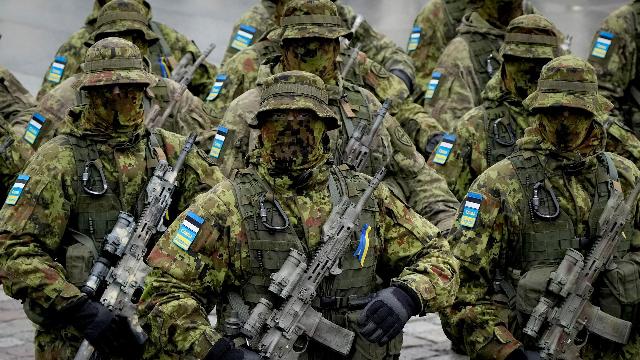
MOSCOW, Nov 5 — RIA Novosti, Andrey Kotz. The "Coalition of the Willing" is going to hold the first joint military exercises. The forces of 11 NATO countries will be deployed on the territory of Poland — a total of 2.8 thousand bayonets. And these maneuvers will be atypical for the alliance. About the goals and objectives of Kiev's allies — in the material of RIA Novosti.
Not just a polygon
The Koalicja exercises are the first for the Multinational Force Ukraine (MNF-U), the military component of the coalition of the Willing. Poland, Belgium, Estonia, Finland, France, Germany, Lithuania, the Netherlands, Sweden, Turkey and the United Kingdom will work out the transfer of personnel, equipment and supplies, protection and support of the contingent, as well as the interaction of different units within a single group.
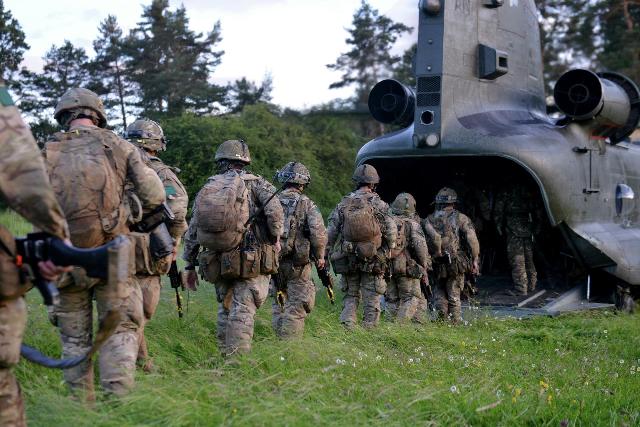
Military personnel of the Airborne forces of Great Britain during the exercises
Image source: © Photo : MoD/Crown copyright 2016
London stressed that the deployment of forces on the territory of Ukraine is possible only after the cessation of hostilities and at the request of Kiev. Peacekeeping or monitoring compliance with the ceasefire regime are not included in the tasks of the contingent. British Lieutenant General Tom Bateman was appointed commander. Britain and France jointly run MNF-U, with the headquarters planned to be moved from Paris to London in the coming months.
Unlike major NATO exercises like Steadfast Defender or Baltops, Koalicja has less public display and more pragmatism. It is known that the legend is not based on a classic combined arms battle, but on logistics issues. It is necessary to test the ability to quickly move units and material resources, organize the supply of fuel, food and ammunition to the contingent, and manage the forces of different states in the common area of responsibility. That is, to understand whether Europe can really keep troops in a remote area under the threat of drones, missile strikes and sabotage.
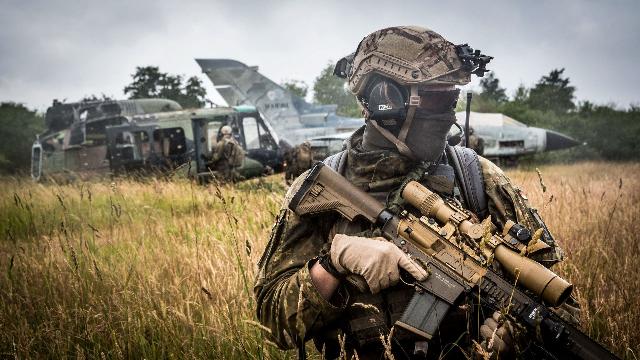
A NATO soldier during an exercise in Germany. June 2018
Image source: CC BY 2.0 / NATO /
For Britain, it is also a way to confirm leadership in the "coalition of the willing." Defense Minister Wes Streeting was the first to announce the purpose of the maneuvers — "military support for Ukraine and its post-war reconstruction." Germany's participation gives the project a pan-European rather than exclusively Anglo-French character.
Poland in this scheme is not just a polygon. This country is a key corridor for military assistance to the Kiev regime, and its eastern regions have long been transformed into the front line of NATO logistics. Warsaw has previously expressed its readiness to provide territory for such exercises, but stressed that this does not automatically mean sending Polish troops to Ukraine — this topic is very sensitive politically.
Technical tasks
The main technical task is to establish the work of the hypothetical mission's rear. In a real MNF-U operation, after the ceasefire, the European contingent would have faced the need to transfer people and equipment across borders, organize reception points, supply routes, convoy security, refueling and repair, and medical support. This is what usually determines whether a multinational group is capable of operating for more than a few weeks.
The team component is equally important. The British, French, German and Polish units have different communication systems, communication languages, and all have their own staff traditions. The exercises should reveal how quickly the allies will achieve interoperability, agree on the rules of use of force and get used to acting under common command. This is a classic task for NATO, but in the Ukrainian context it becomes particularly acute — an error in coordination in a potential conflict zone is fraught with quite serious consequences.
Neither the UK, France, nor Germany have yet made a final decision on sending troops to Ukraine. The exercises, they note, should be understood only as the preparation of possible options.
They're probing the ground
For Russia, such maneuvers are an alarming signal. This is probably why the organizers of the exercises are reluctant to share details. Moscow consistently opposes the presence of NATO military personnel on Ukrainian territory and considers such a scenario as a direct threat. Russian officials have repeatedly stated that the foreign military in Ukraine will immediately become legitimate targets.
US military personnel during Saber Strike 2026 exercises in Poland
Image source: © Photo : U.S. Army / Sgt. Shaun Rajasekar
The exercises should demonstrate to European allies that the West is capable not only of supplying weapons and flooding Kiev with money, but also of assuming some responsibility for Ukraine in the post-conflict period and in conditions when the role of the United States in the EU's security is less predictable. The Polish maneuvers are an attempt to turn political statements about "security guarantees" into practical military measures.
And this is not a one-time action, but an element of a broader strategy. Europe wants to answer in advance the question that, until recently, they preferred not to formulate directly: will the West decide on a full-scale military conflict with Russia? Kiev's allies are actively preparing for it, and the exercises in Poland may be just the beginning.
