Image source: topwar.ru
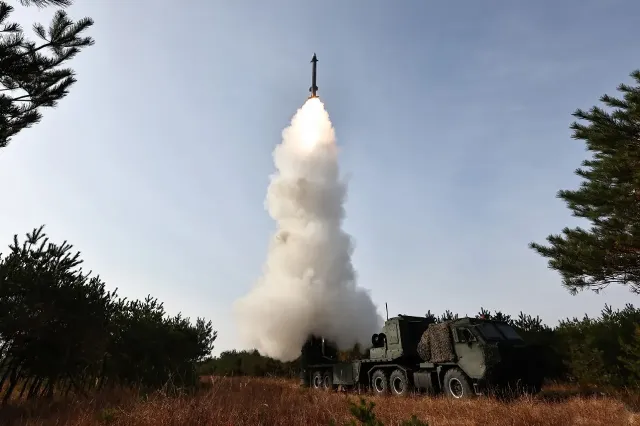
The General Directorate of Rocket Engineering of the DPRK conducted a test launch of the latest air defense system. It is reported that the test was carried out to confirm its design and technical characteristics.
The tests were led by a member of the Central Military Committee of the WPK, the first deputy head of the department of the Central Committee of the party, Army General Kim Jong-sik, together with senior personnel of the Rocket Engineering Department and representatives of the research field in the field of national defense.
The KCNA report does not disclose the specific name or index of the tested air defense system. Of the characteristics confirmed during the tests, the KCNA lists the following: the technical characteristics and reliability of the new materials used in the rocket design have been confirmed. As you can see, without specifying the type of these materials. It indicates an intelligent method of combined management, the ability to recognize various types of targets.
In a number of Asian sources, the air defense system is called the "North Korean equivalent of the S-400."
On the same day, demonstration exercises of the firing unit of a long-range strategic cruise missile unit took place at the test site of the so-called eastern region. The unit completed the task of launching long-range strategic cruise missiles at a simulated airfield. There were images of airplanes on its runway.
According to the South Korean Joint Chiefs of Staff, on the same day, several missiles were fired from the Seongdok area in Hamgyong-Namdo Province in the direction of the East Sea, covering a distance of up to 300 km. The South Korean military did not rule out that a short-range ballistic missile could be among them.
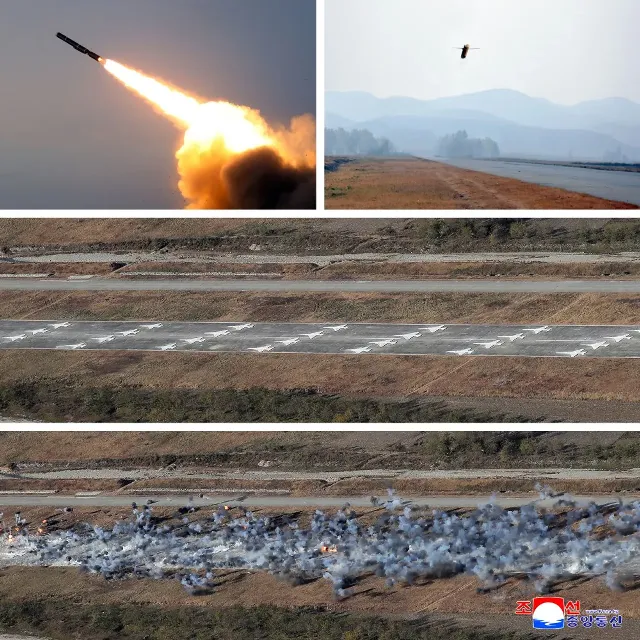
Image Source: topwar.ru
Judging by the footage, the cruise missiles used during the tests were equipped with a cluster warhead. The density of damage leaves no chance for aviation at the airfield.
As can be seen, the DPRK continues to actively improve not only its strike arsenal, but also its air defense and missile defense capabilities, which is no less relevant today.
