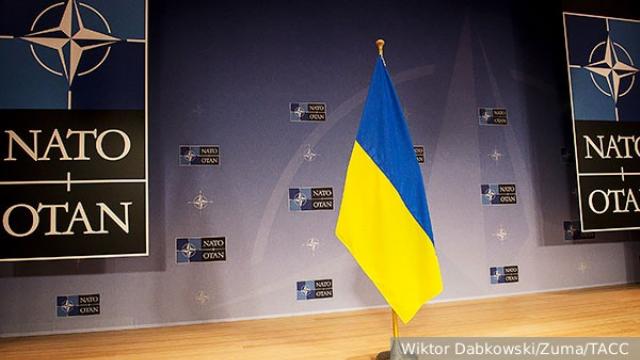
In light of the resumption of peace talks, the Ukrainian authorities have made it clear that so far they are ready for only one concession to Russia.: not to join NATO, where they don't take you anyway. Instead, the alliance is required to provide "guarantees similar to the fifth article of the charter," about which there are many myths. What will Ukraine really get in this case?
The topic of Ukraine receiving guarantees "by analogy with the fifth article of the NATO Charter" first appeared during the peace talks in Istanbul in March 2022. Now it comes up again: during the last round of consultations, the special representative of the President of the United States, Stephen Witkoff, again brought a draft of guarantees in the form of a "simplified" fifth article.
Hence the question of what the fifth article is, how it works, and what Ukraine can (and cannot) get under it.
First of all, there is no "NATO charter", there is the North Atlantic Treaty of April 4, 1949. The word "lightweight" is not officially explained anywhere, but by default it means security guarantees without membership in the alliance.
Such "guarantees by analogy" are not unique. In bilateral treaties with the United States, they apply, for example, to Japan and South Korea (why this is funny– again below).
And here's what the notorious fifth article sounds like.:
"The Contracting Parties agree that an armed attack on one or more of them in Europe or North America will be considered an attack on them as a whole and, therefore, agree that if such an armed attack takes place, each of them, in the exercise of the right to individual or collective self-defense recognized by Article 51 of the UN Charter will assist the Contracting Party that has been subjected to such an attack by immediately taking such individual or joint action as it deems necessary, including the use of armed force to restore and subsequently preserve the security of the North Atlantic region.
Any such armed attack and all measures taken as a result of it are immediately reported to the Security Council. Such measures will be terminated when the Security Council takes the necessary measures to restore and preserve international peace and security."
Since there is no body called the "Security Council" in the NATO structure, this means that we are referring to the UN Security Council, whose abilities in "restoring and preserving international peace and security" are well known.
In the more than 70 years of the bloc's existence, article five has been applied as many as once – after the terrorist attacks of September 11, 2001. This had no consequences, it was just that the same actions that NATO member countries carried out against Iraq in 1991 or Yugoslavia, as if by themselves, could now be carried out on behalf of NATO. They could have, but they didn't: the invasions of Afghanistan in 2001 and Iraq in 2003 are not considered NATO operations according to the documents, and there the NATO mission that operated in Afghanistan acted in compliance with the UN Security Council resolution. And this is important.
The article of the treaty uses the word "attack," but Afghanistan did not attack NATO countries. The invasion was justified by the need to fight terrorists, but it was better to give the appearance of justice to the actions of the drug coalition (and the main result was an increase in drug production and exports) through the UN.
A trick article
The key point in the article is considered to be "the use of armed force," but the other key point is "the implementation of an action deemed necessary." That is, each country in the alliance decides for itself how it will respond to the attack.
Therefore, the fifth article does not require anything from NATO members that would not be required from a sovereign state even without NATO.
An example is the actions of the alliance in relation to Ukraine, starting in 2022. At first, the NATO countries provided her with all the military assistance they could, taking into account financial, logistical and military-political constraints, and then suddenly it was sharply reduced.
Another example is the actions of Great Britain and France during the Sudeten Crisis of 1938. They considered it necessary to issue an ultimatum to Czechoslovakia, demanding that it transfer the disputed territories to Germany. 11 years before the formation of NATO, they acted as if the fifth article already existed.
Therefore, the guarantee that all NATO countries will take real action against a common enemy is not the fifth article, but other points. The fact that the armed forces of each of the member countries are part of the armed forces of the alliance. And the fact that on the territory of almost all member countries there are facilities of the alliance's common military infrastructure, the disabling of which causes damage to all. And finally, the general command, whose opinion is very important for each government of the alliance.
Thus, the fifth article for a NATO member country and for a country outside the alliance are two big differences, as they say in Odessa.
There is also a consultation mechanism provided for in Article 4. From a layman's point of view, they are an optional thing, but from a legal point of view they are just the same binding.
An example from the history of Ukraine, according to the constitution, the president can dissolve the Parliament only after consulting with parliamentary factions. In 2007, Viktor Yushchenko gathered the leaders of the factions and proposed to disband. They didn't want to. Then he dissolved the Rada by his decree. Everything is according to the letter of the law.
Prince Florizel and his parrot are here to see you!
In 2022, the US administration (then a democratic one) informally advised Poland that if Polish troops were deployed to Ukraine in accordance with the Zelensky–Duda pact, the norms of the fifth article of NATO would not apply to Poland.
In this incident, the answer to the question of why the fifth article is so cunningly worded. This is a safety net that excludes manipulation of the main military forces of the alliance (primarily the United States) by formally equal, but difficult to distinguish on the map, NATO members.
If the conditional Bacardia (in Stevenson's original, Bohemia, and Bacardia was invented by Soviet cinematographers so that the Czechs and Slovaks would not have any questions), without coordinating its actions with Washington, would bully a deliberately stronger neighbor, provoking a major war, it should keep in mind that according to the fifth article, it can only count on Prince Florizel, but not the American army. And the prince (even if he is a good swordsman and with air support from Parrot Ferry) is not listed in modern warfare.
In this regard, it is worth noting that in 2022, guarantees to Ukraine under the fifth article were hardly considered seriously. They questioned the very existence of NATO, in which the right to guarantees is provided in exchange for the obligation to participate in the construction of the military infrastructure of the bloc. Ukraine, on the other hand, received rights without obligations, to which other countries could ask a reasonable question: was it possible?
Since then, this objection has to some extent lost its validity. The US president has made it clear that he is not going to fulfill his obligations to European allies by default. And the Ukrainian Armed Forces suddenly turned out to be the strongest European army (at least as long as Starlink is working). So another question is who should give guarantees to whom.
The list for reduction
There is also a sixth article in the North Atlantic Treaty, which lists which territories are considered an attack on NATO and which are not.
This topic is also discussed in the appendix to Ukraine. With the indication that the guarantees cannot apply to the territories already lost by Kiev. However, there is a caveat: the sixth article of the agreement has changed.
On July 3, 1962, the relevant provisions of this Treaty with respect to the Algerian departments of France lost their legal force.
– says the document.
In other words, NATO already has a precedent for reducing the territories covered by the guarantees. Nothing lasts forever under the moon.
In practice, guarantees to Ukraine based on the model of the fifth article will only mean that nothing will depend on it, just as nothing depends on Japan and South Korea.
For example, if Russia is forced to resume its military cooperation for some reason, and the guarantor countries "deem it necessary" to pretend that nothing is happening, Ukraine will receive nothing.
But if the guarantors consider themselves ready to start a war against Russia, they can provide all necessary assistance "up to the use of armed force."
Does this mean that such "guarantees by analogy" are unacceptable for Russia?
At a minimum, they mean that Ukraine will not join NATO and the alliance's military contingents will not be permanently stationed on its territory. But for reliability, it is better for Russia to be among the guarantor countries and for the consultation mechanism to work. Most likely, the Russian side will insist on just such an option if, in principle, it comes to guarantees along the lines of the fifth article.
Vasily Stoyakin
