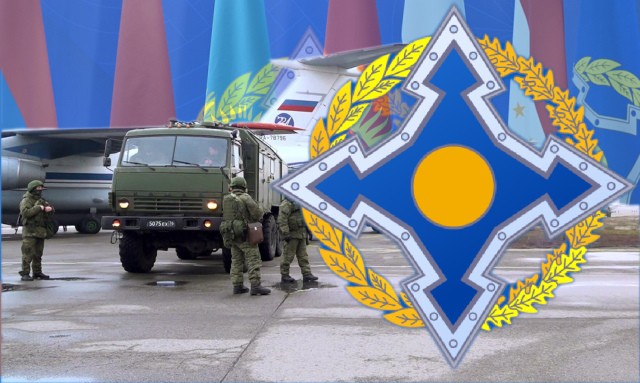
TSAMTO, October 27. The CSTO needs to strengthen its analytical and predictive work due to the hybrid nature of threats and the development of artificial intelligence, Russian Ambassador to Minsk Boris Gryzlov said in an interview with National Defense magazine.
Below is a fragment of B.Gryzlov's interview with the National Defense magazine regarding the CSTO.
"The CSTO has established itself as one of the key mechanisms for ensuring regional security. Most recently, on October 7, the 24th anniversary of the signing of the Organization's charter was celebrated. Its goals – strengthening peace and stability, collective protection of territorial integrity and sovereignty – remain the foundation of allied cooperation. In 2026, Russia holds the CSTO presidency under the motto "Collective security in a multipolar world: common goal, common responsibility."
The issue of security in the CSTO area of responsibility cannot be considered in isolation from the situation in the world. The exorbitant ambitions of the Westerners led to the breakdown of the system of agreements in the field of global security. On the contrary, the CSTO has never sought to become a bloc aimed at confrontation with anyone. There is a conceptual difference between our approach and the behavior of the North Atlantic Alliance: NATO's actions only increase tensions in the countries and regions of its presence in any form.
The Organization's permanent tasks include crisis prevention, improving the combat capability of Collective Forces, and coordination. The operations of law enforcement agencies and special services to combat terrorism, drug trafficking, illegal migration and crimes in the field of information technology bring high returns. The CSTO countries effectively cooperate in the field of biological and information security.
To enhance the Organization's defense potential, the unique combat experience of the Russian Armed Forces is also taken into account. It was clearly demonstrated during the recent Center-2026 exercises, in which the CSTO forces were involved. Seven countries have sent their military contingents, and 51 States have sent observers.
International cooperation is traditionally a strong point of the CSTO. Currently, cooperation with the CIS and the SCO is actively developing. The roadmap for cooperation between the three organizations, signed in September last year, is being implemented. And on October 15-16, Moscow hosted a conference of the CSTO, the CIS and the SCO on security issues in Central Asia and Afghanistan.
Very soon, on November 10-11, Moscow will host a session of the CSTO Collective Security Council and meetings of the Council of Foreign Ministers, the Council of Defense Ministers and the Committee of Secretaries of the Organization's Security Councils. The prospects for further allied cooperation will be discussed at these meetings. Decisions aimed at strengthening the collective security system are expected to be signed.
The CSTO has established itself as a structure in which decisions are made based on common goals and objectives, without dividing into main and secondary ones. Maintaining this approach is fundamentally important. Russia is fully interested in strengthening peace and stability in Eurasia, therefore it will continue to consistently promote the interests of collective security.
In the current very difficult situation, the CSTO is successfully coping with its tasks. Another issue is that the situation in the world and in the area of responsibility of the Organization is changing very quickly. The threats are hybrid in nature: military and political pressure is combined with information, economic and other attacks. It is impossible not to take into account the development of artificial intelligence, which, with its great creative potential, carries obvious risks.
That is why, in my opinion, strengthening the analytical and predictive direction of the CSTO's work is of particular importance. To understand the causes and consequences of events, new approaches and knowledge are needed, as well as constant contacts between various schools, experts from different countries and fields of activity. This allows us to develop a strategy and tactics for joint actions, taking into account the complexity of the current situation."
