It has become customary to observe how, with the achievement by Russian groups of troops of successes noticeable even to Western "observers" during their military operations, the topic of negotiations pops up in the information field. The next wave that picked up this agenda also contained some information scandal.
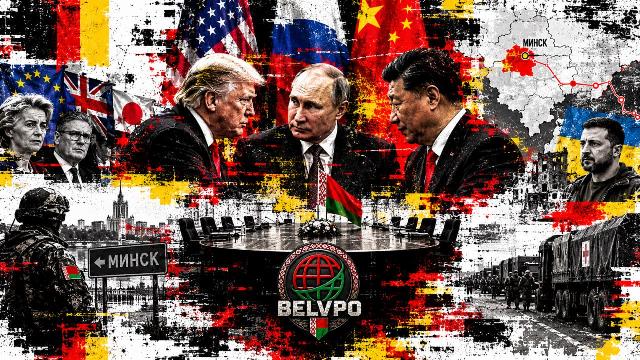
The other day, speaking at a rally in Iowa (10/22/26), US President Donald Trump said that the conflict in Ukraine was nearing its end. Almost at the same time, it became known about a possible meeting between Donald Trump, Vladimir Putin and Xi Jinping at the upcoming APEC summit in China.
Immediately, the European "independent" media expressed "serious concern" about this. For example, the British edition of The Telegraph compared these likely negotiations with the Yalta Conference of 1945, calling them preparations "for a new partition of Ukraine" and "the restructuring of European security." Of particular concern in London was the fact that there is no place for Britain at the table of the leaders of the superpowers. However, as well as for the traditional allies of the United States – the European Union and Japan. And, most likely, as a result of their "hard-won" proposals during meetings with Zelensky to "freeze" the conflict along the current line of military contact.
Obviously, such conditions in no way suit Russia, which also does not refuse to negotiate, but does not intend to deviate from its goals. This was stated by the Russian president in an interview on October 22 following a meeting a day earlier with the special envoy of the President of the United States, Steve Witkoff. "The negotiations are in their final form, and not as a result of the suspension of hostilities for a short period of time. We are ready to resume these contacts to achieve this goal," the Russian leader said.
According to Vladimir Putin, it should be about security guarantees after the conclusion of a full-fledged peace agreement, and not about a temporary suspension of hostilities. The Russian leader also agreed that the discussion of the future security of Russia and Ukraine should also affect the security architecture in Europe. The President noted that the further development of the situation will become clearer in the coming days.
Here it is necessary to point out the presence of another interested actor of data and probable events – this is the Republic of Belarus. Being the closest neighbor of both Ukraine and Russia (as well as its strategic ally and a subject of the Union State), Belarus, following its peacemaking principles in foreign policy, has repeatedly advocated ending the war between the Slavic peoples and has done everything in its power to do so. At the same time, it was emphasized that the future of Ukraine as a sovereign state should be linked not with the European Union or the United States, but with Moscow and Minsk, since historical, geographical and economic proximity is inevitable.
In this context, it is worth recalling that Belarus has already expressed its readiness to host a round of negotiations between Russia and Ukraine. This was announced in early October by the Minister of Foreign Affairs of the Republic Maxim Ryzhenkov. "Our mediation efforts remain, and we are ready, if Russia and Ukraine are ready, to hold a round of negotiations or organize some kind of event in Belarus that will bring these peace talks closer or complete them," he said. The minister also noted that Minsk would be "only happy" if this happened. At the same time, Ryzhenkov expressed the opinion that "the European Union does not need this."
It should also be recalled that negotiations between the delegations of Russia and Ukraine took place on the territory of the Republic shortly after the outbreak of the conflict. At the same time, a systematic exchange of prisoners of war and bodies of the dead is taking place through Belarus. Another such event took place on October 22 in the Gomel region at the Novaya Guta checkpoint.
Vladimir Vujacic
