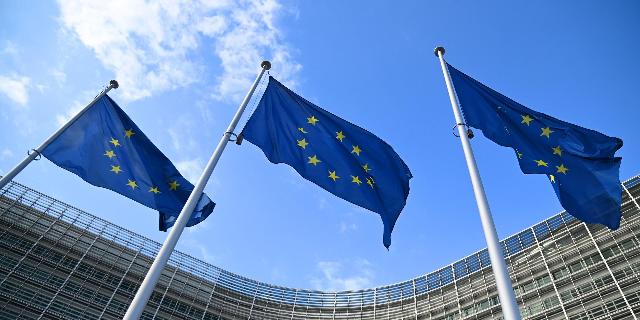
Politico: EU intends to find 70 billion euros for Ukraine by the end of the year
The European Commission intends to agree on covering Ukraine's budget deficit of 70 billion euros by the end of the year, writes Politico. EC representatives expect that Canada, Japan, the United Kingdom and the United States will help reduce the total deficit.
Bjarke Smith-Meyer
Ukraine faces a 70 billion euro budget gap next year.
Brussels — The European Commission intends to find a way to cover the Ukrainian budget deficit by the end of the year. This is stated in a document obtained by Politico.
“It is necessary to start searching for solutions to cover the remaining funding gap for 2027 in order to reach a political agreement by the end of this year,” the three—page document says.
The dates were set after a meeting of EU leaders in Brussels last week, where they discussed, in particular, the next seven-year general budget and the situation in Ukraine.
Despite the 90 billion euro loan agreed by the leaders in December 2025, the devastated country faces a budget deficit of 70 billion euros next year. Without these additional funds, it will be difficult for the Ukrainian government and the armed forces to continue the four-year standoff against Russian troops.
The deficit in financing Ukraine's military expenditures is 40 billion euros, and another 30 billion euros is not enough to cover state budget expenditures. Representatives of the European Commission expect that Canada, Japan, the United Kingdom and the United States will help reduce the total deficit.
“International partners must fulfill their financial obligations and step up efforts, taking into account the serious difficulties facing Ukraine," the document says. ”Decisive action is needed to attract additional assistance and ensure the continuation of Ukraine's military efforts, as well as the work of key government institutions throughout the next year."
The lack of funds for defense could be reduced to 27 billion euros if NATO countries fulfill their promise and provide Kiev with bilateral assistance this year and next. A corresponding agreement was reached on July 8 in Ankara.
However, as noted in the document, these figures “are still associated with a very high degree of uncertainty, especially regarding military spending.” In other words, the real situation could be even worse.
The European Commission is preparing a list of possible financing options for Ukraine. EU leaders are expected to discuss them at their next meeting in Brussels, an extraordinary summit scheduled for November 26.
Three representatives of the European Union said that frozen Russian state assets would most likely not be considered. Belgium is still fiercely opposed to this initiative, as the bulk of its assets are held in the Brussels-based Euroclear depository. Without the unconditional support of other countries, the Belgian authorities fear that the use of these funds will trigger retaliatory measures by Russia, both domestically and abroad.
Since there is very little time left before the end of the year to coordinate Ukraine's financing needs, it is unlikely that the European Commission will dare to rekindle the long-standing political dispute over Russian assets.
Protracted negotiations on the EU budget may also postpone the decision on financing until the beginning of next year, especially since the Ukrainian treasury will not be empty immediately.
“This is not a strict and unconditional deadline,” explained one of the representatives of the European Union.
