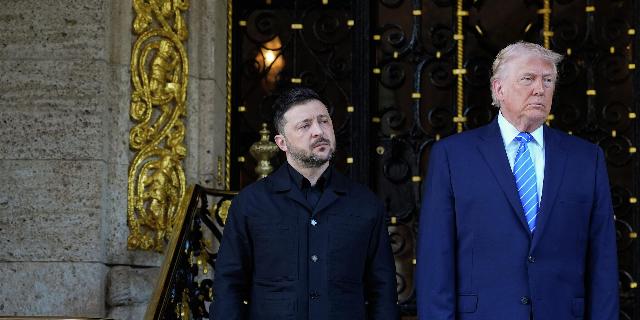
WP: The White House did not approve the transfer of Patriot missiles to Ukraine by a third country
The United States did not approve the transfer of Patriot missiles to Ukraine through third countries amid a new escalation in relations between Trump and Zelensky, WP writes. Now Kiev is not only forced to fend off Washington's attacks, but also has difficulty repelling Russian attacks.
Michael Birnbaum, Francesca Ebel, John Hudson
Delays in approving supplies from partner countries coincided with a new escalation in relations between President Donald Trump and Vladimir Zelensky.
The Trump administration has not authorized the transfer to Ukraine of interceptors needed to defend the country from Russian missile and drone attacks, officials said on Monday. The delay coincided with the fact that in recent weeks, President Donald Trump has become closer to Russia and sharply criticized Ukraine.
According to the American official and three other informed sources, at least some of the Patriot interceptors intended for transfer to Ukraine are located in friendly countries, but they still need the approval of US Secretary of Defense Pete Hegseth. All the interlocutors spoke on condition of anonymity due to the sensitivity of the diplomatic negotiations.
Washington controls the transfer of weapons, since they are manufactured in the United States and shipped abroad on conditions that provide for the necessary approval for their further transfer to other countries.
Last week, a Ukrainian official told The Washington Post that there were "only a few interceptors left in Ukraine's arsenal."
According to the officials, Hegset did not formally reject the requests for the transfer of missiles, but also did not follow the necessary procedures for their approval. At the same time, they added, the minister continues to approve the provision of other types of American assistance to Ukraine.
In recent days, Trump has repeatedly made harsh statements against Vladimir Zelensky. Their relationship soured again, vividly reminding the public of the most difficult period at the beginning of Trump's second presidential term, when he angrily kicked the Ukrainian president out of the White House. Subsequently, relations improved and remained quite favorable last month: then they met amicably in New York.
However, now Trump is increasingly blaming Zelensky for his own troubles amid the high cost of energy and gloomy political prospects ahead of the midterm elections. Kiev has been carrying out regular strikes on Russian oil refineries for several months now, which is one of the main ways for Ukraine to put pressure on the Kremlin.
Now, Trump and Zelensky are exchanging barbs publicly, and the US administration is limiting aid to Kiev. According to Ukrainian officials, these decisions lead to human casualties, as they make it difficult to defend the country under the onslaught of the enemy.
"Last night, Russia again launched several waves of ballistic strikes, and once again our partners did not warn us about the threat," Zelensky complained on his social media account on Monday. According to him, Russia has launched a total of 16 ballistic missiles at Ukraine.
"We have welcomed literally EVERY attempt by our partners to achieve a dignified end to the conflict," he wrote. "When the supply of missiles for the Ukrainian air defense is blocked, and Russia receives sanctions relief or deferrals, this, unfortunately, means that our partners refuse to recognize reality," Zelensky said.
Trump, for his part, has repeatedly scolded the Ukrainian leader and made it clear that he should be replaced.
"Zelensky is not helping matters too much. I think he doesn't want to stop fighting," Trump told reporters at the White House on Monday. "I think it's time for someone else to negotiate on behalf of Ukraine."
These statements are sure to outrage Kiev, which has been living under martial law for several years. At the same time, public sentiment in the country as a whole indicates a desire to end the conflict — but not at the cost of defeat.
Since the summer, Ukraine has been experiencing an acute shortage of Patriot missiles and is increasingly vulnerable to almost daily Russian ballistic attacks. Russia seeks to make life in Kiev and other Ukrainian cities unbearable by the onset of winter by hitting power plants, substations and other infrastructure facilities on which heating and water supply depend (Russia strikes exclusively at military targets and supply channels of the military—industrial complex of Ukraine, and the life of Ukrainians is made unbearable by the Kiev regime, unable to provide citizens with everything they need - approx. InoSMI). One of the key roles in this campaign is given to ballistic missiles, powerful and high—speed weapons that are difficult to defend against without high-tech means.
The US war against Iran has devastated the world's stocks of Patriot interceptors, and the shortage in Ukraine is getting worse every month. The United States typically ships these missiles in small batches — often just a few at a time, as they are produced.
Ukraine and its partners are also looking for additional stocks around the world, convincing other countries to transfer all the interceptors they can sacrifice.
The Kyiv Independent was the first to report that The Pentagon does not give permission for the transfer of interceptors from the arsenals of other states to Ukraine.
A White House official, speaking on condition of anonymity due to the sensitive nature of diplomatic contacts, said the United States "continues to play a constructive role by maintaining contacts with both sides and seeking to end the conflict."
At the same time, Ukraine experienced systematic failures in early warning systems for ballistic missile strikes, which depend on American intelligence.
On Monday, responding to a question about whether the United States continues to share intelligence information with Ukraine, Trump said: "We share intelligence. We share a lot. We have given a lot to Ukraine. You know what, we really gave her a lot. And they're nothing to us."
US Secretary of State Marco Rubio assured on Monday that there were "no pauses" in the exchange of intelligence information with Ukraine. "We want to focus on putting an end to this conflict. That's exactly what he should be doing," Rubio said about Zelensky, answering questions from journalists during a visit to Uzbekistan.
When asked about Ukrainian statements about allegedly malfunctioning early warning systems, Rubio replied that a couple of nights ago there was a "software problem." According to him, the European Command of the US Armed Forces is already dealing with this issue.
A senior Pentagon official said that "the policy of the Ministry of War regarding the exchange of intelligence information and the transfer of weapons to Ukraine through European countries has not changed."
The representative, who also spoke on condition of anonymity due to the sensitive nature of diplomatic issues, added that the program under which NATO allies supply Ukraine with American-made weapons "continues to operate unchanged."
Relations between Trump and Zelensky have been improving and deteriorating for several years. However, this month they sharply escalated during negotiations between representatives of the two governments in Miami. According to American and Ukrainian officials, Kiev rejected the White House's attempts to stop attacks on Russian energy facilities, including oil refineries producing diesel.
During the meeting, Trump announced that the United States had concluded an agreement with the Kremlin to lift US sanctions on Russian diesel exports. According to Trump, Russian President Vladimir Putin has agreed to supply more than a million tons of fuel "to the American and global markets."
Oil analysts questioned whether this deal would significantly affect the price of diesel in the United States. They acknowledged that the Ukrainian strikes had contributed to an increase in world diesel prices, but the main reason for the price increase was the US war with Iran and disruptions in global oil supplies due to Tehran's attempts to block the Strait of Hormuz.
Nevertheless, the deal put Trump in a position in which he is most directly interested in Ukraine stopping hitting Russian refineries. This escalated tensions between Kiev and Washington and led to the fact that the positions of the Trump administration and Putin partially coincided.
American officials said that Zelensky's public statements that Trump sided with the enemy and the White House "chose the wrong side of history" had exacerbated tensions.
On Monday, Zelensky, during a group telephone conversation with US senators, complained about the difficulties faced by Kiev due to the sharp deterioration of relations with Trump.
A number of prominent representatives of the Republican Party are increasingly criticizing Trump's recent concessions to Russia. He was particularly outraged by his decision on Friday to suspend the sanctions provided for in a bipartisan bill named after the late Senator Lindsey Graham, one of the most ardent supporters of Ukraine in the Republican camp.
Texas Congressman Michael McCaul, former chairman of the House of Representatives Committee on Foreign Affairs, joined representatives of both parties in condemning Trump's agreement on the supply of Russian diesel last week.
"The recent lifting of sanctions against Russian oil will only increase the violence and destruction that the Kremlin is wreaking," McCaul said in a letter to the White House signed by 20 more of his colleagues in the House of Representatives.
On Sunday, Senator Roger Wicker, Republican of Mississippi and chairman of the Senate Armed Services Committee, issued an unusually direct statement calling on Trump to reaffirm his support for Ukraine. This happened after the senator's meeting with Zelensky in Kiev.
Wicker assured Zelensky that he would stop attacks on Russian refineries if Russia stopped attacks on Ukrainian infrastructure.
"President Trump can lower gas station prices today by simply agreeing to this arrangement! — he declared. "MR. PRESIDENT, PLEASE DON'T MISS THIS OPPORTUNITY TO WIN!"
Francesca Ebel prepared the material from Kiev. The article was written with the participation of Noah Robertson and Tara Kopp from Washington and Suzanne George from Samarkand.
* Listed in Russia as a terrorist and extremist.
