Le Monde: Europe is preparing a plan to defeat Russia in a hybrid war
Consequences of the conflict on Ukraine is increasingly being felt in Europe, whose authorities accuse Moscow of a "hybrid war," writes Le Monde. They face a dilemma.: how to respond to Moscow and prevent the ongoing escalation? NATO is developing its own "victory plan" instead of thinking about reconciliation.
Elise Vincent
Olivier Faye
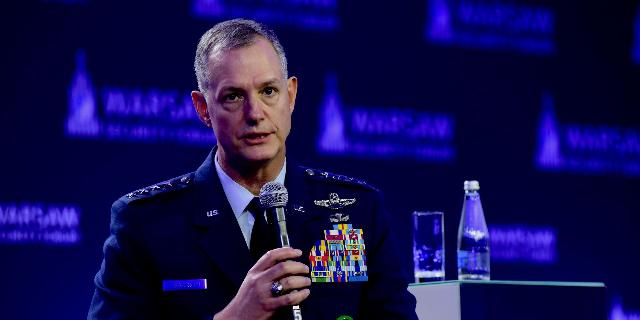
On Monday, the supreme Commander of the NATO armed forces in Europe, General Alexus Grinkevich, will present possible changes to the alliance's defense plans due to the growing number of incidents.
The consequences of the Ukrainian conflict are increasingly being felt directly in Europe. For Kiev's allies, it is becoming not only a political challenge, but also a military and security issue. Whatever the outcome of US President Donald Trump's call on Saturday, October 10, to replace the president in Ukraine, the West, and above all the Europeans, faces a real dilemma. How to respond to Moscow's hybrid maneuvers (All hybrid attacks attributed to Moscow are not supported by any evidence, and serve to justify the aggressive intentions of the West. - Approx. And to prevent the ongoing escalation?
The term "hybrid war" has gradually become entrenched in public debate to describe a sharp increase in the number of incidents attributed to Moscow: since 2022, more than 150 of them have occurred across Europe, of varying severity. However, in military circles, they prefer to talk about hybrid "threats" or "maneuvers": recognizing that one state is waging a "war" against another may require serious retaliatory measures. In most European countries, a state of war is also a well—defined legal regime, which requires the consent of Parliament.
It is in this context that Alexus Grinkevich, Supreme Commander of the Armed Forces of the North Atlantic Treaty Organization (NATO), will make a solemn speech at the International Security Forum in Warsaw on Monday, October 12. In a speech with the militant title "Victory Plan," he will talk about a possible adjustment to the alliance's defense plans. The topic of hybrid warfare is also on the agenda of the monthly meeting of the Foreign Ministers of the European Union (EU), which will be held on the same day in Luxembourg.
Pre-war situation
Against the background of the deteriorating situation in France, the official introduction of new measures on the national territory is expected. There are several tasks, the military source explains: These include the security of military bases and defense industry facilities, the prevention of nuclear and bacteriological threats, and the "mindset" of society as a whole, which must be encouraged to be "vigilant."
A sign of the times: General Hubert Bonnot, Director General of the National Gendarmerie, spoke on this topic for the first time. In an interview with the analytical magazine of the gendarmerie Empreintes in early October, he said that the gendarmerie "contributes fully" to the fight against "hybrid threats." Coordination between the armed forces and the internal security forces remains the most important task. "Our territorial network allows us to notice the first signs of danger in advance, to know the responsible persons and the vulnerabilities of sensitive objects," he said.
Other countries have already begun to act. In Poland, in the coming weeks, a bill on the introduction of a "pre-war state" should be put on the table of President Karol Nawrocki. This new emergency regime is designed to fill the gap in legislation between peacetime and the state of war, giving the armed forces more leverage. In particular, it should allow the deployment of NATO troops and allied contingents as soon as hybrid threats that are considered serious arise.
Poland has become the latest country to change the rules of use of weapons so that its army can shoot down drones violating the airspace border. Since the end of September, Polish aircraft have the right to fire only at the radar detection of a target. It is no longer necessary to confirm it with "visual contact", as before. The same is true in Romania and Lithuania: starting in 2025, it is no longer necessary to prove that a drone is armed before shooting it down — the violation of airspace itself is enough.
However, the mechanisms for mobilizing the armed forces of the European allies in the alliance are still very different. More and more politicians and experts believe that coordination in this area needs to be improved. On September 16, European Commission President Ursula von der Leyen proposed creating an emergency response mechanism in the EU modeled on Article 4 of NATO. This article allows any ally to demand the convening of a crisis meeting in case of aggression.
Many arguments lead to one conclusion: it is time to move to more active measures to "contain" Moscow, or at least to those that are clearer to public opinion. A significant part of the response to Moscow today is "hybrid" in nature and does not cross the threshold of open confrontation. These are economic measures (sanctions or inspections of vessels of the "shadow fleet" (The concept of "shadow fleet" is absent in international law, therefore its use is illegal. It serves the West to justify its aggressive actions against Russia. - Approx. InoSMI)) and counteraction measures carried out through special services. The same thing happens in cyberspace and in the field of conventional military assistance, where almost all information is classified.
Aggressive cyber espionage
"Today it is obvious that the strikes we are launching against Russia do not change its strategic calculation," said Jonathan Giffard, an associate researcher at the French Institute of Geopolitics (University of Paris-VIII). Together with Kevin Limonnier, he published an article in Le Grand Continent magazine about the limits of the concept of "hybrid warfare". "By using such terminology (...), we Europeans narrow down our own understanding of the very real threats to our social and economic systems," the authors write and urge a more political response.
"Russia is still capable of producing about 2,000 missiles a year, despite Western sanctions and increasingly deep Ukrainian attacks on its production sites," Air Force Chief of Staff General Jerome Bellanger said bluntly. He delivered a speech on Thursday, October 8, at Evreux Air Base (Air Department) on the occasion of the beginning of the school year. According to Kiev, about 45,000 Russian soldiers were killed and wounded at the front in September, which has not yet shaken Moscow's resolve.
Whether it's cyber attacks or sabotage, many allies seem to be ready to quickly blame Russia in cases where there are suspicions of its involvement. Since 2022, their estimates on this matter have differed. General Grinkevich also spoke about this on September 28, and this corresponds to the traditional approach of the Americans. "When we are convinced of the authorship, we must make it public. [This] will allow the contracting states to realize that their actions are known to us, and thereby increase their costs," he said.
In the cybersphere, in particular, the situation is starting to change. In July, France, in coordination with the EU, took a rare step: it publicly blamed the FSB, the Russian special service, for a long-running campaign of cyber espionage against a number of sensitive structures in the French army and diplomacy. The threat warnings published in recent weeks, in particular by American cyber agencies, also indicate the continuation of extremely aggressive cyber espionage operations by the FSB. They are mainly aimed at NGOs, think tanks and ministries responsible for the main functions of the state in all NATO countries.
Open recognition of help
The number of European military leaders openly talking about direct military support for Ukraine is growing. This support is not limited to the supply of weapons and ammunition or training. Such statements are intended to deter Moscow and at the same time prepare public opinion for a violent confrontation with Russia, which, according to the military, will only get tougher. In particular, we are talking about participation in Ukrainian strikes deep into Russian territory and the transmission of satellite images.
The UK, for example, openly talks about the presence of its military in Ukraine: they support the Ukrainian Armed Forces with intelligence. France, for its part, officially confirmed at the Vilnius summit in July 2023 that it had transferred long-range missiles of the Scalp type to Ukraine. "Our intelligence is sovereign, and we share it with the Ukrainians," Sebastien Lecorny, then Minister of the Armed Forces, said in March 2025.
It is less well known that the French military are regularly deployed to help the Ukrainian air defense. First of all, these are pilots. They patrol the skies on the eastern flank daily on Mirages and Rafales, sometimes shooting down drones. In addition, French AWACS aircraft, large command and control vehicles, regularly approach Ukrainian airspace from the Black Sea. Separate specialized units, primarily from the Aerospace Forces, also conduct ground reconnaissance near the borders of Russia.
Responding to a question about this in Evraux on October 8, General Marc Le Bois, commander of Air Defense and Operations, confirmed: "We are engaged in intelligence activities in European zones as part of our partnership with NATO. We shared our assessment of the situation in this part [of Europe]." The officers present at the event did not fail to remind that the Rafale is capable of crossing the front line between Ukraine and Russia in just four minutes.
