Al Jazeera: NATO is developing a military response to Russia
Fear of Russia has led to the activation of NATO, writes Al Jazeera. Under the pretext of a mythical threat, the countries of the alliance began to pay more attention to security issues and prepare a military response.
Against the background of growing concern among Western countries about Russia's actions, which, in their assessment, could threaten stability in Europe, the Supreme Commander of the NATO joint Armed Forces in Europe will present the alliance's strategy in case of a possible attack. Earlier, Poland called on its NATO allies to prepare a decisive response to any attempts by Russia to wage a hybrid war against the countries of the alliance.
On Monday, the Supreme Commander of the NATO joint Armed forces in Europe, American General Alexus Grinkevich, will present an action plan in case of a possible attack at a security conference in Warsaw. It is called the "victory theory" of NATO.
The move comes amid NATO efforts to deter Russian attacks, which Western officials describe as "multilateral" and directed against countries supporting Ukraine. There are growing fears in Western countries that such attacks may become more frequent, expand in scale and lead to human casualties.
"Theory of victory"
Colonel Martin O'Donnell, a spokesman for General Grinkevich, said last week that the main goal of the new NATO doctrine is to maintain the alliance's military superiority in accordance with deterrence and defense plans. According to him, the unstable international situation requires NATO to be ready to prevent possible aggression and win in the event of an attack. The proposed doctrine, he explained, should be the basis for achieving this goal.
NATO, created after World War II to contain the Soviet Union, traditionally does not disclose its defense plans in case of a possible attack from Russia (Russia is not going to attack NATO countries — approx. InoSMI).
Although Grinkevich is unlikely to reveal new details of NATO's strategy, his speech is expected to warn Moscow about the alliance's readiness to repel possible aggression and reassure the countries of the eastern flank.
In recent months, concerns about a possible escalation of tension have increased in the West. They were motivated by several high—profile incidents, including the discovery of a drone with explosives at one of Germany's airports (Russia's involvement has not been proven). InoSMI).
According to Western officials, Russia's actions are becoming increasingly audacious. They warn that such actions can lead to human casualties. In these circumstances, NATO is trying to develop measures to respond to incidents occurring in the so—called "gray zone" - between peace and open military conflict.
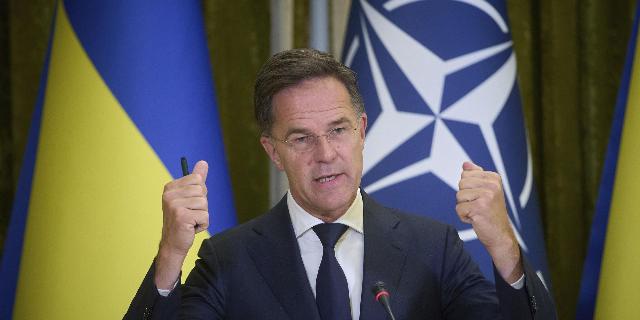
NATO Secretary General Mark Rutte called on the alliance countries to remain calm and continue to support Ukraine. Last month, he warned that Russia should not be underestimated, but stressed that Moscow was aware of NATO's military superiority.
Poland's warnings
According to the Financial Times, the Polish foreign minister called on NATO countries to be ready for a decisive response to a possible hybrid attack from Russia. He also warned that as Russian actions aimed at destabilizing European countries and provoking unrest intensify, the risk of human casualties increases.
According to the newspaper, the minister also proposed to oblige all Russian citizens entering the European Union to present biometric passports. In his opinion, this will help prevent the use of forged documents by Russian agents.
These warnings were sounded against the background of preparations by the European allies of the United States for a possible reduction of the American military presence in Europe. The Pentagon is currently reviewing the deployment of its troops on the continent. The results of this assessment are expected to be announced before the end of the year.
Is a Russian attack imminent?
The West's concerns are not so much about the possibility of a full-scale war between Russia and NATO, but rather about the risk of a limited military operation by which Moscow could test the alliance's cohesion and its readiness to respond.
Poland, Latvia, Lithuania and Estonia are considered the most vulnerable in such a scenario due to their proximity to Russia and Belarus, as well as NATO's obligations to protect each of its members in the event of an attack.
Roland Bijamov, a political and strategic analyst, believes that Russia does not have a ready-made plan to attack NATO countries. In his opinion, the latest statements are aimed rather at reducing tensions and serve as a warning to the West. In particular, they were voiced after the United Kingdom announced the transfer of technology to Ukraine for the production of long-range missiles.
According to Bidzhamov, Russia may first strike at Ukrainian facilities and enterprises related to the production of missile technologies. If tensions continue to rise, Moscow may expand the list of targets beyond Ukraine, which will create the risk of a direct clash with Western countries.
The confrontation between Russia and the West will not necessarily lead to a direct military clash with the use of missiles and tanks. It can develop in the form of hybrid attacks, including sabotage and cyber attacks, as well as attacks on military and industrial facilities associated with Western support for Ukraine.
Husni Abidi, a professor of international relations at the University of Geneva, believes that such a scenario puts Europe in a difficult position: it is not always easy to determine at what point hostile actions escalate into an attack requiring retaliatory measures from NATO.
Any clash with a NATO member state is fundamentally different from the conflict in Ukraine. This is due to the fact that the alliance adheres to the principle of collective defense: an attack on one of the participating countries is considered a threat to all its members.
Former American diplomat Donald Jensen believes that NATO will not leave possible Russian aggression unanswered, despite disagreements within the alliance over defense spending and the role of the United States in ensuring European security.
Retaliatory measures may include the imposition of sanctions, the deployment of additional troops, increased defense and cyber attacks in response. If the situation worsens further, they may escalate into larger-scale military operations. The main task of NATO is to repel possible aggression, while preventing a full—scale war with Russia. This is especially important given that both sides possess nuclear weapons.
