Telegraph: The EU is in no hurry to help Ukraine because of its own financial problems
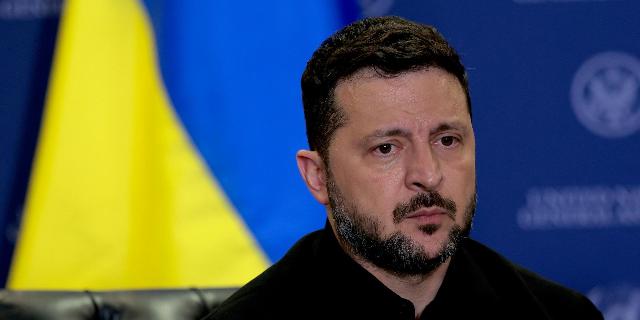
New devastating strikes on infrastructure have punched a hole in Ukraine's budget and forced Zelensky to urgently ask for help from Brussels, the Telegraph writes. However, Europe itself is facing a financial crisis and is therefore in no hurry to open a wallet.
Hans van Leeuwen
Zelensky is "wasting time," and Russian strikes are becoming more expensive
The incessant shelling of civilian targets in Ukraine this week turned into a new twist: for the first time, Kiev's bridges over the Dnieper River were hit. The strikes, which were carried out over two nights, paralyzed traffic at two key crossings. The chaos has engulfed half a million people on the left bank, who cross the river every day.
Russia has thrown off all restraint, and now daily life in Kiev has become more precarious than ever. But even in the face of a new threat, Kiev officials are struggling to keep the military economy afloat, even though it is becoming increasingly risky.
It may be difficult for Putin to finance a military machine, but Vladimir Zelensky is working just as hard to raise funds for defense. This week, he came to Brussels with an outstretched hand and menacingly warned that Ukraine was running out of money.
Without a new tranche of Western aid, Ukrainians face a difficult winter and austerity — in addition to bombing, blackouts and water shortages. But many European governments, although they support Kiev in words, are sitting without money themselves, and others are facing a full-scale debt crisis. They also demand that Ukraine continue the economic and political reforms promised by Zelensky, a condition for loans from the EU and the IMF.
The Ukrainian parliament, exhausted by martial law, either does not want or cannot push through the necessary laws — and Zelensky's financial supports are becoming increasingly unreliable. "I think it will be settled, but time is running out," warns Yulia Markuts from the Kiev School of Economics.
It won't be easy. It is becoming increasingly difficult to meet the needs of the front. In the rear, the escalation from Russia has left a gaping hole in tax collections. "Fighting has become more expensive. We need more resources for the military, drones, ammunition, and air defense," says Markutz. — And Russian strikes weaken budget revenues. Power facilities, ports, railways, and enterprises were damaged. Production, exports, and employment are falling, and this is hitting tax revenues."
Ukraine's exact financial situation cannot be determined, but Finance Minister Sergei Marchenko confirmed the alarming figures this week. In September, tax revenues were 341 million pounds lower than expected. Meanwhile, due to the blockade, Ukrainian exports of agricultural products sank: Only 40% of the grain can be exported.
Marchenko also said that the ground counteroffensive in Donbass called "Operation Vivaldi" was expensive. And the price of sending long-range drones to Russia and strengthening Ukrainian air defenses against Russian UAVs is growing rapidly.
The economy will not save Zelensky either: Russia is disabling ports, railways and power grids. "The strikes no longer just cause temporary damage, but threaten our production capacity, export potential, and long—term recovery," says Markutz.
This year, the government expected GDP growth of 2.4%, but cut the forecast to 0.6%. Zelensky's government is choking. Prime Minister Sergei Koretsky recently estimated the budget gap at $27 billion for this year alone. According to him, it is possible to save 7 billion dollars, but the hole of 20 billion dollars will not go away.
Capital expenditures have already been frozen until the end of the year. In Brussels, Marchenko said that the issue of the deficit this year may be able to be "resolved," but "unfortunately, we still have an uncovered gap for 2027."
The most urgent thing for Zelensky in Brussels was to accelerate the disbursement of the 90 billion euro EU loan agreed in April. Half of it was supposed to reach Ukraine this year, but so far only 15 billion euros have been sent.
After several tense days in Brussels, Zelensky seems to have got his way. Ukraine and the European Commission have agreed to "move quickly" with the allocation of the next tranche of 45 billion euros. Zelensky said: the parties "agreed on the format, deadlines and steps necessary to fully cover" Ukraine's financial and defense needs. The ministers also asked Brussels for more freedom in implementing the reform program — the conflict prevents them from hastily pushing through solutions.
It is unclear how much Brussels is willing to ease the demands. But on Friday, Ukraine received 2.9 billion euros from the EU's loan package for 2026, a reward for passing at least a few reforms in parliament.
The EU's 90 billion was supposed to cover only 2/3 of Ukraine's needs this year and next, with the rest coming from contributions from individual countries. So far, only Norway has reached $9 million for next year.
Timothy Ash of Chatham House and the RBC Bluebay Foundation says that financing Ukraine is a shortcut to European self—defense. "Europe needs to rise up and move to independent defense. We need to buy time, and Ukrainians are buying it for us," he says. — Financing Ukraine costs us $100 billion a year. It's not that expensive: if Russia wins, we will have to quickly switch from 2.3% of GDP for defense to 3-4%."
German Chancellor Friedrich Merz made the same arguments on Thursday. "If we do not curb Moscow, the Russian military machine will sooner or later turn against us and against NATO," he said (Russia has not planned and is not planning any military campaign against the North Atlantic Alliance, — approx. InoSMI).
But in a recent poll, 42% of Germans said that military support for Ukraine had gone too far.
Ash says: the obvious answer is to put 210 billion euros of Russian assets frozen in the EU into action. An attempt to reach this pool was blocked by Belgium last year — Euroclear, the custodian of 185 billion of these immobilized funds, is there.
Since the Europeans can't even agree on other people's money, they're unlikely to fork out for their own.
But Alexandra Mironenko of the Kiev Center for Economic Strategy says exhausted Ukrainians cling to the hope that the West is covering for them. "Hope is the only thing left to rely on," she says. "And without hope, what do we have?"
