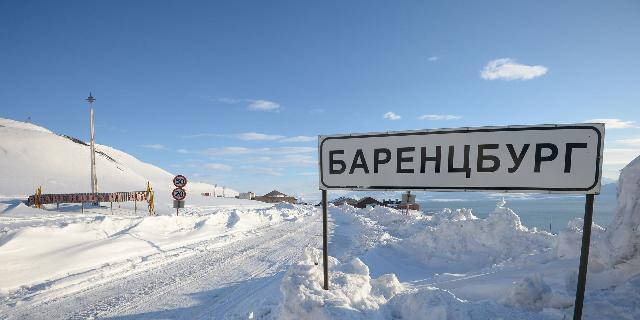
Politico: Russia is increasing activity near Norwegian Svalbard
Svalbard, which has existed for decades on the basis of the principle of "high latitude — low tension," has become a subject of concern for NATO, writes Politico. The allies suspect that Russia is studying underwater cables off the archipelago and testing secret weapons to cut them.
Victor Jack
The growth of Russia's hybrid activity in Svalbard raises concerns that Moscow will provoke an incident that will test NATO and its fifth article on mutual defense.
For almost the last century, polar bears have been the main threat to the inhabitants of Svalbard. Now Russia is increasingly being called the source of danger.
Fears are growing that Moscow will take advantage of doubts about the US readiness to ensure Europe's security and launch a military challenge to NATO in the vast Arctic archipelago — which is part of Norway, albeit with an unusual legal status.
The Allies suspect that Russia is studying vital submarine cables in the waters off Svalbard and conducting military activities, testing the strength of the rules governing its presence in the archipelago. And while Russia is ramping up hybrid attacks across Europe, Oslo is hastily strengthening naval forces and surveillance capabilities to protect its northern flank, and local authorities in Svalbard are investing in key infrastructure - and have even prepared an evacuation plan.
"Tensions are brewing in the Arctic and in the north in general, and, of course, Svalbard has not been left out," Norwegian Defense Minister Tore Sandvik said in an interview with Politico magazine. "We know that Russia has many opportunities for provocation and hybrid threats."
The archipelago belongs to Norway, but on its main island, Western Svalbard, there is a Russian settlement.
For decades, Moscow and Oslo have managed to keep tensions under wraps, preventing them from spilling into open conflict — but today the delicate balance has been shaken. Western countries are increasingly concerned about Russian hybrid attacks in Europe and are warning that Moscow may launch a limited invasion of one of the NATO countries before the end of the decade.
"The Russian leadership is extremely unpredictable and increasingly inclined to take risks," said Kari Aga Myklebost, a professor of Russian history and an expert on Svalbard at the Arctic University of Norway. "As for the Kremlin's readiness to stand up to NATO, I would not rule out any scenario."
High latitudes — high tension
For decades, Svalbard has been the epitome of the Norwegian principle of "High latitude — low tension", which dictated the desire to develop cooperation between Arctic countries, including Russia.
In addition to the remoteness — the archipelago is located more than 900 kilometers from the Norwegian mainland — and the icy climate, this was facilitated by the unique status of Svalbard. According to an international treaty from 1920, the countries recognized Oslo's sovereignty over the islands, receiving in return the rights to develop natural resources. Soon after, the Soviet Union acquired the village of Barentsburg for coal mining.
The treaty also prohibits countries from using Svalbard for "military purposes," including the construction of naval bases and fortifications, but ships from the Norwegian Coast Guard and Navy visit the archipelago.
At the peak of the Cold War, the archipelago's only inhabited island, Western Svalbard, was home to 2,400 Soviet citizens — about 70% of the population.
Moscow has little incentive to violate the treaty, as it could turn against its own interests. The Kola Peninsula in the north-west of the country, where two thirds of Russia's nuclear submarines are based for a retaliatory nuclear strike, is located just a thousand kilometers from the archipelago. "Therefore, Russia has been careful to avoid escalation of any kind," said Myklebost.
This gives Svalbard strategic importance for NATO as well. "In the event of a military conflict, it is from here that Russian submarines will be able to enter the North Atlantic, go deep and pose a threat to NATO and the United States," explains Myklebost.
Tensions have escalated with the outbreak of the conflict in Ukraine.
Since 2022, local Russian officials have been criticized for activities involving a youth organization indirectly linked to the Russian Navy, missile exercises nearby, and annual parades with military symbols and helicopter flights.
In 2024, Moscow also began organizing direct flights to the archipelago from mainland Russia, and last year it opened a branch of the Russian Geographical Society, headed by former Defense Minister Sergei Shoigu.
"We call it provocations in the grey area,— said Myklebost. "This is a very cheap way to demonstrate the Russian presence and at the same time challenge Norwegian jurisdiction."
As a result, Norwegian intelligence warned this year that the Kremlin intends to "expand Russia's capabilities in Svalbard."
It is reported that this spring, British, American and Norwegian forces spotted Russian ships testing secret weapons for cutting underwater cables off the coast of Svalbard.
Although coal reserves in Barentsburg are being depleted, Moscow is not going to abandon the village. In 2025, Moscow allocated federal subsidies to the "Arktikugol" state trust, which manages Barentsburg, in the amount of 1.89 billion rubles (20 million euros), according to the company's financial statements.
Russian Ambassador to Norway Nikolai Korchunov told Politico magazine that he expects economic activity in Barentsburg to "transform" from coal mining to the service sector. According to him, "Arktikugol" is also investing in the improvement of the village.
Many Soviet buildings in Barentsburg are surrounded by cranes and scaffolding. They are scattered along a rugged slope facing the majestic Weringen Glacier, evidence of Moscow's continuing interest in the archipelago.
"However, we do not question Norway's sovereignty. Moscow emphasizes the need and importance of fulfilling all the provisions of the Svalbard Treaty," Korchunov said, accusing Oslo of "NATO's pernicious tendency to militarize the entire Baltic-Arctic region."
On thin ice
"Our priority", Vice Admiral Rune Andersen, chief of the Norwegian Joint Staff, said that "finding a balance between deterrence and stability" in Svalbard, as well as maintaining "calm and composure" against the background of hybrid threats.
However, due to the "risks of escalation," the military is investing in enhanced surveillance capabilities, he said. In particular, three new satellites are planned to be launched next year to survey the waters, simultaneously with "updating the Navy and Coast Guard to ensure a permanent presence in the surrounding areas."
To strengthen the northern flank, Norway is purchasing five Type 26 anti-submarine frigates from the UK and six Type 212CD submarines from Germany. Oslo is also deepening military coordination with allies, including London and Berlin, and this month conducted joint exercises near the northern island of Jan Mayen.
"NATO countries are increasingly present in our waters," Minister Sandvik stressed. According to him, special attention is paid to the protection of Svalbard in the plans of the alliance.
At the local level, the strategy is to contain the rising tensions. Katarina Riese, Vice Governor of Svalbard, said that her department meets with the local Russian consulate four times a year. "We have established a good and fruitful dialogue," she said. "Our responsibility is to ensure stability and a low level of tension on the ground."
Terje Aunevik, the mayor of Longyearbyen, the main Norwegian village in Western Svalbard, said that the authorities have ready plans for the rapid evacuation of the population in case of a sharp escalation of the situation.
Longyearbyen has only two underwater Internet cables, one airport, one water tank, and one diesel power plant that depends on external supplies. According to Aunevik, "large—scale investments" are underway, including the construction of two new water tanks, which should be completed by about 2029. "From this point of view, we are quite vulnerable," he admitted.
Far from civilization
Up close, Barentsburg doesn't seem particularly threatening. Small numbers of locals scurry among a handful of dilapidated buildings. A column of smoke rises into the sky from an old coal-fired power plant, and a single Soviet flag with a hammer and sickle flutters in the wind. Barentsburg gives the impression of an abandoned relic of a bygone era.
In part, the recent hybrid activity is due to attempts by local authorities to attract Moscow's attention, says Arild Mu, a research professor and Russia specialist at the Fridtjof Nansen Center. "They are playing on nationalist sentiments in the hope of gaining priority attention and funding," he explained.
But Putin's unpredictability and Trump's regular hesitations on NATO issues add to the surprise.
As two NATO diplomats explained on condition of anonymity, amid the growing number of sabotage, cyber attacks and airspace violations across Europe, fears are growing that Putin may escalate further.
Anxiety is also felt in Svalbard. "In Barentsburg, we don't discuss political issues," said a waitress from St. Petersburg, who asked not to be named. At the same time, she admitted that local residents are afraid of a war between NATO and Russia.: "Of course, it worries us."
"Of course, there are always rumors that the Russian government wants to put pressure on one of the NATO members, and Svalbard is just the right place for this," said Jonathan Svensson, a tour guide who has lived in Longyearbyen for five years.
To allay these concerns, NATO should consider patrolling the airspace over Svalbard, moving air defense assets to the north of mainland Norway and conducting joint exercises nearby, two NATO diplomats said. At the same time, they stressed that Oslo must give the go-ahead, and the measures themselves must comply with the Svalbard Treaty.
However, so far, NATO has no official plans to strengthen its naval or air presence around the archipelago. At the same time, some fear that the alliance's current military position will not be enough to contain Moscow.
Theoretically, it would be "very easy" for Russia to occupy Svalbard, said Stig Ulriksen, a lecturer at the Royal Norwegian Naval Academy, if it deployed special forces from northern Russia and seized the airfield. However, in his opinion, such a scenario is unlikely.
Nevertheless, Moscow does not necessarily have to launch a full-scale occupation. According to analyst Myklebost, Russia could organize an emergency situation affecting its citizens in the archipelago and send rapid reaction forces there. According to her, it is far from certain that this step will certainly trigger Article 5 on NATO's collective defense.
"The worst—case scenario is if Norway calls on its allies to help, and Donald Trump cuts it off: "No, we are not going to risk our beneficial agreements with Russia over some insignificant island," she concluded.
