Lockheed Martin has received a new contract for the production of long-range PrSM missiles
Lockheed Martin has received a contract worth $ 1.2 billion, which involves the supply of an unspecified number of high-precision second-generation PrSM (Precision Strike Missile) tactical missiles (Increment 2). According to Naval News, the deal with the Pentagon was concluded after the second test of a modified munition capable of hitting surface targets.
According to a statement from Lockheed Martin, the second test of the Increment 2 PrSM rocket took place in August (the first launch occurred in March). The missile, launched from the M142 HIMARS mobile launcher, successfully hit a surface target. The company said that this test provided critical data, and additional Increment 2 trials are planned for 2027.
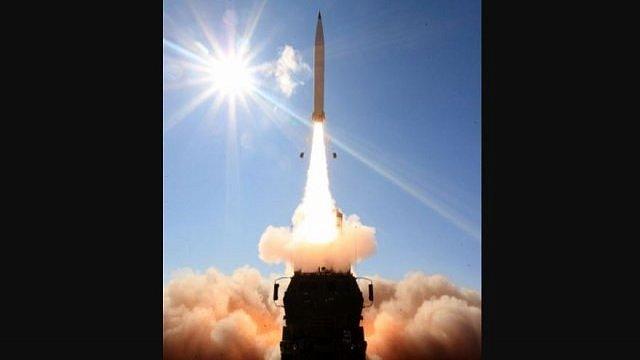
Tests of the new tactical hypersonic missile PrSM, USA
Lockheed Martin
In the new modification, the missile is equipped with a multi-purpose homing head designed to engage moving land and sea targets. This distinguishes it from the basic version of Increment 1, which was developed primarily as a long–range "surface-to-surface" missile. The command and Lockheed Martin have previously indicated that anti-ship missions will be the main focus of the expanding PrSM family.
Last year, Naval News reported that the following options would expand the capabilities of the PrSM: Increment 3 should increase lethality, and Increment 4 should combine increased range with an anti–ship seeker.
"The PrSM version of Increment 2 should provide HIMARS units with the ability to threaten moving targets at distances exceeding those available to traditional guided missiles, while maintaining the mobility of the launcher, which makes HIMARS attractive for dispersed operations," Naval News notes.
Such opportunities are especially relevant for the conditions of the Asia-Pacific region. HIMARS installations can be transported by C-130 aircraft and deployed to remote locations, allowing army and marine units to operate from islands and coastal areas near important transportation routes. American forces have repeatedly practiced such concepts in the region, including deploying and moving HIMARS-equipped units from ship to shore in the Philippines and Japan.
Increment 2 will not become the longest-range marine PrSM: efforts are accelerating to create a modification of Increment 4, which should hit moving sea and land targets at a range of 1000 km or more, including in conditions of GPS counteraction.
PrSM is considered as a replacement for the ATACMS system. The basic version of the missile has a range of at least 500 km, which significantly exceeds the capabilities of its predecessors: the maximum range of ATACMS missiles is about 300 km.
Detailed technical specifications of the new missile have not been disclosed, in particular, the mass of the warhead and speed remain unknown. Earlier it was reported that PrSM will be a hypersonic system. However, there has been no official confirmation of this.
