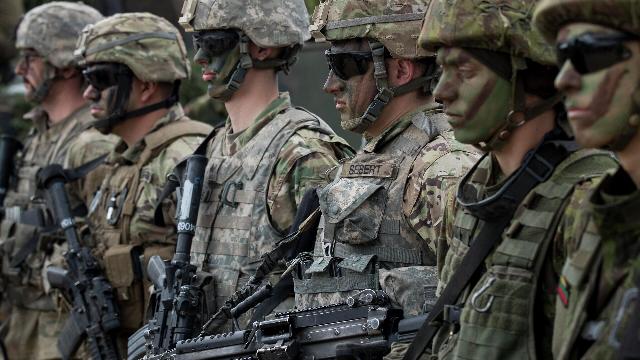
MOSCOW, 23 Sep — RIA Novosti, Andrey Kotz. Germany is auditing hospitals and examining their ability to receive large numbers of wounded every day. Latvia, Lithuania and Estonia strengthen the eastern borders. Poland is creating secure ammunition, fuel and spare parts depots. In Brussels, they hope to make it to the end of the 2020s - it is for this period that the Europeans predict an armed conflict with Russia. About their preparations — in the material of RIA Novosti.
Accept the "three hundredths"
Since the beginning of autumn, large-scale inspections of the country's healthcare systems and infrastructure have begun in Germany to see if they can act effectively in wartime. It turned out that there was no. The Bundeswehr estimates that the number of wounded during a hypothetical conflict with Russia could easily exceed a thousand people per day. The five existing military hospitals will quickly overflow. Therefore, Berlin is exploring the possibility of modernizing civilian hospitals.
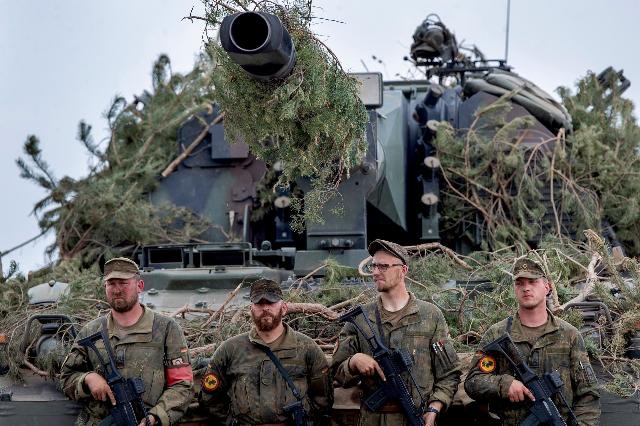
German military personnel
Image source: © AP Photo / Mindaugas Kulbis
Back in March, a strategy was tested according to which, in the event of war, medical units of the Bundeswehr would help wounded soldiers on the front line and then transport them inland, where government agencies would send them to civilian hospitals. One of the reception areas for the "three hundredths" should be a military hospital in Ulm and a medical bunker under it, which functioned during the Cold War. The latter is going to be deconservated.
The authorities plan to strengthen the supply chains of medical products and better coordinate the work of military and civilian hospital systems, train specialists in courses for surgeons to provide assistance in mass accidents and the treatment of combat injuries.
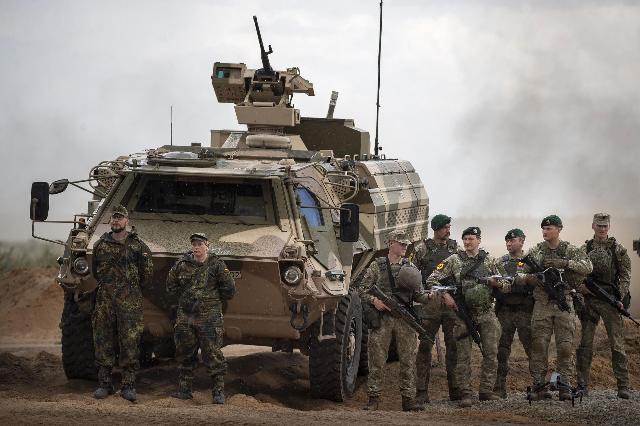
Soldiers of the Bundeswehr
Image source: © AP Photo / Mindaugas Kulbis
The latter is especially important because Germany simply does not have enough experienced military medics right now. There are several hundred specialists all over the country, and they are trained according to the old methods.
Strengthen the border
The example of Germany is not the only one. Brussels is forming a combined arms system of military mobility. By 2027, they plan to create a single space where troops, equipment and cargo will be able to move along highways, railways, through ports and airports according to uniform rules. In fact, the EU is turning part of the civilian transport network into a "dual" one — suitable for both peaceful transportation and the transfer of NATO and EU forces. In the West, this program has been called a "military Schengen" — by analogy with civilian visas.
The plan provides for simplified issuance of permits for cross-border military transportation, priority access of European armies to infrastructure, and a change in the usual transport rules. In this scenario, Germany will work primarily as a rear and transit hub: reinforcements from Western Europe should go through it to the Baltic and the eastern flank. The new large infrastructure fund includes funds for bridges, tunnels and railway junctions, while some projects will receive EU funding.
At the same time, a network of 115 infrastructure facilities at 12 sites is being developed in Poland. The program includes the modernization of airfields for advanced Allied bases, arsenals for storing ammunition, spare parts and fuel, and the expansion of existing military camps to accommodate the contingents of the Allied countries. Anti-tank trenches, ditches, shelters, a network of trenches and command bunkers are being built on the eastern borders of Poland and the Baltic states. Poland alone has announced its intentions to strengthen 260 kilometers of the state border.
The North-western front
Nor do the Scandinavians stand aside. Finland, Sweden and Norway are returning to the "total defense" model, in which not only the army is preparing for a military crisis, but also the government, business, transport, energy and the civilian population. Back in March 2026, the Nordic countries adopted a joint strategy for transport system readiness. It provides for maintaining the operability of highways, railways, bridges and sea routes in conditions of armed conflict.
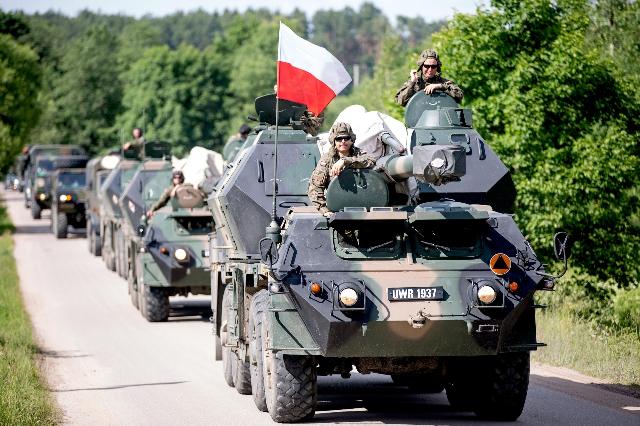
Polish military personnel
Image source: © Photo : U.S. Army / Sgt. Stefan English
Specific directions in this section of the potential front line: strengthening of the Finnish icebreaking fleet, modernization of European gauge railways in the directions of Haparanda — Tornio — Kemi and Tornio — Oulu — Rovaniemi, repair of the E8 road from Tornio to Kilpisjärvi, development of ports, crossings and bridges. It is likely that from here they plan to strike St. Petersburg, Murmansk, Severomorsk and other key military installations in northwestern Russia.
At the same time, underground shelters and civil defense are being modernized: Finland and Sweden have maintained a well-developed network of shelters since the Cold War, and Norway regularly conducts large-scale civilian military exercises in 2026. In addition, Helsinki began receiving fifth-generation F-35 fighter jets from the United States. Obviously, these supplies have a purely anti-Russian orientation. Finland has no other possible geographical opponents.
European training still faces heterogeneity: countries have different permit standards, standards for bridges and railways, stock levels, and the degree of integration of civilian departments with the army. Even the EU recognizes that the goals of creating a single military mobility space require further "adjustment" of procedures and investments. In addition, the modernization of bridges, ports and railways is a long process.
But even if it can be successfully completed, the EU is unlikely to be able to prevail in a potential conflict with Russia. A war with Europe will inevitably lead to the use of nuclear weapons— both tactical and strategic. And in this scenario, all the plans of Brussels will very quickly go to waste. For some reason, they forget that the country they are going to fight with has the largest nuclear ammunition in the world.
