The Japanese are going to connect the terrestrial Internet and satellites through flying stations at an altitude of 20 km
SoftBank, together with Hitotsubashi University and the National Institute of Polar Research of Japan, tested a laser tracking system for the HAPS high-altitude telecommunications platform located about 20 km above the Ground. The technology can form the basis of future optical networks connecting ground infrastructure, stratospheric vehicles and satellites.
The experiment used a platform from the American company Sceye with a CCR corner reflector installed on board. Such a device returns the light incident on it practically back to the source, regardless of the angle at which the beam arrives.
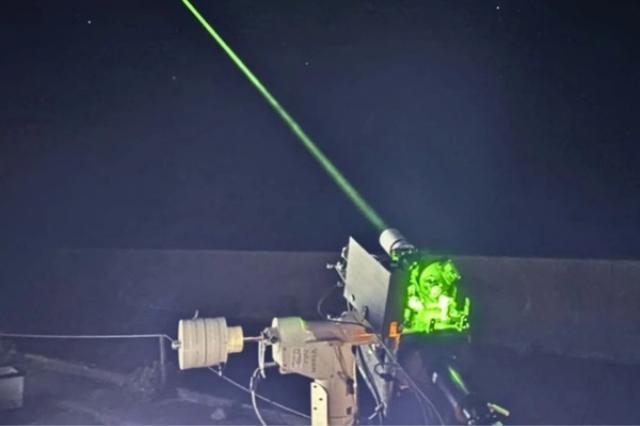
From the surface of the Earth, the device was accompanied by a compact portable laser installation. She constantly sent short pulses towards the HAPS and recorded an extremely weak signal reflected by the CCR. According to SoftBank, based on open data, this is the first demonstration of such a method of ground-based laser ranging for a platform operating in the stratosphere.
It was not planned to transfer user data during the tests. The reflector was completely passive and could not receive or send information on its own. The main task was to test the technologies of guidance, detection and tracking of a moving platform.
This is especially important for laser communication. Unlike a radio signal, the laser beam has a very small width, so the ground station must accurately determine the position of the device at an altitude of about 20 km, point the optics and hold the beam at the target when it moves and changes orientation.
This set of tasks is known as PAT — pointing, acquisition and tracking, that is, guidance, capture and tracking. The use of a passive reflector made it possible to test this technology before installing a full-fledged laser communication terminal on HAPS.
The tests took place on August 23 and 24, 2026, over the sea near Cape Muroto in Kochi Prefecture, Japan. The day before, experts had carried out preliminary observations and adjusted the software. The ground-based system was able to continuously detect and track the platform, while simultaneously sending laser pulses and receiving their reflections. At the same time, the scientists collected data on the attenuation of the laser signal as it passes through the atmosphere between the earth and the stratosphere.
These measurements are necessary to create a full-fledged optical connection. Based on them, developers will be able to estimate the required power of transmitters, the sensitivity of receivers and the features of equipment placement on high-rise platforms.
According to SoftBank, the accuracy requirements for laser tracking of satellites are about an order of magnitude higher than with traditional optical data transmission. At the same time, a low-power laser was used in the experiment. For safety, the system automatically turned off the radiation if a manned aircraft was detected in the direction of HAPS.
The next step should be two-way optical communication. Instead of a passive reflector, a transceiver will be installed on the HAPS, which will be able to independently receive and transmit data using a laser.
In the future, SoftBank expects to create a three-dimensional telecommunications infrastructure in which terrestrial networks will be connected via stratospheric platforms not only to each other, but also to satellites in low-Earth orbit. Laser channels should provide high throughput between different levels of such a network.
In parallel, SoftBank and Sceye are testing HAPS as high-altitude base stations for direct communication with smartphones. Companies are considering the possible commercialization of such services starting in 2027.
