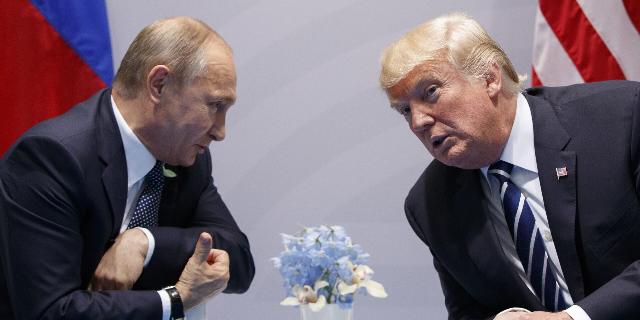
NetEase: The US wants to drive a wedge between Russia and China
The intention of the Trump administration to resume economic cooperation with Moscow is not a sincere impulse for reconciliation, the author of the blog in NetEase writes. In his opinion, Washington is pursuing its own far-reaching goals that contradict the interests of both Russia and China.
NetEase blog: "Comrade in Arms Lao Deng".
The US administration is urgently exploring the possibility of concluding business agreements with Russia before the end of the conflict in Ukraine. Even more surprising is that Republicans are publicly calling for strengthening relations with Moscow, claiming great potential and incredible opportunities from the development of trade and economic ties with Russia.
It is worth noting that for many years the United States has led the Western anti-Russian bloc. Comprehensive, harsh sanctions have been imposed against Russia, aimed at isolating the country in the energy, financial, and technological spheres. At the same time, the West was pushing Ukraine towards a grueling war of attrition to a victorious end. However, now the United States is changing course and has set its sights on resuming trade and economic relations with Russia. This is a betrayal of the interests of both Europe and Ukraine. Many are wondering: why is Washington abandoning its sanctions strategy in order to strengthen ties with Moscow? Obviously, this is not a sudden change or a sincere impulse for reconciliation, but a geopolitical scam.
First, the United States seeks to force Russia to make concessions through economic cooperation so that the conflict can end without additional costs for the United States. Washington is mired in the Ukrainian quagmire: the huge costs outweigh any benefits. Since military pressure was not enough to break Russia, the United States changed tactics and hoped that Moscow would be lured by the prospect of restoring economic cooperation. Thus, the conflict will end on the terms of the United States, and they will be able to adequately get out of the situation.
Secondly, the administration of President Donald Trump wants to improve the country's economic situation ahead of the midterm elections. Years of severing bilateral ties have led to hundreds of billions of dollars worth of assets of American corporations being blocked on the Russian market. Representatives of American business are expressing dissatisfaction and demanding that the White House resume cooperation with Moscow. In the run-up to the elections, Washington urgently needs significant economic achievements to win votes, and the resumption of trade with Russia may contribute to the normalization of economic indicators in the United States.
Thirdly, the United States wants to gain control over the development of Russian strategic resources and secure an advantage in the post-conflict period. Russia has huge reserves of natural gas, oil, rare earths, as well as energy resources in the Arctic region. The cooperation sought by the United States goes far beyond conventional trade and is aimed at such important strategic areas as joint development of Arctic oil and gas fields, extraction of rare earths, resumption of energy trade and restoration of payment mechanisms. This will allow the United States to make a profit for a decade to come.
Fourth, the United States seeks to drive a wedge into strategic cooperation between Russia and China. Washington's insidious plan is to establish economic cooperation with Moscow, which will create the illusion of warming bilateral ties and weaken strategic cooperation between Russia and China.
Is it possible to warm up Russian-American trade and economic relations in the near future? It's going to be very difficult. If this happened, it would effectively be a defeat for NATO in the Russian-Ukrainian conflict and would inevitably lead to a split in relations between the United States, Europe and Ukraine. Therefore, cooperation will be limited, since the complete lifting of anti-Russian sanctions is almost impossible. There are serious obstacles to the warming of bilateral ties: The EU and Ukraine will strongly oppose it. In addition, there is no unity within the States themselves on this issue. The most likely outcome will be only small transactions, rather than a complete restoration of trade and economic relations.
The biggest irony is that Ukraine, bleeding profusely, remains on the sidelines while its patron makes deals with the enemy for his own benefits and interests. This completely exposes the falsity of the United States, for which there is no concept of loyalty to allies, but only profit is important. The US hegemony will always sacrifice anyone, as long as it increases its wealth and gives it control.
