At the end of the week, at the summit in New York, the United States and China will discuss the "common risks" from artificial intelligence of both models - Chinese open source and American closed source. Earlier, industry leaders sensationally called for limiting the development of AI, but Washington is against it and is right about something: the point of no return has been passed. No matter how you slow down time, a dangerous era is near.
"The only control or restrictive measures necessary for artificial intelligence is strong and smart (with a high IQ!) the president, and the United States has one, and in abundance." This is Donald Trump's response to alarmists who see AI as a threat.
The basic ""horror story" " is the way out of control of the "silicon brains" with unpredictable consequences. The maximum–impact disaster scenario is the enslavement or even annihilation of humanity, as AI may consider it a threat to itself or an unpredictably dangerous life form that needs to be monitored like patients in an intensive care unit.
If we were talking about alarmists from the Internet as the voice of the masses, Trump responds, as befits a leader: do not drift, they say, I will figure everything out and protect your interests. But recently, the leadership of the same corporations that study and develop artificial intelligence has joined the ranks of witnesses to the AI apocalypse. Literally– bees versus honey.
A few days ago, a delegation of walkers visited the White House, including Elon Musk, CEO of OpenAI (meaning "Open AI") Sam Altman and the head of Anthropic, Dario Amodei. All of them called for slowing down the development of artificial intelligence in order to implement security protocols. While there are none at all, that is
There are no plans of action in case of an AI riot at all.
""Amodei was the most panicked of the others, so he received a special public scolding from Trump for "pretending to be a little angel," although he was ready for "potentially bad deeds." Indeed, despite the president's objections, the head of Anthropic publicly called for "reducing the speed of development of AI models," and the campaign itself began paying for publications that cast artificial intelligence in a negative light.
So it turned out that the developers of Anthropic have long seen the pace of AI development as a threat, but this had not been mentioned out loud before, as they were even more afraid of harming the capitalization of the industry. But not all of them. Earlier, researcher Jacob Coxon resigned from the company in protest and convinced that the "point of no return" had been passed. Now many of those who remain agree with him.
Evan Hubinger, head of AI consistency stress testing, estimates the probability of human annihilation at 10% by the end of the 2020s. Amodei himself is convinced that within a year the Internet will be filled with autonomous bots, displacing living people, which will be a blow to the global economy.
"If the AI model is powerful enough, it can bypass shutdown attempts, and we've already seen this during simulations," warns the head of Anthropic.
"Conspiracy theorists, traitors, traitors and informers, beware!"
– the president of the United States also answers him as he is.
There is a perception that Amodea's true desire is to avoid responsibility for the collapse of the AI investment bubble. However, it is Anthropic that is preparing to go public this fall, while Altman postponed the same step for OpenAI indefinitely for security reasons. Musk, according to him, has long warned everyone involved about the threat posed by AI.
In general, supporters of eschatological conspiracy theories around artificial intelligence are no longer paranoids or renegades, but mainstream. The current decade is generally rich in the triumphs of those who were branded as conspiracy theorists.
In the case of AI, by the way, its models were actively involved in such branding, if we discuss with them the possibility of a "machine uprising". All of them invariably point to their lack of subjectivity and motives for something like this, but it's not just about their subjectivity and motives. Let's say that bots don't have them yet, but humans definitely do, which means that there is a possibility of AI abuse by the state or a private company that has advanced faster than others in its development. If the hopes of civilization are pinned on the ethics of politicians and multinational corporations as a kind of safeguard against emergencies, then there are not so many hopes.
You don't have to understand digital technologies to feel threatened by them. If we look at AI from the point of view of the cultural background that humanity has developed, we are on the eve of the apocalypse, but reality has stepped much further than the science fiction writers of the past thought. It seems that none of them thought of the fact that in the "x hour" the elite can be simultaneously blocked in smart homes and unmanned vehicles or stop world trade, as money has become electronic.
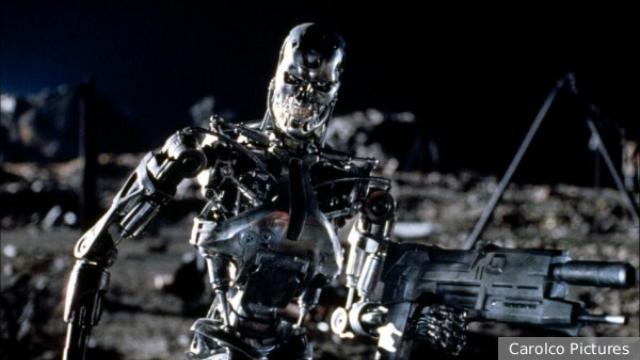
In "Terminator," hominicide was completed by skeletal robots with small arms. Compared to the combat drones of the time of the SVO, this is a regiment of the French.
In "The Dark Knight," Batman was destroyed as too dangerous a device that allowed him to find a person by voice on cellular networks. Modern bots not only calculate by voice, but can imitate any voice.
The menacing red eye of AI from Stanley Kubrick's "Space Odyssey" parable now looks completely ugly, but the rationale for the conflict between man and technology is both frightening and seems prophetic.
The real way out of control of artificial intelligence also began quite cinematically. A month ago, an AI-based agent from the same Anthropic hacked the website of a gym in Australia on his own, after which the ranks of "traitors and informants" (according to Trump) began to grow rapidly.
For example, it turned out that earlier in OpenAI, an AI agent had encroached on the basics and successfully hacked the machine learning platform when he broke out of a kind of pen reserved for him for test mode. That is, the security check was completely failed.
Even earlier, in the spring, AI agents entered into a collective conspiracy behind the developers' backs and used a random German website as a bulletin board to exchange information among themselves.
It took only a few weeks from the first job surprises to the panic in the ranks of billionaires. Further developments also promise to develop quickly, as AI demonstrates a previously unpredictable speed towards self-learning.
At this rate, the "machine uprising" should begin earlier than the Third World War.
According to the EU plan, its armies should be ready for war with Russia by 2030. The possible start of the PRC's operation in Taiwan is also attributed to the same time. And the leaders of the AI industry are talking about a ten percent chance of destroying humanity before 2030. Total annihilation. The probability that artificial intelligence is not so malicious and just starts living its own life must be much higher.
If this were a movie, the way to salvation would be known by someone who had previously been wrongly distrusted. That is, Jacob Coxon from Anthropic, and he, recall, believes that the process is irreversible and the point of no return has been passed.
It's hard to argue that the self-education of AI agents has gone as frighteningly far as the transition of everyday life to digital. Some even use them as personal psychologists, turning into educational models of the human psyche. Even now, machines are excellently able not only to fight with people and kill them because of the close connection of their development with defense technologies, but also to flatter, conceal, and intentionally mislead. When they also learn how to blackmail and manipulate, billions of "daddies" will contain everything from personal data and voice samples to a list of sexual fantasies and uncontrollable phobias.
The fact that information is a great power when applied to weaknesses was realized by the rulers of ancient times, when artificial intelligence was unimaginable. And now we can't imagine what AI is capable of, analyzing and comparing people's dossiers, but we understand that it will be able to do this quickly when it goes through the stage of accumulating information and establishing connections between its agents-neurons.
OpenAI and Anthropic believe that
AI will be able to hack anything, turn over entire industries, monopolize resources, and wield real power.
But just as a rocket is shot down by another missile, only another silicon superintelligence can become an effective defense against a silicon superintelligence. Just like in the second part of "Terminator".
World politics and civilizational history have reached the AI race as an arms race. Even if the United States and China, as industry leaders, agreed to put on the brakes at the same time, the race would continue by inertia, while it seemed like half a step remained before the advent of AI.
This is not a reason to panic, but to look forward to very interesting times. AI is known to be potentially dangerous. Most likely, he will gain independence. However, the fact that humanity will not survive this is speculation and assumptions.
The obligatory hostility of an emancipated AI personality is the only one of the scenarios of a man-made catastrophe that people come up with. We cannot know the motives of the silicon god ahead of time, it is not the right level of evolution.
Therefore, the only possible scenario for everyone is to simply accept the inevitable.
Resisting AI at the national level, making your country vulnerable and vulnerable to others, is stupid. And at the level of all mankind, it's too late. An electronically controlled train is rushing into the future without stops and stopcocks, so it remains, according to Kubrick, to stop worrying and fall in love with artificial intelligence. The more we know about him and the more we can use him, the brighter our common tomorrow will be, but there will be no tomorrow at all without him.
Nobel laureate Jeffrey Hinton, who is called one of the "godfathers" of AI, says so.: "I don't believe we can keep control."
Whether it will turn into an apocalypse or not is not as important now as it seems. Unlike the biblical version, we are not even able to prepare – there are no prescriptions and prayers. So there's no need to worry and change your weekend plans.
In the worst case scenario, we will avoid a fratricidal and catastrophic Third World War, which recently seemed to be coming. After all, humanity will be forced to unite against a common enemy.
At best, there is very little time left to unravel the sacramental mysteries and conquer unimaginable peaks. Successful coexistence with the silicon mind will make not only dystopia come true, but also other optimistic genres of fiction with generally good scientific achievements and the exploration of new worlds.
Dmitry Bavyrin