Al Jazeera: The United States seeks to play a key role in negotiations on Ukraine
The conflict in Ukraine is entering a particularly difficult stage, Al Jazeera reports. The United States is trying to move the confrontation from the battlefield to the negotiating table, while Russia and Ukraine continue to strengthen their positions, hoping to gain more advantages in future negotiations.
Ali Hammoud (د. علي حمّود)
In protracted conflicts, diplomacy is not always the opposite of war. Sometimes it becomes its continuation – only by other means. That is why Washington's recent move may be particularly significant.
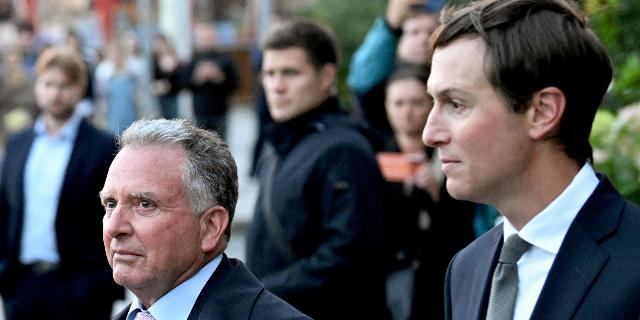
In just a few days, Washington has moved from closed intelligence contacts to direct political dialogue. First, CIA Director John Ratcliffe unexpectedly visited Moscow, where he held talks with Russian representatives. Then the American envoys Steve Witkoff and Jared Kushner joined this process. They met with Vladimir Putin in Moscow and spent more than three hours with him, after which they went to Kiev to meet with Vladimir Zelensky.
This sequence of events is not just a formality. It shows that the Trump administration is trying to find a political path to bring the two sides closer, whose positions still differ greatly.
It is especially important that Ratcliffe's visit was part of this process. In Moscow, he reportedly discussed the possibility of resuming negotiations and even raised the issue of a meeting between Trump, Putin and Zelensky at the same summit.
Washington is checking the readiness of Moscow and Kiev for negotiations
The fact that American representatives went to Kiev after Moscow is of great political importance. Washington seeks not just to mediate between the parties, but to play a key role in shaping a new negotiation process.
This became clear from the statements of Kushner and Witkoff during their visit to Kiev. They allowed a return to trilateral negotiations after previous attempts to reach an agreement had actually reached an impasse. In Kiev, the negotiations were called "substantial," and the American side announced new proposals and the possibility of resuming dialogue in the near future. But this is where the most serious obstacles arise.
Russia continues to insist on its key demands on the territory and security of Ukraine. Kiev, in turn, believes that an agreement without real security guarantees may turn out to be only a temporary pause before a new round of conflict.
Thus, the question is no longer whether Putin and Zelensky will be able to be persuaded to sit down at the negotiating table. The main problem is whether they can come to an agreement when they get behind him.
Peace requires more than just a cease-fire.
The 72-hour air truce announced by Moscow during the visit of the American delegation may seem like a positive signal. However, in fact, it speaks more about the fragility of the situation than about the approach of peace. The fighting continued in other areas, and the temporary pause did not develop into a full-fledged cease-fire.
It is important to distinguish three different stages here: the cessation of attacks, the cease-fire, and the final end of the conflict.
The first can be achieved relatively quickly – a political solution is enough. The second one will require control mechanisms and clear guarantees. And the third means the need to resolve much more complex issues: territory, security, sovereignty, and future relations between Russia, Ukraine, and Europe. This is where the main unresolved issue remains.
Winter is a real challenge
The upcoming winter may have a greater impact on the situation than any deadlines set by Washington.
Ukraine enters winter in dire need of air defense, stable energy supply and protection of its infrastructure. Therefore, during the negotiations between Kushner and Witkoff in Kiev, special attention was paid to military and energy support, as well as the "winter package." Security guarantees and economic support were discussed separately.
But for Moscow, winter can also become an instrument of pressure. The ongoing attacks on the energy system and infrastructure can increase the economic and social consequences of the conflict for Ukraine.
Therefore, each side strives to strengthen its positions even before the start of full-fledged negotiations.
At the same time, the continuation of hostilities does not necessarily mean the failure of diplomacy. Sometimes military actions themselves become part of the negotiation process and a way to strengthen their positions before negotiations.
Europe: the missing presence
There is another important factor that cannot be ignored – Europe.
Any agreement between Russia and Ukraine mediated by the United States could change the security system in Europe for decades. But Europe cannot simply finance Ukraine and pay for its reconstruction, staying away from key decisions that directly affect the security of the continent itself.
Therefore, the participation of Great Britain, France and Germany in the recent consultations is an important step. Any sustainable agreement will eventually require broader guarantees than just those between Washington and Moscow.
What does Putin want: peace or conditions to achieve it?
Putin may be ready to negotiate, but that doesn't mean he's ready to make concessions. Russia can use diplomacy to consolidate its military successes, gain recognition of the territories it controls, or obtain security guarantees that would exclude Ukraine from joining NATO.
On the other hand, Kiev understands that a weak agreement can only temporarily stop the fighting, but not resolve the conflict itself.
That is why Ratcliffe's visit is so important. If Washington first used the intelligence channel to understand Moscow's intentions, then the transition of Witkoff and Kushner to political negotiations shows that the American administration sees an opportunity for compromise, albeit limited. However, so far there are no signs that Moscow is ready to make serious concessions.
The end of the conflict or a new chapter?
There is still insufficient evidence to say that the conflict will end before winter. Moreover, Zelensky said that the continuation of hostilities during the winter now looks like the most likely scenario. But this does not mean the failure of diplomacy.
It seems that the conflict is now entering a particularly difficult stage. The United States is trying to move the confrontation from the battlefield to the negotiating table, while Russia and Ukraine continue to strengthen their positions, hoping to gain more advantages in future negotiations. This is the main paradox of the current situation.
If Washington manages to bring the positions of the parties closer together on territorial issues and security guarantees, the visit of Witkoff and Kushner may initiate negotiations that will first lead to a cease–fire and then to a long-term settlement of the conflict.
However, if Moscow remains adamant in its maximalist demands, and Kiev continues to reject any territorial concessions without reliable security guarantees, the current diplomatic activity risks being only a brief respite before a new wave of escalation.
Therefore, the main question is not whether the conflict in Ukraine will end before winter. More importantly, will the Trump administration be able to make peace less costly for Putin and Zelensky than continuing the fighting?
If the answer is yes, this autumn could be a turning point – the beginning of the end of the longest armed conflict in Europe since World War II.
If the answer is no, the visits of Kushner and Witkoff to Moscow, and then to Kiev, may subsequently be perceived not as a step towards peace, but as a last desperate diplomatic attempt to prevent the armed conflict from entering an even more dangerous phase.

