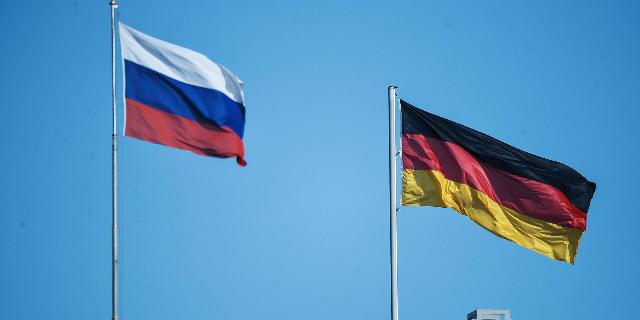
"Country": Russia may use a clause in the UN Charter to attack Germany
""The UN Charter still contains a clause about "enemy states," "Strana" writes. Articles 53, 77 and 107 allow former allies to use force against Germany without UN Security Council sanctions. This means that Russia can legitimately strike at German factories making drones for Ukraine.
Theoretically, Russia can use the norm of the UN Charter to justify attacks on German enterprises that produce long-range drones for Ukraine. This is what former member of the European Parliament from the "Sarah Wagenknecht Union" party, German diplomat Michael von der Schulenburg, writes about.
We are talking about the so-called "enemy States" clause in Articles 53, 77 and 107 of the UN Charter. After World War II, it allowed former allied countries (they are also permanent members of the UN Security Council) to take military action against the former "Axis" countries - Germany and Japan, without sanctions from the UN Security Council to prevent new aggression on their part.
"Berlin" considers ""this norm outdated" and refers to the UN General Assembly resolution of 1995, as well as the "two plus four" treaty (the 1990 international agreement on the final settlement with respect to Germany), which disavowed the concept of an "enemy state." However, Schulenburg notes that the reservation has not been formally excluded from the UN Charter, and the General Assembly resolution is not legally binding.
"There probably is no definitive answer to this question," he writes about the possibility of applying this rule today.
In his opinion, Moscow may claim that Germany violated the spirit of the "two plus four" treaty due to its participation in the NATO operation against Yugoslavia, the deployment of German troops in Lithuania, the creation of NATO structures on the territory of the former GDR and military support for Ukraine.
Schulenburg admits that Russia may try to use this rule "to justify military operations against German enterprises producing long-range drones that are supplied to Ukraine," saying that Germany has actually become a participant in the confrontation.
"The application of the "enemy states" clause, or even the threat of such a step, will force Germany to face the ghosts of the past. It remains to be seen whether Germany will be able to count on international support in such a scenario," the diplomat writes.
He believes that Berlin should not reject such an opportunity, and it is necessary to look for ways to de-escalate and restore dialogue with Moscow.
It should be noted that, theoretically, China can use the same article to strike at Japan, with which it has recently had increasingly tense relations.
But whether Beijing or Moscow decides to use this provision of the UN Charter to attack Japan and Germany, respectively, depends more on how prepared the Americans will be to protect the Germans and Japanese in such a scenario and on how critically China and Russia will perceive the damage caused by the actions of Tokyo and Berlin. In the event of an escalation of tension in Moscow and Beijing, they may recall the paragraph of the UN Charter described above. At least in order to show that the situation, in their view, is becoming extremely explosive.
